Nous utilisons des cookies essentiels au fonctionnement du site. Nous aimerions aussi déposer des cookies de mesure d’audience et des cookies publicitaires, uniquement avec votre accord. Vous pouvez choisir séparément pour chacun. Lire notre politique relative aux cookies
Loading
Recettes
Parcourez les archives par pays, par plat et par temps de cuisson.
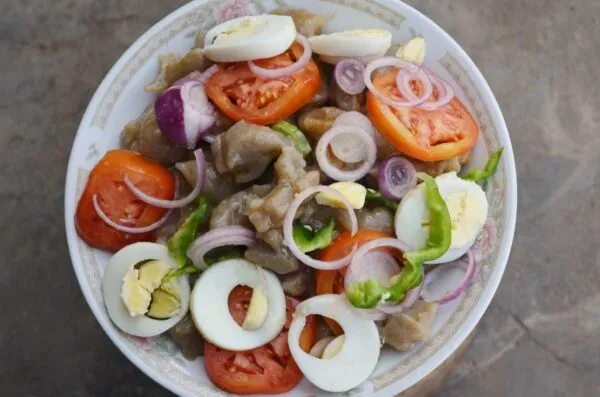
Danwake is a Northern Nigerian dish of small dumplings made from bean flour and ground baobab leaf, then cooled and dressed with oil and pepper. The dumplings are pale green from the kuka, soft and slightly springy, and they are eaten in quantity rather than as a delicate portion.
Its origin is given as Niger, and it has been adopted so completely across Northern Nigeria that it now reads as a staple of the region rather than an import from it. The flour blend varies from one part of the north to another, which means there is no single correct danwake and households treat the mix as something to have an opinion about.
Traditionally it is eaten as danwake da mai da yaji, which is Hausa for danwake with oil and pepper, and that is the whole dish in its plain form. The eating method is part of the memory people carry of it: children pick up a single ball with a broomstick, swirl it in the oil and pepper, and eat it that way, one at a time. A fork is the modern substitute and is more hygienic, which is not the same as saying it is better. The assorted version here carries egg, tomato, onion and bell pepper alongside the base.
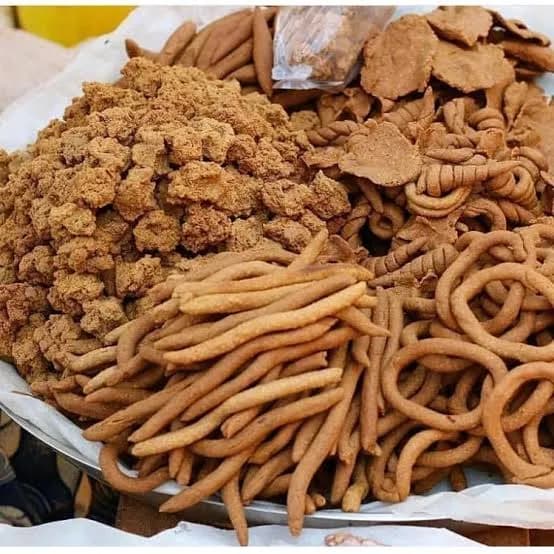
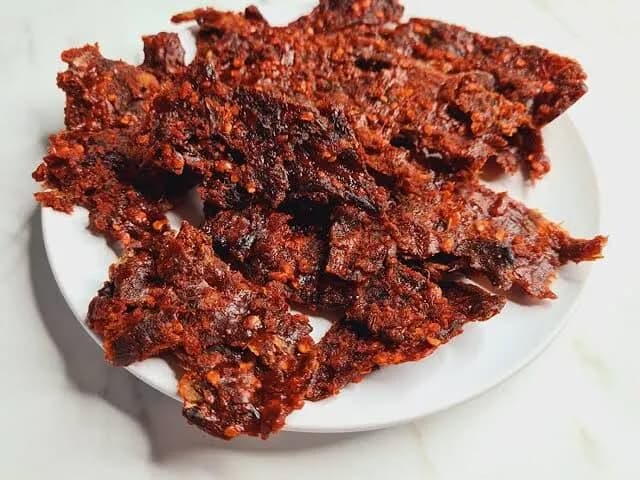
Kuli kuli is a peanut snack eaten across Nigeria, Benin, northern Cameroon and Ghana, and it is one of the most widely recognised street foods in West Africa. It is made from peanuts alone, and the technique is what makes it: the oil is deliberately pressed out of the ground paste before the remaining solids are shaped and fried.
That extraction is the point. Removing the oil leaves a dense, dry paste that fries into something genuinely crunchy rather than soft, and it also produces the frying oil as a by-product, so nothing is wasted. It is a piece of processing knowledge that predates industrial oil pressing and is still done by hand in Hausa communities in northern Nigeria, where the snack has its strongest association.
It takes different shapes in different places: small sticks, rings, flat discs and irregular pieces are all standard, and the form varies by region and by seller. English names for it, groundnut cake and peanut snack among them, are approximations rather than translations. Kuli kuli is eaten on its own, mixed into garri with sugar and water, crumbled over salad, or served alongside fura and koko. Crushed to a powder it becomes the peanut component of suya spice, which is where most people outside the region encounter it without knowing.
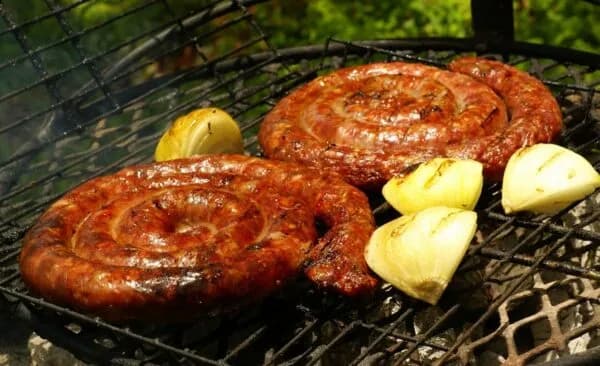
Boerewors is South Africa's sausage and one of the few foods in the world whose composition is set in law. Regulation requires at least 90 percent meat and caps the fat, which means anything sold under the name has to be the real thing. That is an unusual amount of legislative attention for a sausage and a reasonable measure of what it means to the country.
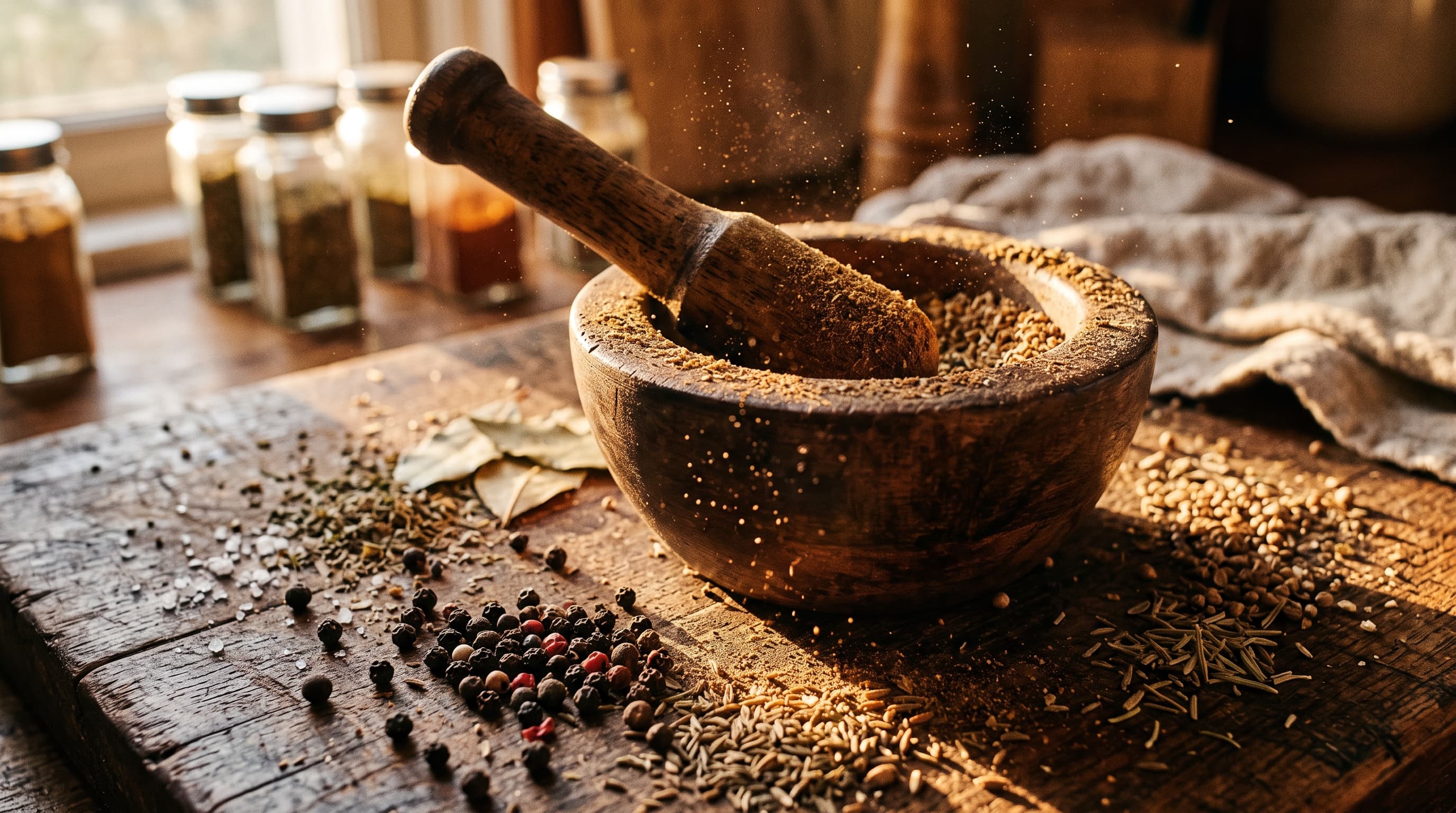
It is coarsely minced beef, often with pork or lamb, seasoned with coriander seed, black pepper, nutmeg, cloves and allspice, bound with vinegar and filled into a natural casing in one continuous spiral. The coriander is the note people recognise. The spiral is not decorative: boerewors is grilled whole in its coil and cut only after cooking, because the casing holds the juices and cutting it first dries the sausage out.
Its setting is the braai, and the braai is not a quick barbecue. It is an afternoon or an evening built around constructing a wood or charcoal fire and waiting for it to reach the right heat, during which a good deal of talking and drinking happens. When the braai master declares the fire ready, the meat takes half an hour and everything else has to be ready. For South Africans abroad, boerewors is the food most often named as the one they cannot get, which is why so many of them learn to make it.
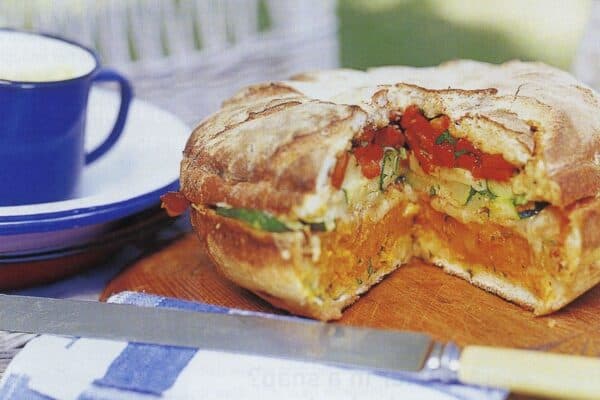
Picnic bread is a South African savoury quick bread, heavy with cheese, spring onion and bacon, bound with egg, and made to be eaten cold in a slice with nothing on it.
The category matters. It is a quick bread, raised chemically rather than with yeast, which means no proving and no kneading. Everything is mixed and baked. That is much of why it exists: it is a bread that can be made in an evening for the next day without planning.
Its association is with food carried away from home. It is described as an old recipe favoured by fishermen for their packed lunches and by schoolchildren, and the reasoning is visible in the recipe itself. It needs no butter because there is enough fat in it already. It holds together in a slice rather than crumbling. It does not dry out the way a plain loaf does. And it is dense enough that one slice is a meal rather than an accompaniment, which is exactly what you want on a boat or a long day out.
The texture is unusual for a bread. It is moist, almost pudding-like in the middle, without being heavy, and the cheese keeps it soft for days.
It is honest about what it is: nobody has ever pretended this is a low-fat recipe.