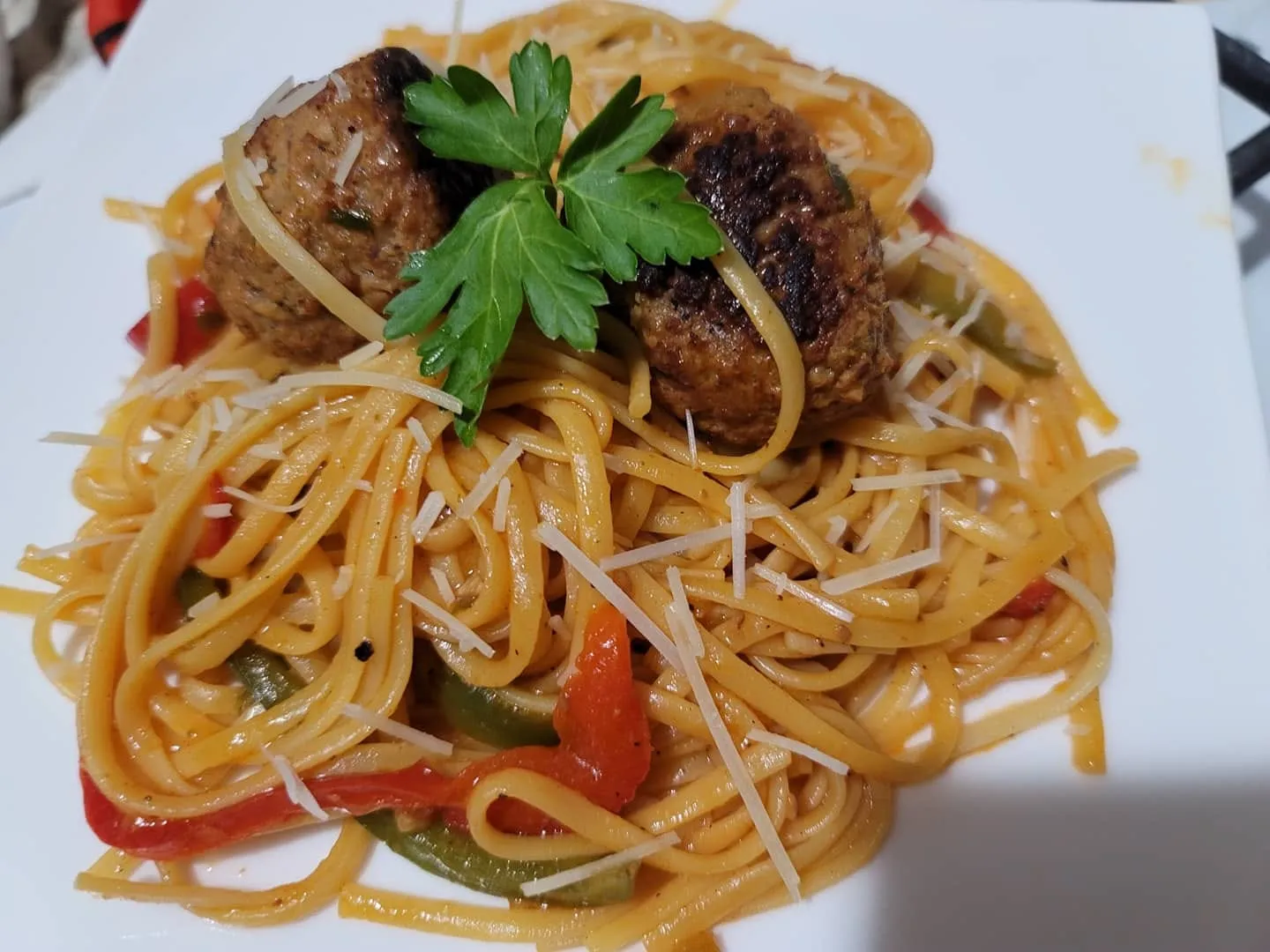
Dominican Spaghetti
4.54.5 out of 5, 4 ratings30 min


Cookies sur African Food Network
Nous utilisons des cookies essentiels au fonctionnement du site. Nous aimerions aussi déposer des cookies de mesure d’audience et des cookies publicitaires, uniquement avec votre accord. Vous pouvez choisir séparément pour chacun. Lire notre politique relative aux cookies

Parcourez les archives par pays, par plat et par temps de cuisson.
Dominican spaghetti is a Caribbean dish, not an African one, and the distinction matters on a platform documenting African food. It belongs to the Dominican Republic, where Italian migrants arriving in the late nineteenth and early twentieth centuries brought pasta into a kitchen that already had its own strong idea of what a tomato sauce should be. What resulted is recognisably Dominican rather than Italian. The base is sofrito, the sautéed onion, pepper, garlic and coriander mixture that underpins cooking across the Spanish speaking Caribbean, and the sauce carries green olives, capers and raisins alongside beef, pork or shredded chicken. That combination of briny, sweet and savoury in one sauce is a Hispanic Caribbean signature with roots reaching back through Spain to the Moorish kitchens of North Africa. That last connection is the only thread linking this dish to the continent, and it is a long and indirect one. Dominican spaghetti is presented here as what it is, a Caribbean pasta dish rather than an African one, and it sits in the Worldwide Recipes collection for that reason.
Les mieux notées
30 minEasyDominican Republic
Recette de Debby · Africook
Rien ici pour le moment
Tout effacer