Nous utilisons des cookies essentiels au fonctionnement du site. Nous aimerions aussi déposer des cookies de mesure d’audience et des cookies publicitaires, uniquement avec votre accord. Vous pouvez choisir séparément pour chacun. Lire notre politique relative aux cookies
Loading
Recettes
Parcourez les archives par pays, par plat et par temps de cuisson.
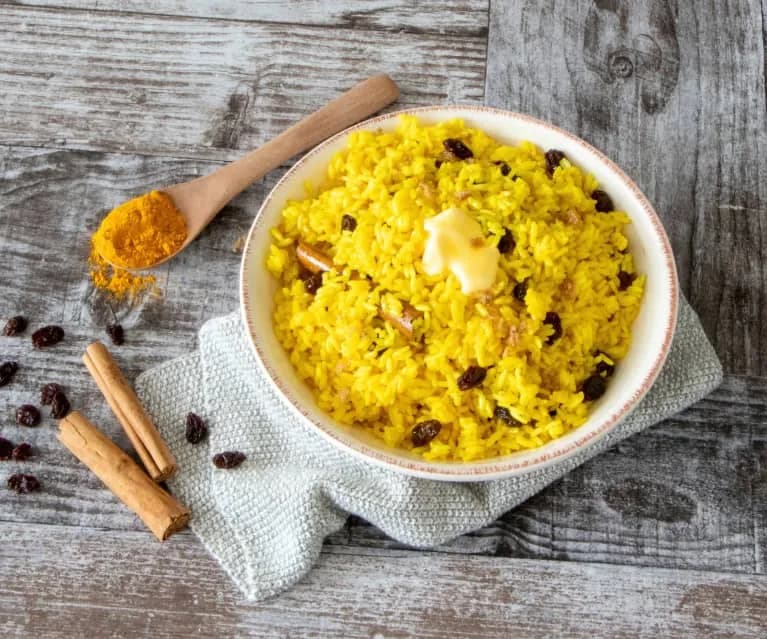
Rice cooked with turmeric, cinnamon, raisins and sugar into a sweet golden side dish. It is South African, from the Cape Malay tradition, and it is served alongside savoury curries and meat.
Sweet rice as a savoury accompaniment is the thing to understand. Cape Malay yellow rice contains sugar, raisins and cinnamon, and it goes with curry, bobotie and roast meat, the sweetness is deliberately set against savoury and spiced food rather than served as a dessert. That contrast runs right through Cape Malay cooking and it is the same instinct behind bobotie's fruit chutney and the apricot jam in pickled fish.
The community it comes from was formed by people brought to the Cape from Southeast Asia as slaves and political exiles by the Dutch from the seventeenth century onwards, and the dish is one of many that carries that history directly. Related yellow rices exist across the world, nasi kuning in Indonesia, kaha buth in Sri Lanka, and the family resemblance is not coincidental.
Turmeric is what colours it. Saffron is used in more expensive versions and annatto elsewhere.
**A significant problem with this page.** Its ingredient list merges two separate recipes, a yellow rice and a marinated roast chicken, into one list, and its method covers both. Only the rice belongs here.
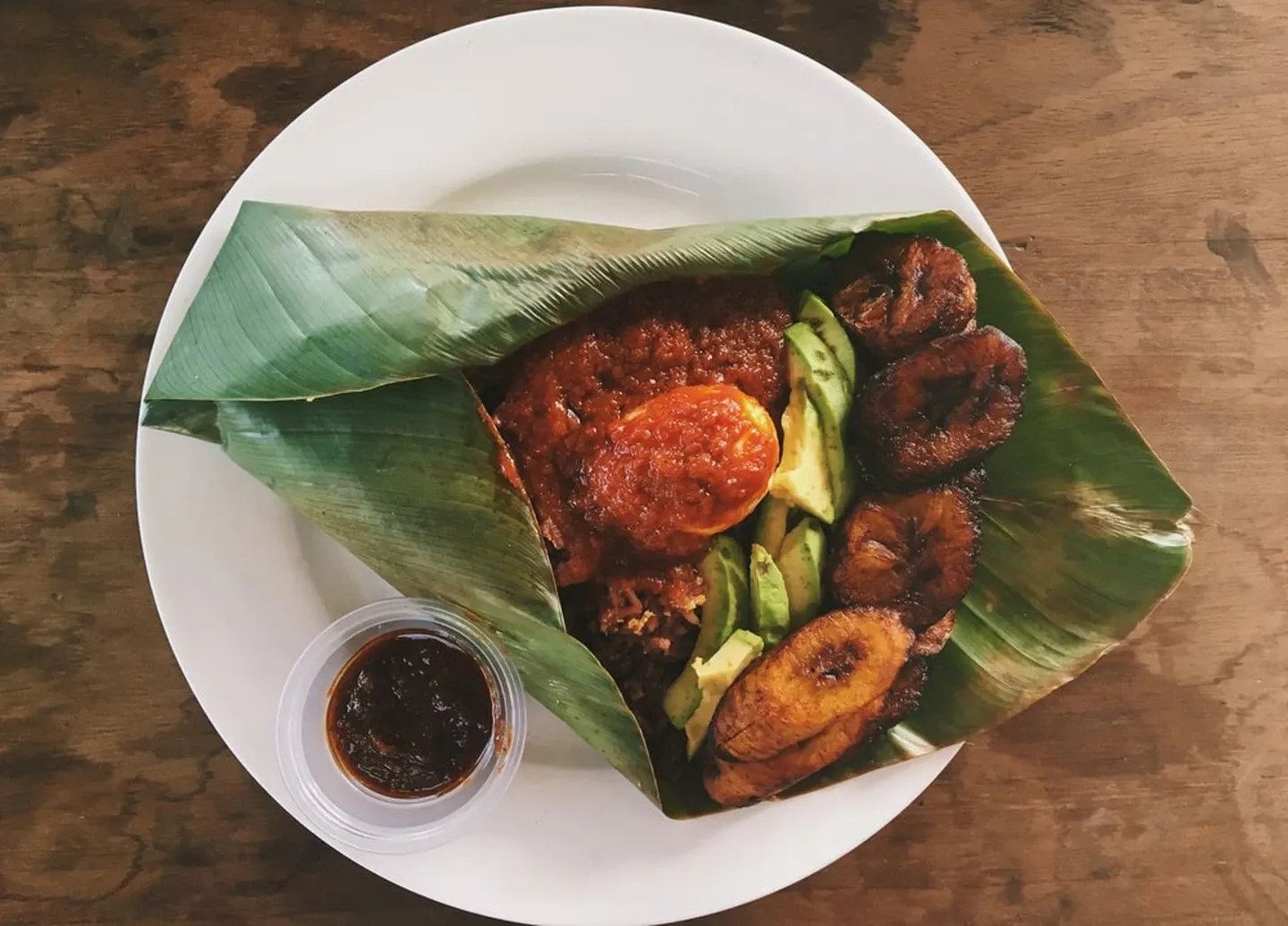
Waakye is rice and beans cooked together with dried millet or sorghum stalk leaves, which leach a deep reddish brown into the grain and give the dish both its colour and its name. It is Ghana's most loved street breakfast, and in Accra and Kumasi the waakye seller is a neighbourhood institution whose location is known, whose quality is debated and whose loyalty is genuinely held.
Sellers begin before dawn and often sell out by mid morning. The dish is bought wrapped in leaves and assembled to the customer's specification from a wide spread of accompaniments: shito, the dark Ghanaian pepper and fish sauce, gari, egg, spaghetti known as talia, fried plantain, avocado, salad, stew and fried fish or meat. A full waakye plate is substantial enough to carry someone through a working day, which is precisely what it is for.
The waakye leaf is the ingredient that cannot be substituted. It is the dried leaf sheath of a West African sorghum, called poporo oka in Yoruba and adako in Togo, and it functions as a colourant rather than a flavouring, with the quantity used determining how deep the colour runs. Black eyed beans are traditional and jasmine rice is the Ghanaian preference. The dish is eaten across West Africa under other names, as wanke in Lagos and ayimolou in Togo.
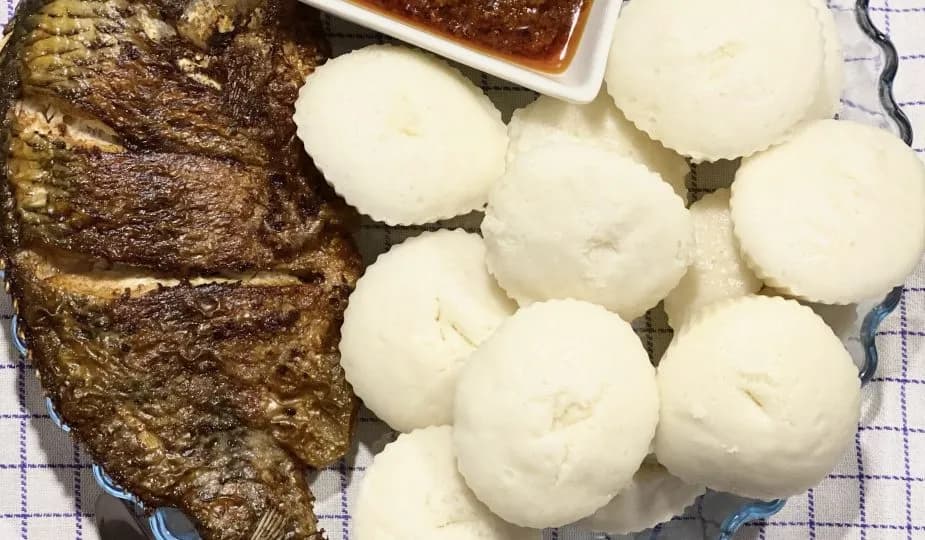
Ablo, also written abolo, is a steamed rice cake with a light, springy crumb, eaten across the coastal stretch of West Africa where Togo, Benin, Ghana and Côte d'Ivoire meet. It is white, faintly sweet, faintly sour, and built to be torn and dipped.
Its texture is the result of fermentation rather than of any raising agent alone. Rice is soaked, ground and left to rise, and the sourness that develops in that time is the difference between an ablo and a plain steamed dumpling. In Benin the cakes are steamed wrapped in banana leaf bundles, which leaves a green, faintly grassy note that a metal mould cannot give.
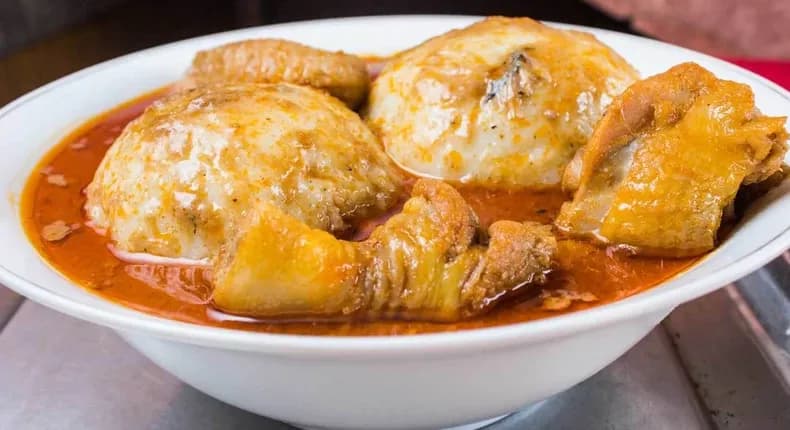
Ablo occupies the position that bread occupies elsewhere: it is the mild thing on the plate that the sauce is for. It is eaten with thick stews and grilled fish, and it belongs equally to a party table and a home meal. In a food culture where most starches are pounded or stirred, a steamed and leavened cake is a distinct approach, and one that Togolese, Beninese, Ghanaian and Ivorian cooks share across their borders.
Pilau is the spiced rice of the East African coast: rice cooked with cumin, cardamom, cloves, cinnamon and turmeric until every grain carries the spice. It is celebration food across Kenya, Tanzania, Uganda and Zanzibar, made for weddings, for Eid, and whenever a guest of consequence arrives.
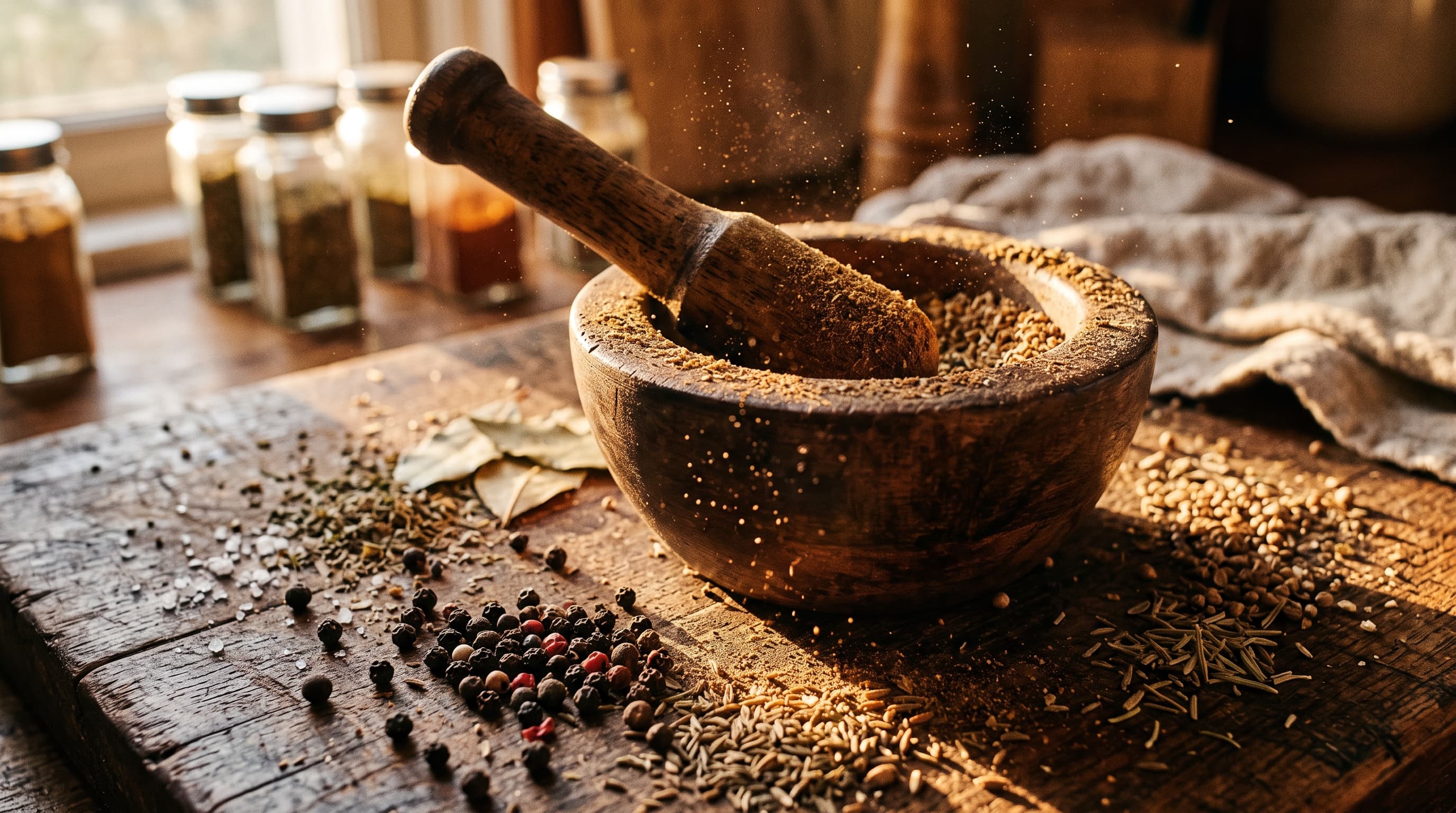
It reached the Swahili coast through centuries of Indian Ocean trade, and the family it belongs to runs from Persian polow through Central Asian plov to South Asian pulao. The East African version is milder than the Indian one and does not use curry, which is the distinction the source draws and it is a fair one. The defining spice mix has its own name, pilau masala, and there is a recipe for it on this site.
An important note about this page. Its written description is of a full pilau: caramelised beef, potatoes, tomatoes and pilau masala simmered in meat stock. The recipe card attached to it is something else entirely, a plain spiced rice with no meat, no potatoes and no stock. The recipe below follows the card, since that is the actual recipe on the page, and the result is a good vegetarian side dish. It is not, however, the celebratory beef pilau the description promises.
Browning the onions properly is the step that matters most in either version.
Les mentions alimentaires sont fournies par les contributeurs à titre indicatif. Elles ne sont pas vérifiées par AFN et dépendent des produits que vous achetez. En cas d’allergie grave, vérifiez vous-même chaque ingrédient. Cuisine, allergies et votre propre jugement