Nous utilisons des cookies essentiels au fonctionnement du site. Nous aimerions aussi déposer des cookies de mesure d’audience et des cookies publicitaires, uniquement avec votre accord. Vous pouvez choisir séparément pour chacun. Lire notre politique relative aux cookies
Loading
Recettes
Parcourez les archives par pays, par plat et par temps de cuisson.
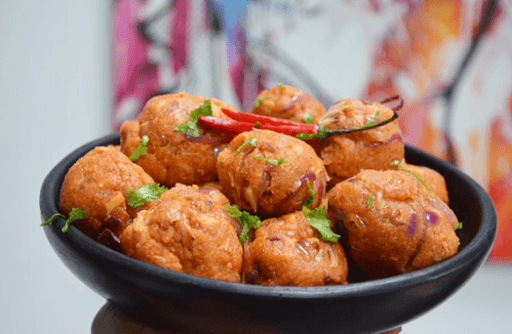
Fried yam is called dundun in Yoruba, and it is one of the most eaten street foods in Nigeria. Yam is peeled, cut into thick chips, salted and fried until the outside crisps and the inside stays soft and floury. It is sold from roadside stands with a pepper sauce, and it is eaten at breakfast, at lunch and late at night.
Yam is the crop that Nigeria produces more of than anywhere else in the world, and dundun is the most direct thing to do with it. It costs almost nothing, needs three ingredients, and the frying takes minutes. That combination is what makes it street food: a vendor with a pot of oil and a sack of yam is in business.
Its usual partner is akara, the fried bean cake, and the pairing of dundun and akara with a ground pepper sauce is a standard Nigerian breakfast. It is also eaten with egg sauce, with fried fish, with stew, or on its own. The word dundun covers the fried treatment specifically, as distinct from the plain, pounded and porridge treatments of the same tuber, each of which occupies its own place on the Nigerian table.
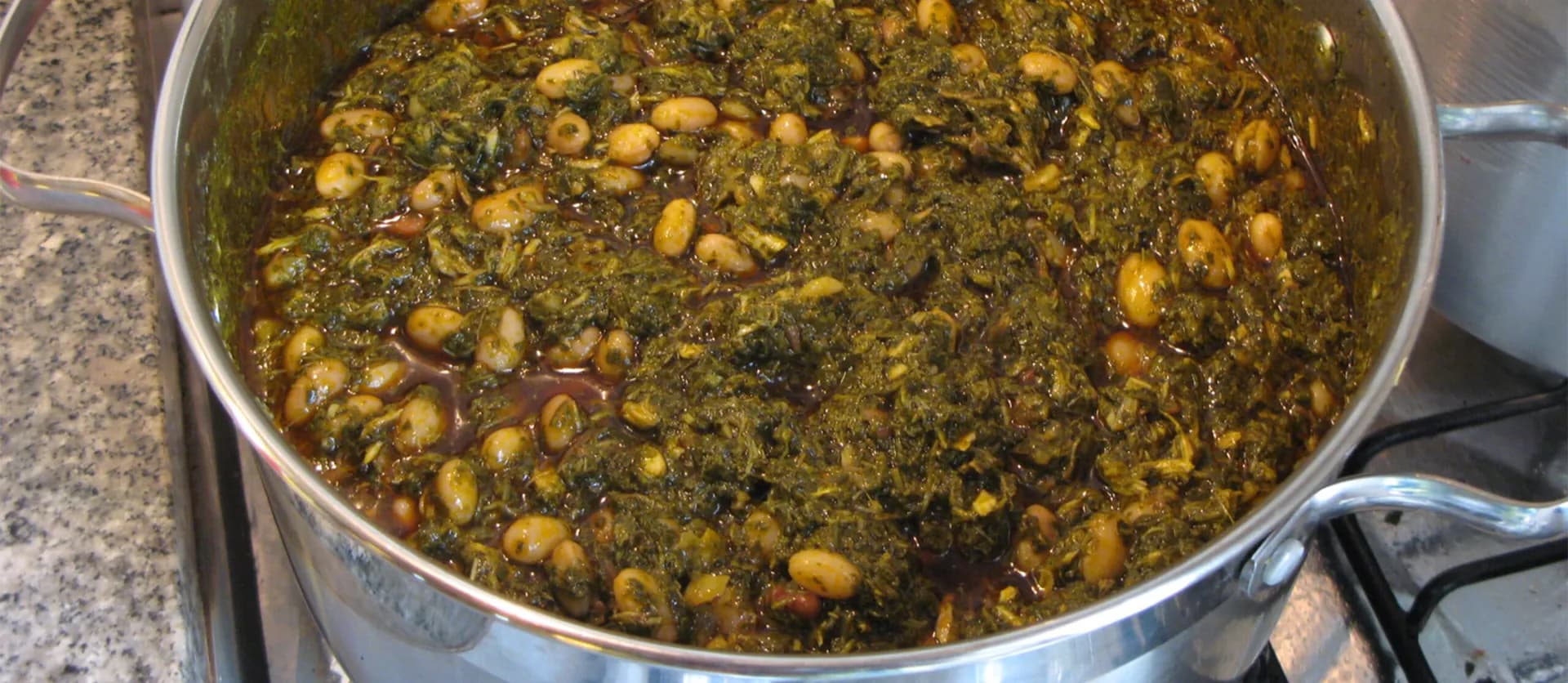
Dried white beans cooked until tender, then finished with red onion and sliced tomatoes into a thick, soupy stew. It is Malagasy, and it is served everywhere on the island.
It is laoka, which is the useful word here. In Malagasy eating, rice is the meal and laoka is whatever accompanies it, the thing that goes on top of, or beside, a large plate of rice. Tsaramaso is one of the most popular laoka in the country, and it is eaten as a matter of course rather than as an occasion dish.
It is very often not vegetarian. Zebu meat, the humped cattle that are central to Malagasy life, makes it hen'omby sy tsaramaso, and pork makes it tsaramaso sy henakisoa. The shank is the cut the source recommends. This version is the plain one, which is also widely eaten.
The technique in the recipe is worth noting: the beans are cooked separately in water, seasoned only at the end, and a cup of their cooking liquid is kept back. That liquid is what the finished stew is loosened with, and it carries starch and flavour that plain water would not.
The source compares it to cassoulet, which is a reasonable shorthand, beans and meat cooked long and slow, though the seasoning is entirely different.
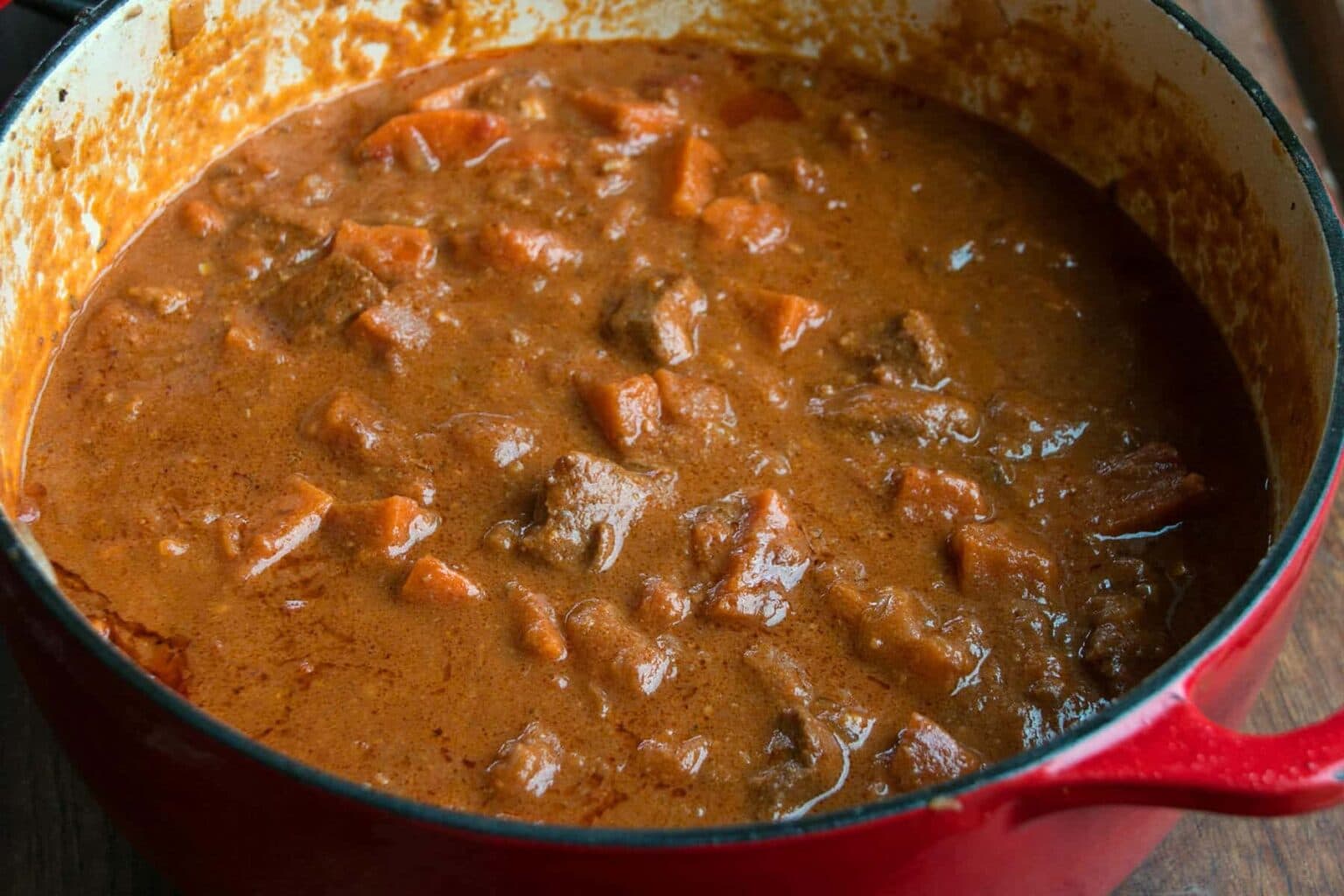
Domada, also written Domoda, is Gambia's national dish and one of West Africa's most comforting stews, a rich, thick groundnut (peanut) based stew cooked with chicken or beef, tomatoes, sweet potato, and cabbage. The peanut paste dissolves into the broth as it cooks, creating a silky, deeply flavoured sauce that coats every piece of protein and vegetable in the pot. The dish belongs to the family of West African groundnut soups found across Senegal, Ghana, Nigeria, and Cameroon, but Domada has its own character, sweeter from the potato, more mellow than the spicier Ghanaian versions, and always generous in the quantity of groundnut used. In Gambia it is eaten at celebrations, family gatherings, and as everyday home cooking.
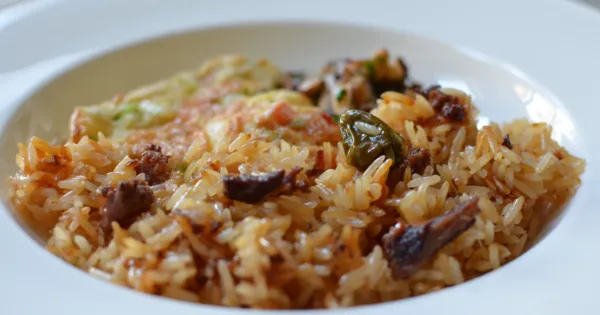
Goat Gari Pinon is a robust Ghanaian dish where spiced, slow-cooked goat meat is served over or mixed with gari, dried, fermented, and toasted cassava flakes, creating a satisfying combination of tender, boldly seasoned meat and the slightly sour, grainy texture of the gari absorbing all the cooking juices. The dish is deeply practical in its origins: gari is a preserved, shelf-stable staple that can absorb liquid and flavour readily, making it an ideal accompaniment to richly cooked meats. The combination of goat meat and gari is a classic of Ghanaian home cooking and street food culture.