Nous utilisons des cookies essentiels au fonctionnement du site. Nous aimerions aussi déposer des cookies de mesure d’audience et des cookies publicitaires, uniquement avec votre accord. Vous pouvez choisir séparément pour chacun. Lire notre politique relative aux cookies

Loading
Recettes
Parcourez les archives par pays, par plat et par temps de cuisson.
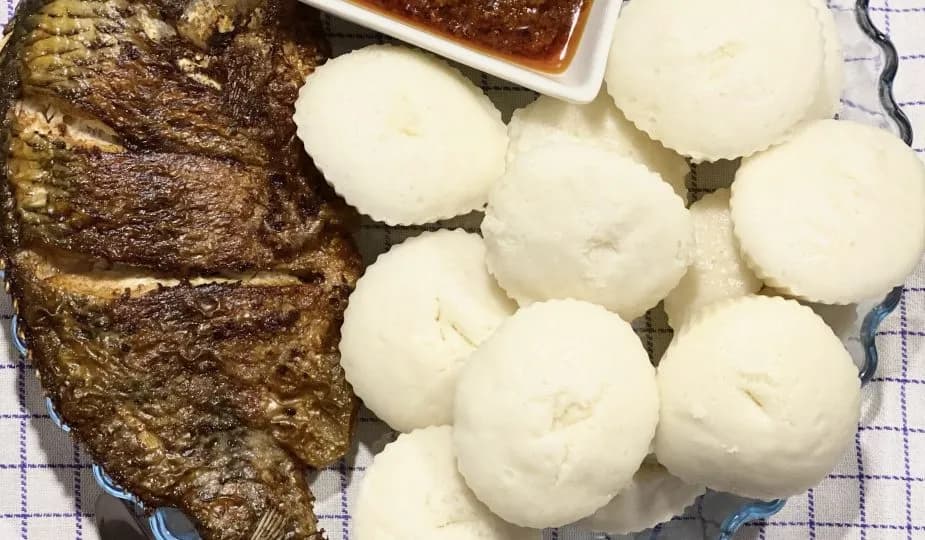
Dan wake is a northern Nigerian dish of dumplings made from bean flour and kuka, the powdered leaf of the baobab tree. The name translates from Hausa as son of beans, and the dumplings cook in water until they float, then are drained and dressed with oil and spice, and eaten with a salad of raw vegetables and hard egg.
Kuka is what colours it and what makes it northern. Baobab leaf powder is used across the Sahel as a thickener and a green vegetable, and its slightly mucilaginous quality helps bind the bean flour dough. Potash, kanwa, is the third component, a traditional alkaline salt used across West African cooking to soften and to alter texture, and it is what gives dan wake its particular chew.
It is deliberately plain on its own. The dumplings carry almost no seasoning and rely entirely on what is put on them: yaji, the peanut based suya spice, fried oil, sliced onion, cabbage, tomato and cucumber, and often a sauce alongside. That construction, a neutral base plus an assertive dressing, is common across northern Nigerian street food and it is why dan wake is sold from stalls rather than mainly cooked at home.
Black-eyed peas soaked, cooked until tender and seasoned with salt. That is the entire recipe, and it is deliberately so: this is the base that a great many Nigerian bean dishes are built from, and it is eaten plainly in its own right.
In Nigerian usage, beans without further qualification usually means black-eyed peas, ewa in Yoruba, agwa in Igbo, wake in Hausa. They are indigenous to West Africa, domesticated there thousands of years ago and carried to the Americas through the transatlantic slave trade, which is why they are as central to Southern American cooking as to Nigerian.
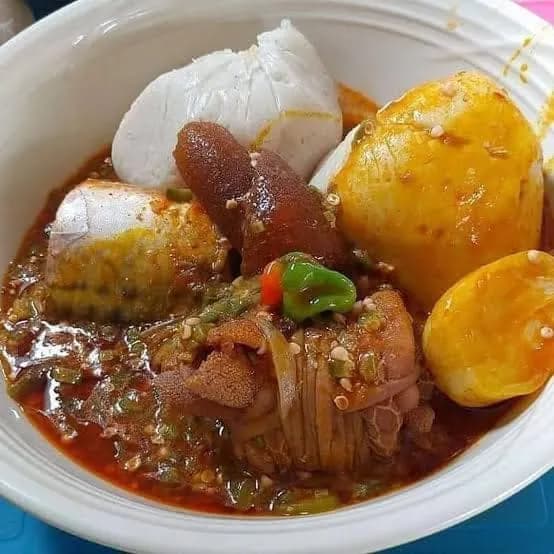
Eaten plainly, boiled beans go with a pepper sauce, fried plantain, fried yam or bread, and that combination, beans and bread, beans and dodo, is everyday food across the country. From this same pot come the more elaborate dishes: ewa agoyin with its dark fried pepper sauce, honey beans, beans porridge.
Two things in the method deserve keeping. Picking through dried beans for stones is not fussiness, small stones do get through commercial sorting and they break teeth. And salting only at the end is correct, because salt added early toughens the skins and lengthens the cooking considerably.
The source's extensive nutritional and weight-loss claims have not been carried across.
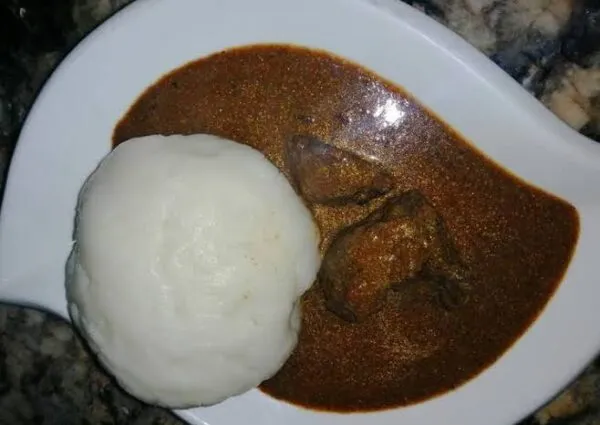
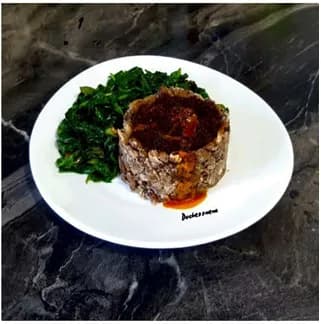
Tuwon masara is maize swallow, and the name is Hausa and literal: tuwo for the cooked mass, masara for maize. It is one of the everyday staples of Northern Nigeria and among the plainest things the region cooks, which is entirely by design.
It is the same family as tuwon dawa, made from guinea corn, and tuwon shinkafa, made from rice, and Hausa households treat the three as distinct rather than interchangeable. Masara gives a paler, milder, slightly sweeter tuwo than dawa, and it is the version most commonly compared to polenta by people trying to explain it. The comparison is fair on ingredient and misleading on treatment: polenta is seasoned and enriched, while tuwon masara is cooked in plain water with nothing added, because its job is to carry the soup rather than to compete with it.
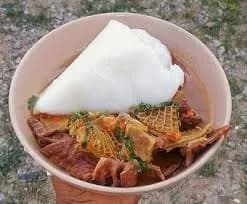
That is what the northern soups are for. Miyan wake made from beans, miyan taushe with pumpkin and groundnut, miyan zogale from moringa, miyan kuka from baobab leaf, miyan ridi from sesame. Tuwon masara goes with any of them, and with any Nigerian soup from further south. The corn is dried, ground to a medium consistency and sieved fine, and the resulting flour is stirred into boiling water and worked smooth.
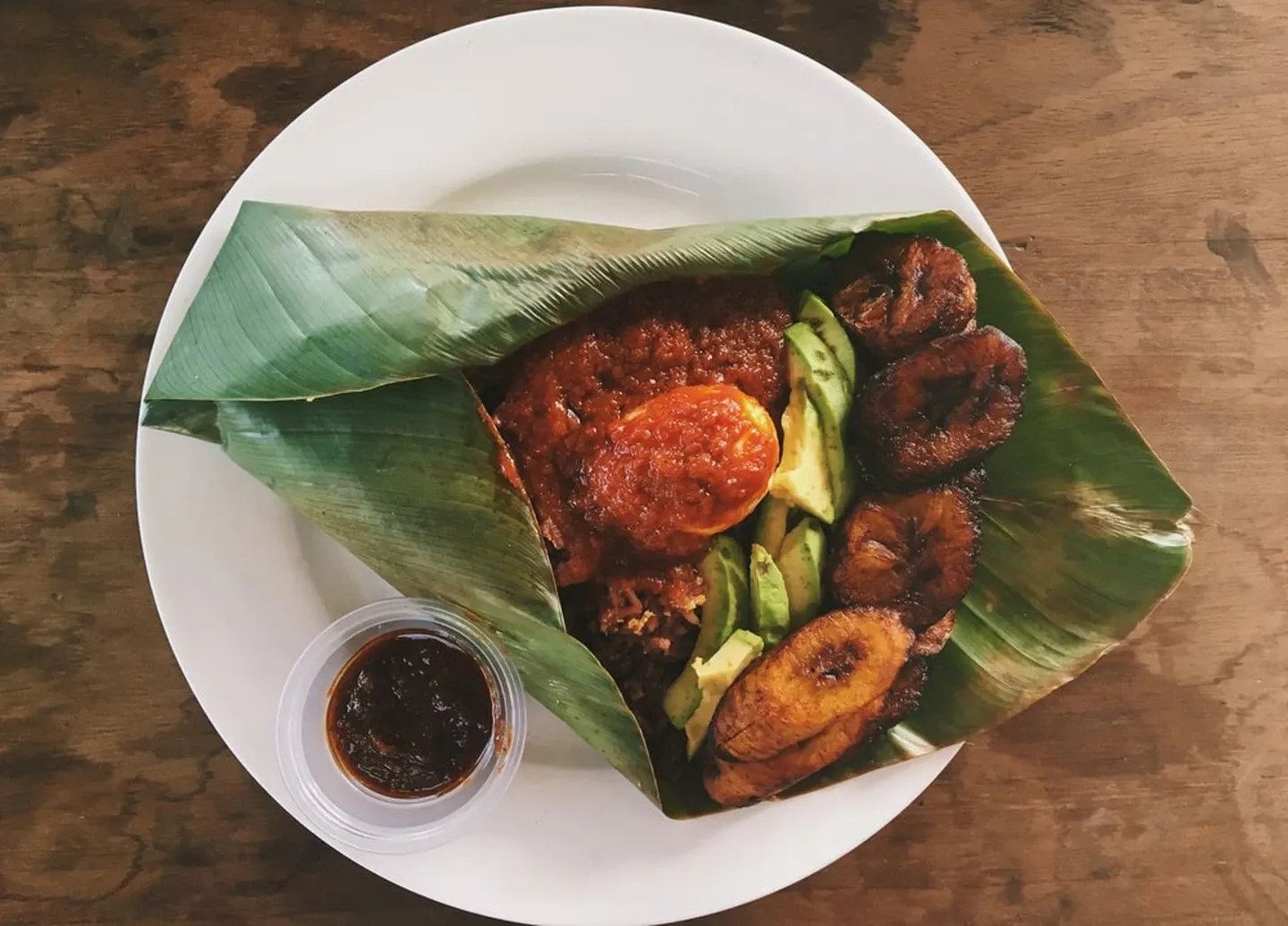
Waakye is rice and beans cooked together with dried millet or sorghum stalk leaves, which leach a deep reddish brown into the grain and give the dish both its colour and its name. It is Ghana's most loved street breakfast, and in Accra and Kumasi the waakye seller is a neighbourhood institution whose location is known, whose quality is debated and whose loyalty is genuinely held.
Sellers begin before dawn and often sell out by mid morning. The dish is bought wrapped in leaves and assembled to the customer's specification from a wide spread of accompaniments: shito, the dark Ghanaian pepper and fish sauce, gari, egg, spaghetti known as talia, fried plantain, avocado, salad, stew and fried fish or meat. A full waakye plate is substantial enough to carry someone through a working day, which is precisely what it is for.
The waakye leaf is the ingredient that cannot be substituted. It is the dried leaf sheath of a West African sorghum, called poporo oka in Yoruba and adako in Togo, and it functions as a colourant rather than a flavouring, with the quantity used determining how deep the colour runs. Black eyed beans are traditional and jasmine rice is the Ghanaian preference. The dish is eaten across West Africa under other names, as wanke in Lagos and ayimolou in Togo.
Les mentions alimentaires sont fournies par les contributeurs à titre indicatif. Elles ne sont pas vérifiées par AFN et dépendent des produits que vous achetez. En cas d’allergie grave, vérifiez vous-même chaque ingrédient. Cuisine, allergies et votre propre jugement