Nous utilisons des cookies essentiels au fonctionnement du site. Nous aimerions aussi déposer des cookies de mesure d’audience et des cookies publicitaires, uniquement avec votre accord. Vous pouvez choisir séparément pour chacun. Lire notre politique relative aux cookies
Loading
Recettes
Parcourez les archives par pays, par plat et par temps de cuisson.
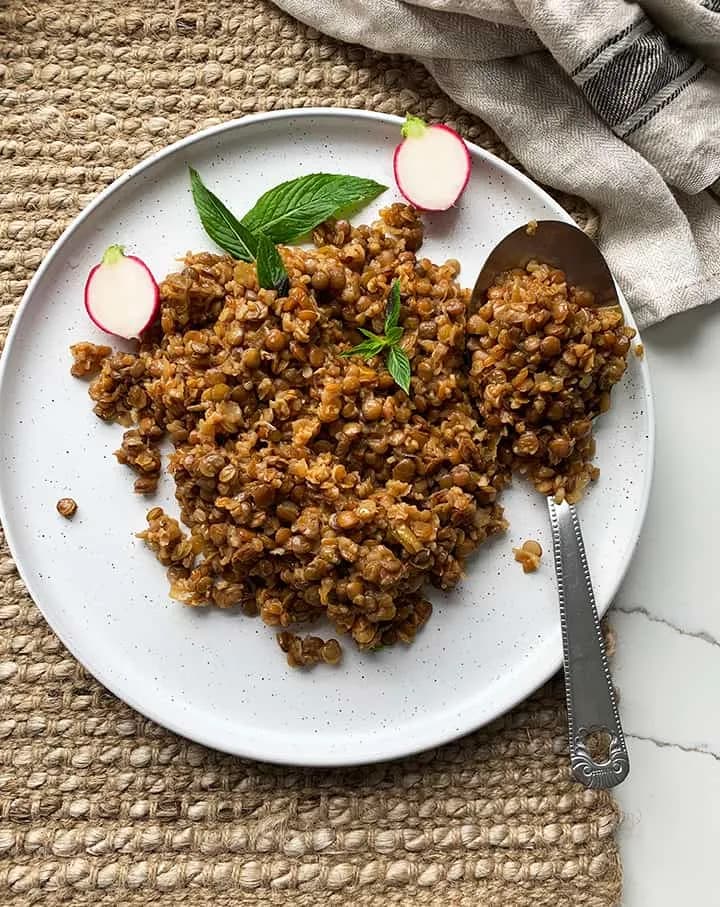
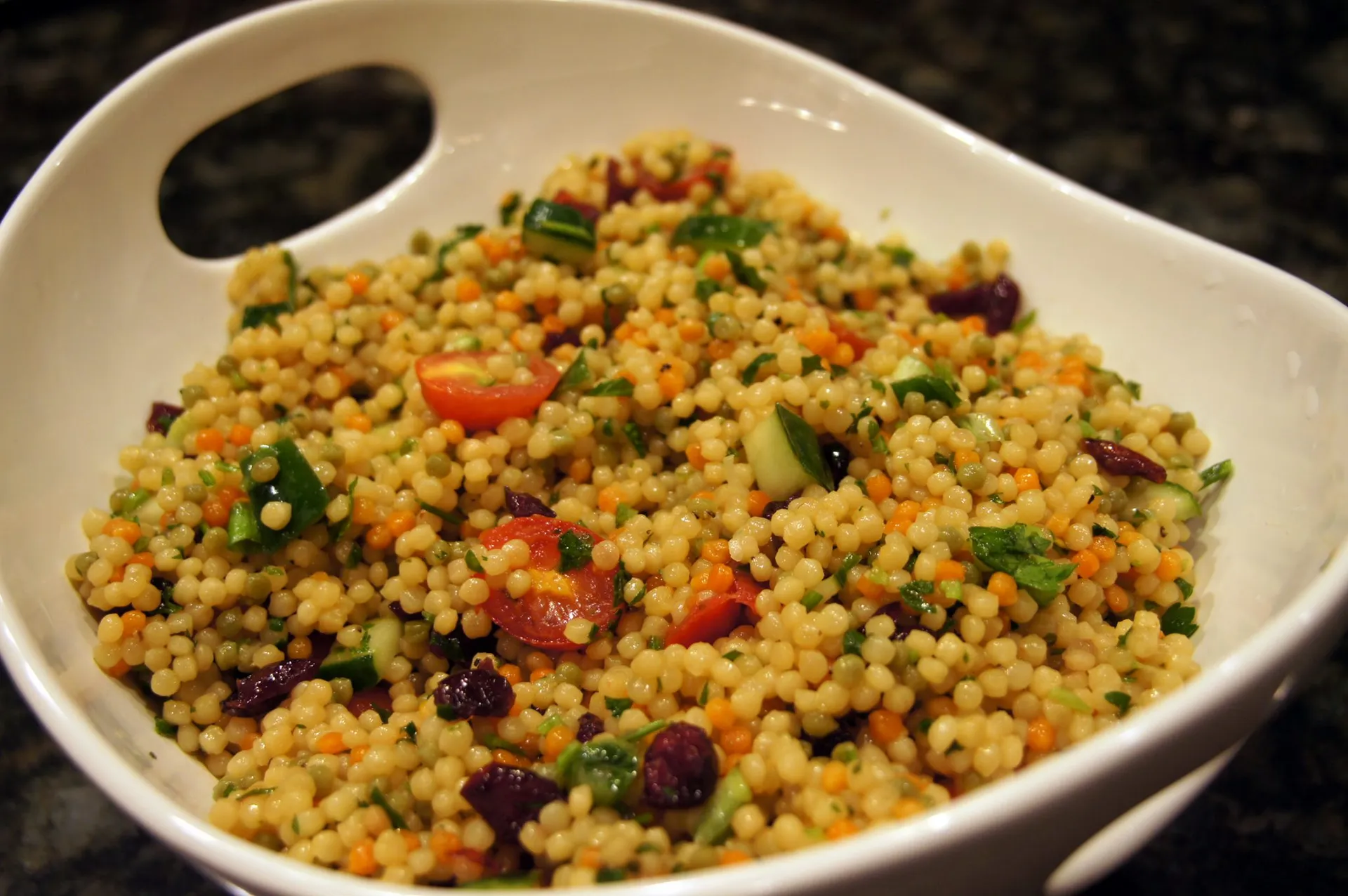
Mujadara is lentils and rice cooked together and topped with deeply caramelised onions, and the source names it a signature Middle Eastern dish. It belongs to the Levant rather than to Africa, and it sits in Worldwide Recipes for that reason.
The name is unflattering and accurate. In Arabic mujaddara means riddled with small holes, or pockmarked, and it describes the appearance of the lentils scattered through the rice. It is nicknamed the dish of the poor everywhere it is eaten, because it contains no meat and nothing expensive, and the source makes a fair comparison: mujadara is to the Middle East what couscous is to the Maghreb.
Its age is what makes attribution impossible. The first recorded recipe goes back centuries, and as the source observes, the older and simpler a dish is, the more cultures claim its paternity. What matters technically is the onions: they need to be fried until the edges genuinely curl and darken, and the flavoured oil they leave behind is poured into the pot without them, so the onions stay crisp on top rather than softening into the rice.
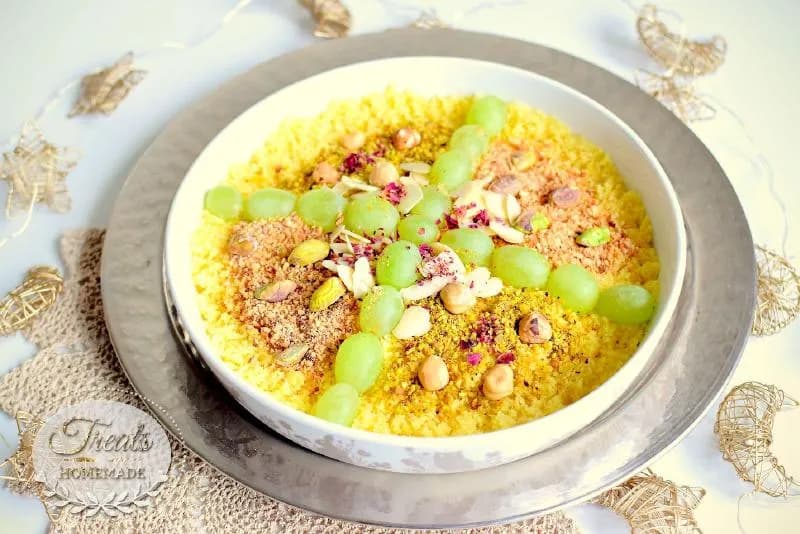
Masfouf is steamed couscous sweetened with milk and honey and mixed with dates, raisins, nuts and banana, layered with a vanilla custard. It is Tunisian and it belongs to Ramadan.
It is the sweet counterpart to Tunisian couscous, which is otherwise a savoury dish, and that inversion is the whole idea, the same grain, the same steaming technique, turned into a dessert or a breakfast. During Ramadan it appears at suhoor, the meal before dawn, because it is filling and sustaining, and at iftar as a sweet.
Geranium water is the ingredient that places it. Distilled from scented geranium leaves, it is used across Tunisian sweets in the way rose water and orange blossom water are used further east, and it has a green, faintly citrus perfume that neither of those reproduces. Middle Eastern and North African grocers stock it.
Steaming the couscous properly rather than pouring boiling water over it is what the recipe asks for, and it is the difference between light separate grains and a claggy mass. This is a dessert made from properly cooked couscous rather than instant.
**It contains almonds and walnuts, which the title gives no indication of.**
The source's ingredient list repeats milk, honey and geranium water without indicating that the second set belongs to the custard.
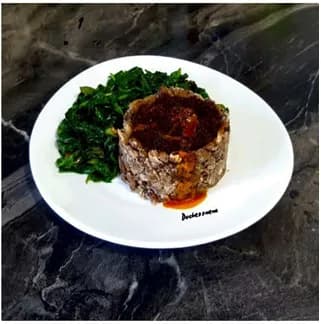
Black-eyed peas soaked, cooked until tender and seasoned with salt. That is the entire recipe, and it is deliberately so: this is the base that a great many Nigerian bean dishes are built from, and it is eaten plainly in its own right.
In Nigerian usage, beans without further qualification usually means black-eyed peas, ewa in Yoruba, agwa in Igbo, wake in Hausa. They are indigenous to West Africa, domesticated there thousands of years ago and carried to the Americas through the transatlantic slave trade, which is why they are as central to Southern American cooking as to Nigerian.
Eaten plainly, boiled beans go with a pepper sauce, fried plantain, fried yam or bread, and that combination, beans and bread, beans and dodo, is everyday food across the country. From this same pot come the more elaborate dishes: ewa agoyin with its dark fried pepper sauce, honey beans, beans porridge.
Two things in the method deserve keeping. Picking through dried beans for stones is not fussiness, small stones do get through commercial sorting and they break teeth. And salting only at the end is correct, because salt added early toughens the skins and lengthens the cooking considerably.
The source's extensive nutritional and weight-loss claims have not been carried across.
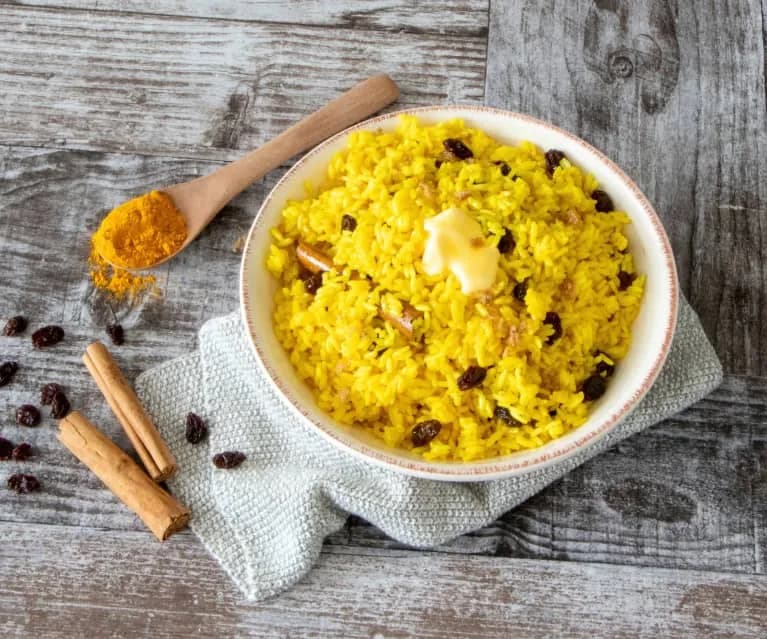
Rice cooked with turmeric, cinnamon, raisins and sugar into a sweet golden side dish. It is South African, from the Cape Malay tradition, and it is served alongside savoury curries and meat.
Sweet rice as a savoury accompaniment is the thing to understand. Cape Malay yellow rice contains sugar, raisins and cinnamon, and it goes with curry, bobotie and roast meat, the sweetness is deliberately set against savoury and spiced food rather than served as a dessert. That contrast runs right through Cape Malay cooking and it is the same instinct behind bobotie's fruit chutney and the apricot jam in pickled fish.
The community it comes from was formed by people brought to the Cape from Southeast Asia as slaves and political exiles by the Dutch from the seventeenth century onwards, and the dish is one of many that carries that history directly. Related yellow rices exist across the world, nasi kuning in Indonesia, kaha buth in Sri Lanka, and the family resemblance is not coincidental.
Turmeric is what colours it. Saffron is used in more expensive versions and annatto elsewhere.
**A significant problem with this page.** Its ingredient list merges two separate recipes, a yellow rice and a marinated roast chicken, into one list, and its method covers both. Only the rice belongs here.
Les mentions alimentaires sont fournies par les contributeurs à titre indicatif. Elles ne sont pas vérifiées par AFN et dépendent des produits que vous achetez. En cas d’allergie grave, vérifiez vous-même chaque ingrédient. Cuisine, allergies et votre propre jugement