Nous utilisons des cookies essentiels au fonctionnement du site. Nous aimerions aussi déposer des cookies de mesure d’audience et des cookies publicitaires, uniquement avec votre accord. Vous pouvez choisir séparément pour chacun. Lire notre politique relative aux cookies
Loading
Recettes
Parcourez les archives par pays, par plat et par temps de cuisson.
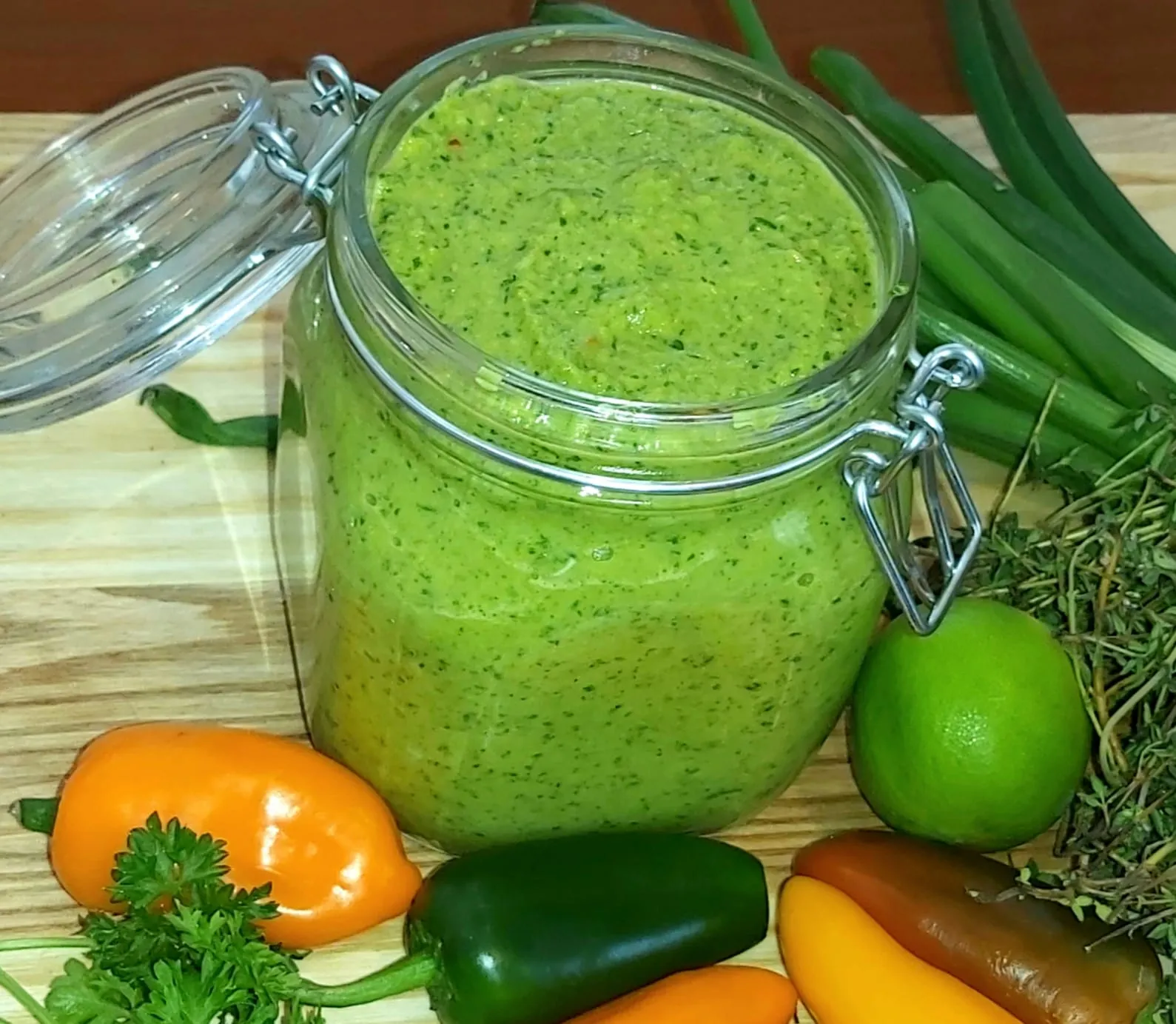
Green seasoning is a blended paste of fresh herbs, aromatics and chilli, used across the Caribbean as an all-purpose marinade and flavour base. Trinidad and Tobago is where it is most identified, and Guyana, Jamaica and the wider region all have versions.
The source describes it as known to the Caribbean and some parts of Africa, which is a fair way of putting it. Its home is the Caribbean. What it resembles in Africa is a family of green pastes that do similar work: Senegalese nokoss, Moroccan chermoula, and the blended pepper bases used across West Africa. Those are related in function rather than in origin, and green seasoning as it is made here is Caribbean.
It goes on everything: meat, seafood, grains, stews. Composition varies enormously by household and island, and the version here is a modest one built on parsley, coriander, celery, onion, garlic, scotch bonnet and thyme. Bigger versions include chive, culantro, pimento peppers and ginger. It keeps about a week refrigerated, and freezing it in ice cube trays is the standard way to hold a large batch, which is how most Caribbean kitchens handle it.
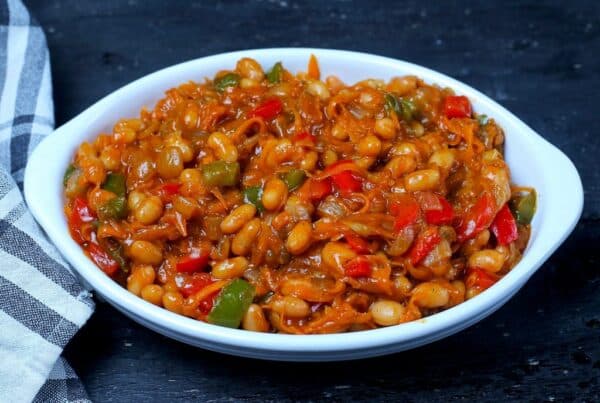
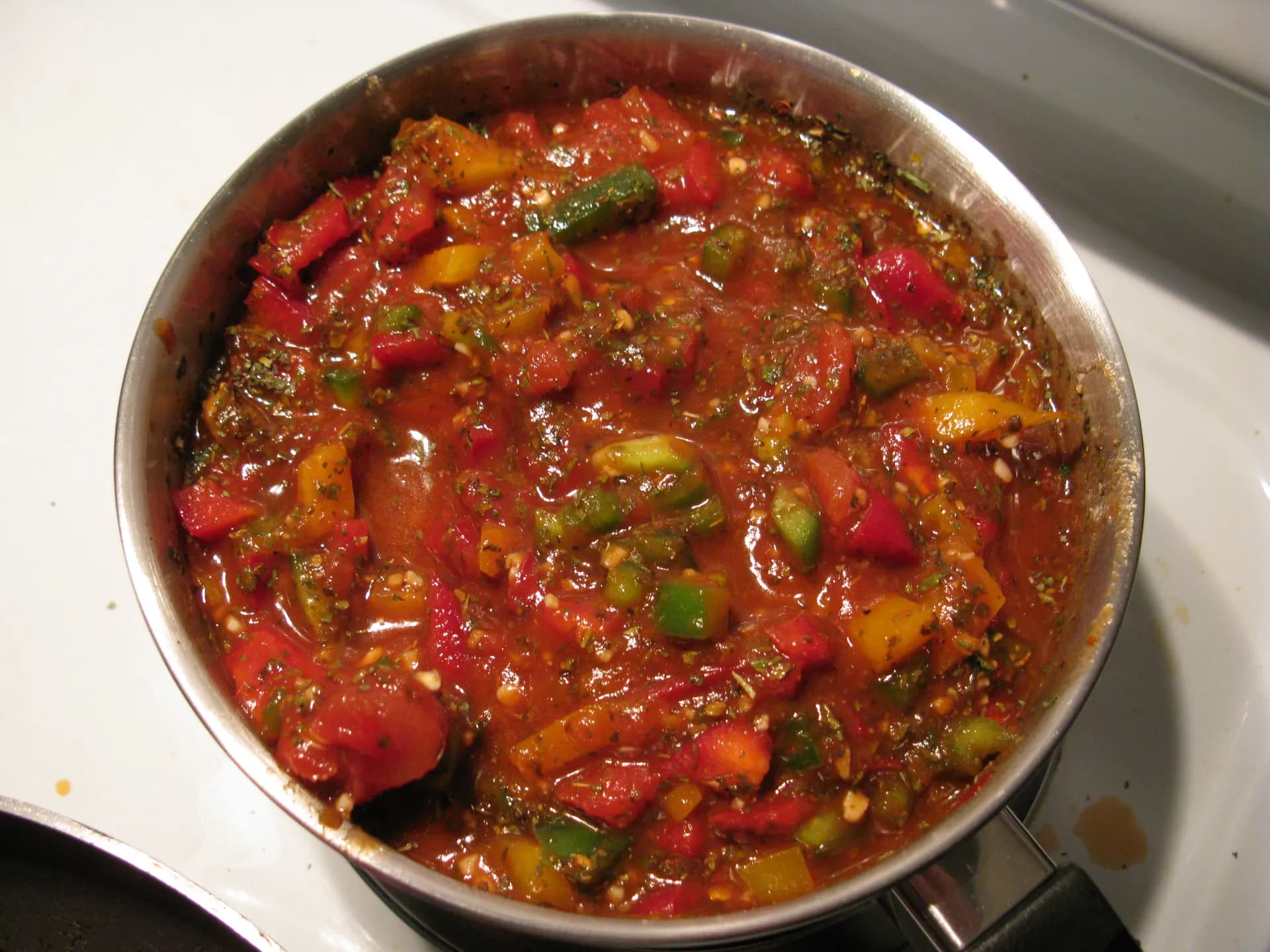
Chakalaka is a South African relish of onions, tomatoes, peppers and often baked beans, spiced with curry powder and chilli, and it is close to compulsory at a braai.
It came out of the townships, where it has been a staple of black South African cooking for decades. Accounts of its origin vary and none is firmly documented, which is common for food that developed in domestic and working-class settings rather than in restaurants. What is certain is that it is now everywhere, served at braais, at funerals and weddings, in lunchboxes, tinned and sold in supermarkets.
Its usefulness is in its flexibility. It works hot as a side dish, cold as a relish, spooned over pap, alongside grilled meat, or in a sandwich. It is light, quick, keeps well, and gets better after a day.
Grated carrot is near universal, baked beans are common though not obligatory, and the heat level varies from mild to considerable depending on who is making it.
It is naturally vegan in its standard form, which is unusual for a dish that spends most of its life next to grilled meat.
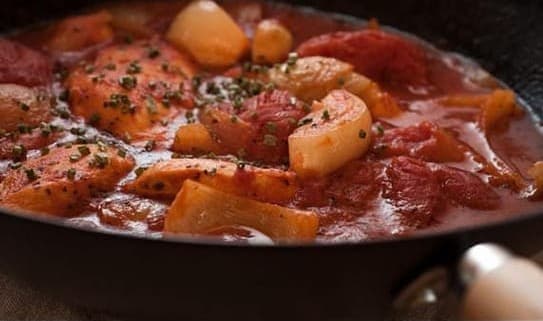
A bredie is a South African stew with a specific structure. Where an ordinary stew is built on stock, a bredie uses very little liquid and relies on the vegetables to release their own, so the sauce that develops is made by the ingredients rather than added to them. That distinction is what the word carries.
Lamb is the meat most associated with it, and the seasoning tells you where the dish comes from. Cinnamon, cloves and garlic in a meat stew is a Cape signature, reflecting the spice traditions that Cape Malay cooks brought to South African food from Southeast Asia and the Indian Ocean. A European lamb stew does not taste like this, and the difference is entirely in the spice cabinet.
Bredies are named for their vegetable rather than their meat: tomatiebredie for tomato, waterblommetjiebredie for the water hyacinth flowers that grow in Cape wetlands, green bean bredie, cabbage bredie. The lamb is the constant and the vegetable is the variable, which is the reverse of how most stew traditions name themselves. It is slow food, cooked until the lamb falls apart, and it is served with rice or bread to take up a sauce that has been concentrated rather than diluted.
Moukhbaza is mashed ripe banana with dried hot chilli, and the combination is the entire point. Sweet and hot together is a pairing Sudanese cooking returns to repeatedly, and moukhbaza is its most concentrated expression: nothing but banana, lemon juice and toasted chilli, with no attempt to soften the contrast between them.
The source places it in eastern Sudan. It is worth being straightforward that closely related dishes under the same name are documented in Yemen, on the other side of the Red Sea, where mukhbaza is a well established banana and chilli preparation. Eastern Sudan faces Yemen directly across that water, and the Red Sea has carried food, people and language in both directions for a very long time. Which side of it the dish began on is not something the available record settles.
Dried chilli is used across Sudanese cooking for range rather than simply for heat, and here it is toasted first, which deepens it and takes the raw edge off. Moukhbaza is served as a side or a relish rather than as a course, spread and eaten with bread, and a presentation version stuffs the mashed banana back into a halved and baked banana pepper.