Nous utilisons des cookies essentiels au fonctionnement du site. Nous aimerions aussi déposer des cookies de mesure d’audience et des cookies publicitaires, uniquement avec votre accord. Vous pouvez choisir séparément pour chacun. Lire notre politique relative aux cookies
Loading
Recettes
Parcourez les archives par pays, par plat et par temps de cuisson.
Bamia is a stew of lamb, okra and tomato, and the name is simply the Arabic word for okra, which tells you where the emphasis lies.
It is eaten across an enormous area: all the Arab countries, Anatolia and Turkey, Greece, Afghanistan and Iran, with regional variations at every point. In Egypt it is a household staple and particularly associated with Ramadan, where it appears regularly on iftar tables.
The construction is straightforward. Lamb is browned and stewed with onion, garlic and tomato, seasoned with coriander and cardamom, and okra is added to cook in the sauce. It is often finished in the oven in a clay dish, which is worth doing if you have one, the even, enclosed heat suits it.
The okra question dominates how people feel about the dish. Okra releases a mucilaginous liquid when cut and cooked in liquid, which thickens the stew. Some cuisines prize this; others go to considerable lengths to avoid it. Using whole small okra rather than sliced, and not overworking it, keeps it to a minimum.
Small young pods are much better than large ones, which turn woody.
Chicken tagine is Moroccan slow cooking at its most recognisable: chicken with preserved lemon, olives, onion and a warm spice blend, cooked gently until the meat falls apart. The name belongs to the vessel as much as the dish.
A tagine is a shallow ceramic or unglazed clay pot with a tall conical lid. The cone is not decorative: steam rises, condenses against the cone and runs back down into the base, so the dish cooks in its own recirculating moisture with very little added liquid. It works like a slow cooker and gives the same result, meat that is tender and a sauce that has concentrated rather than evaporated.
The spice profile is the Moroccan signature: paprika, cumin, ginger, coriander, cinnamon and cayenne together, with honey for balance and lemon for sharpness. Cracked green olives and preserved lemon go in at the end so they keep their character. It can be made in a tagine, in a Dutch oven, or on the stovetop, and this recipe uses the last. If you cook in an actual tagine on a hob, use the lowest setting you can: raising the heat cracks the clay.
Oyster mushrooms grilled and tossed in suya spice. It is a plant-based version of the Nigerian street food, and it works better than most meat substitutions do.
**The traditional suya spice contains ground peanuts, and this recipe includes them.** The source flags it and offers to leave them out, which is honest, but it is worth stating clearly, because a peanut allergy and a suya spice blend are a genuinely dangerous combination and the name gives no warning.
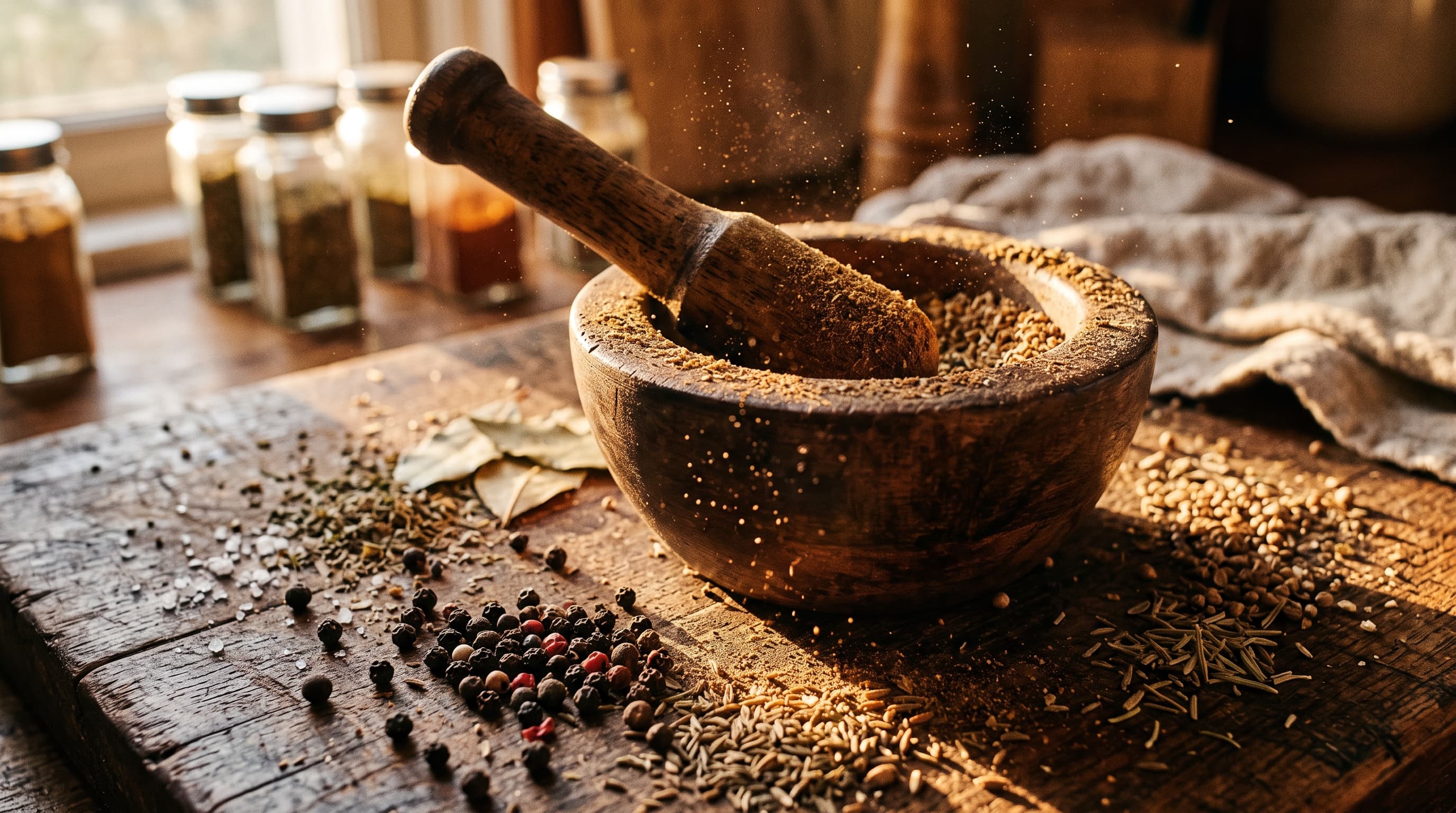
Suya proper is skewered beef, ram or chicken rubbed in yaji, the spice blend of ground roasted peanuts, ginger, cayenne, garlic, onion powder and paprika, and grilled over open coals. It is Hausa in origin, from northern Nigeria, and it is sold across Nigeria, Cameroon, Niger, Ghana and parts of Sudan. Kyinkyinga is the Ghanaian name, agashe the Sudanese.
Oyster mushrooms are the right substitution and not an arbitrary one. Shredded, they have a fibrous, layered structure that genuinely resembles pulled meat, they take on the dry rub readily, and they char well. Most vegetables do neither.
The source's method is very compressed, one step reads "put in a preheated medium", with the word oven missing, and has been filled out below.
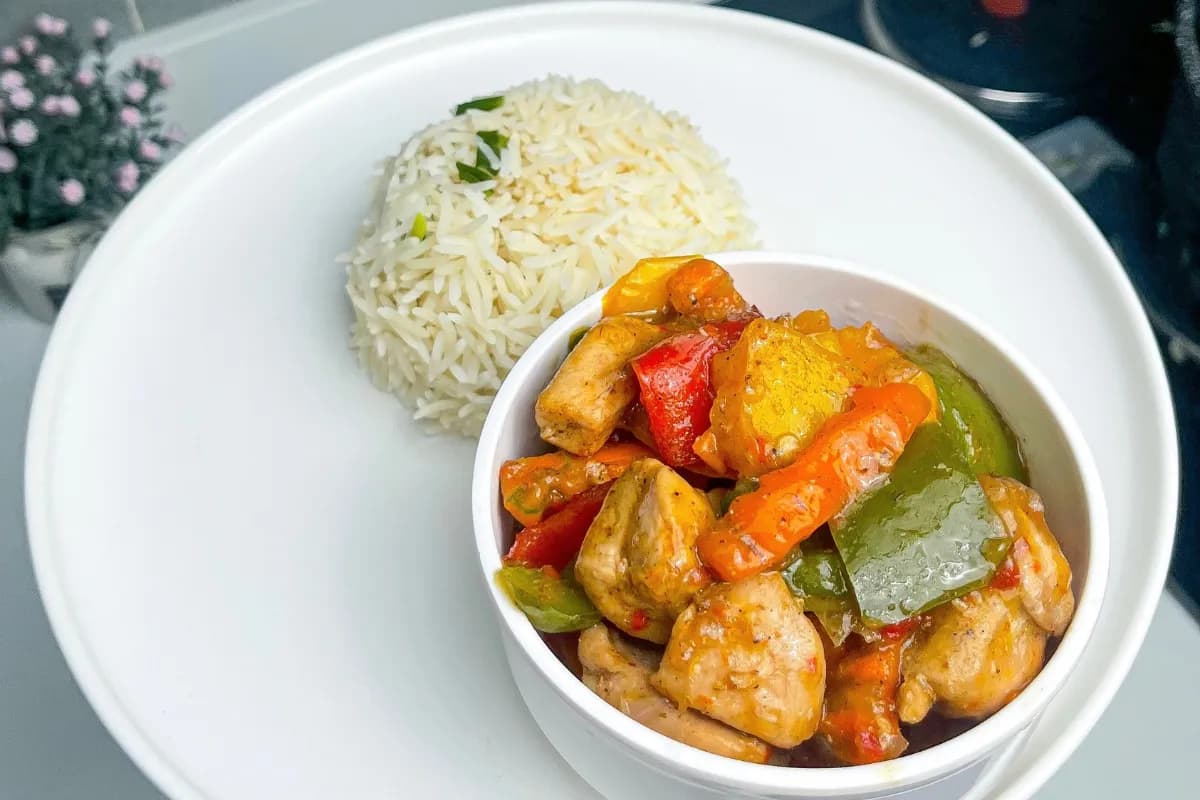
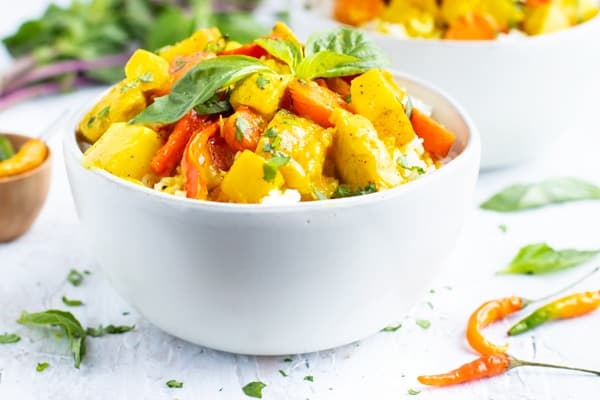
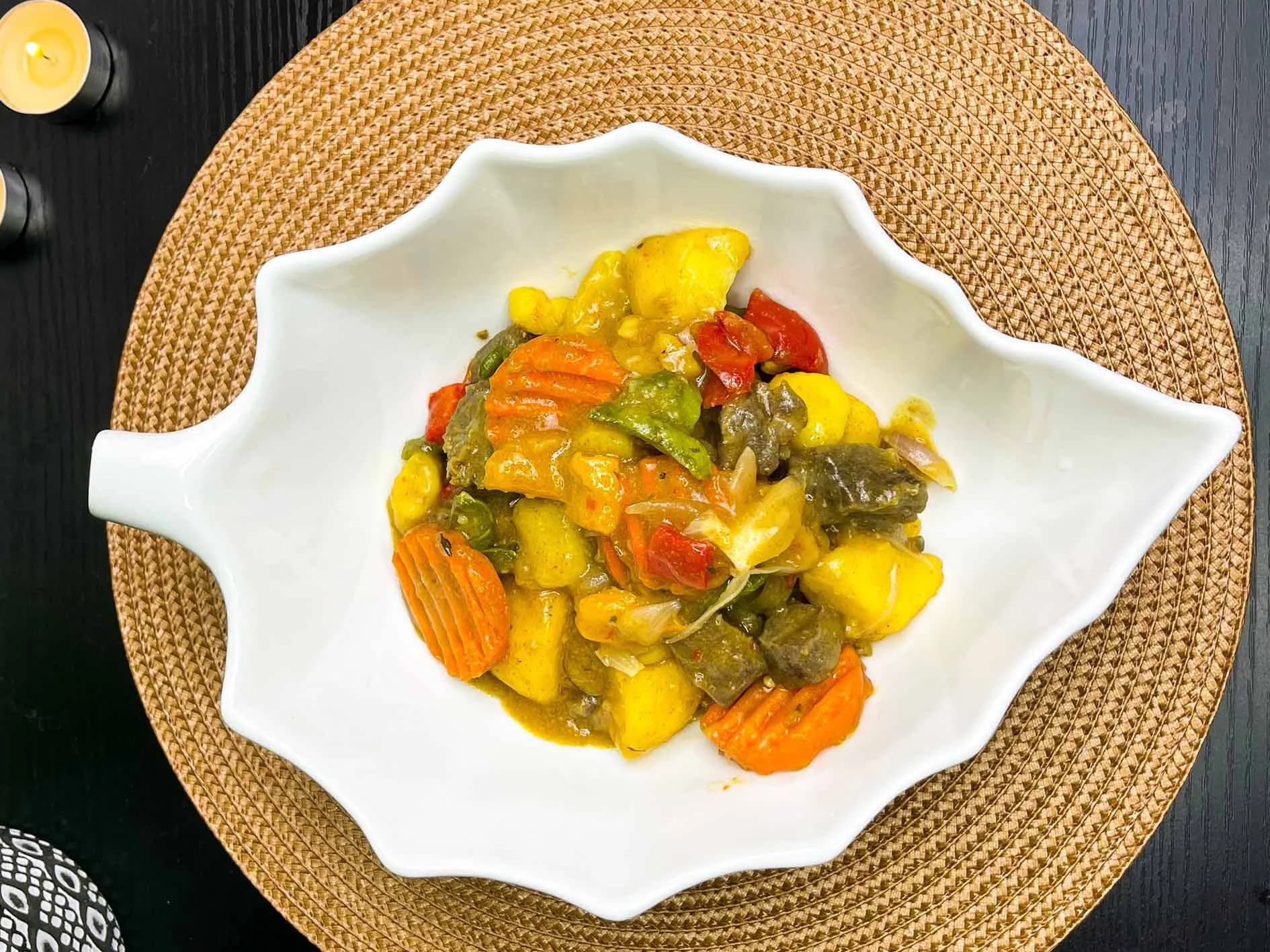
Coconut chicken curry is a one-pan dish of chicken simmered in coconut milk with a curry spice blend and whatever vegetables are to hand, broccoli, cabbage, peppers, potato, carrot.
The word curry is worth being precise about. It is not a single spice or a single dish. It comes from English usage during colonial rule in India, applied broadly to spiced saucy dishes, and it now covers an enormous range of unrelated cooking across South Asia, Southeast Asia, the Caribbean and East Africa. A curry powder sold in a jar is a blend, and the blends differ substantially between manufacturers and regions.
Coconut milk versions belong mainly to the coastal and tropical end of that range, southern India, Thailand, Malaysia, the Caribbean, and the Swahili coast of East Africa, where coconut is grown and used heavily.
This particular recipe is a general one rather than a regional tradition, which is its strength: it tolerates substitution well and is designed to be varied.
**Filed as Worldwide**, the recipe as written makes no specific national claim, so attributing it to any one cuisine would be inventing detail.