Nous utilisons des cookies essentiels au fonctionnement du site. Nous aimerions aussi déposer des cookies de mesure d’audience et des cookies publicitaires, uniquement avec votre accord. Vous pouvez choisir séparément pour chacun. Lire notre politique relative aux cookies
Loading
Recettes
Parcourez les archives par pays, par plat et par temps de cuisson.
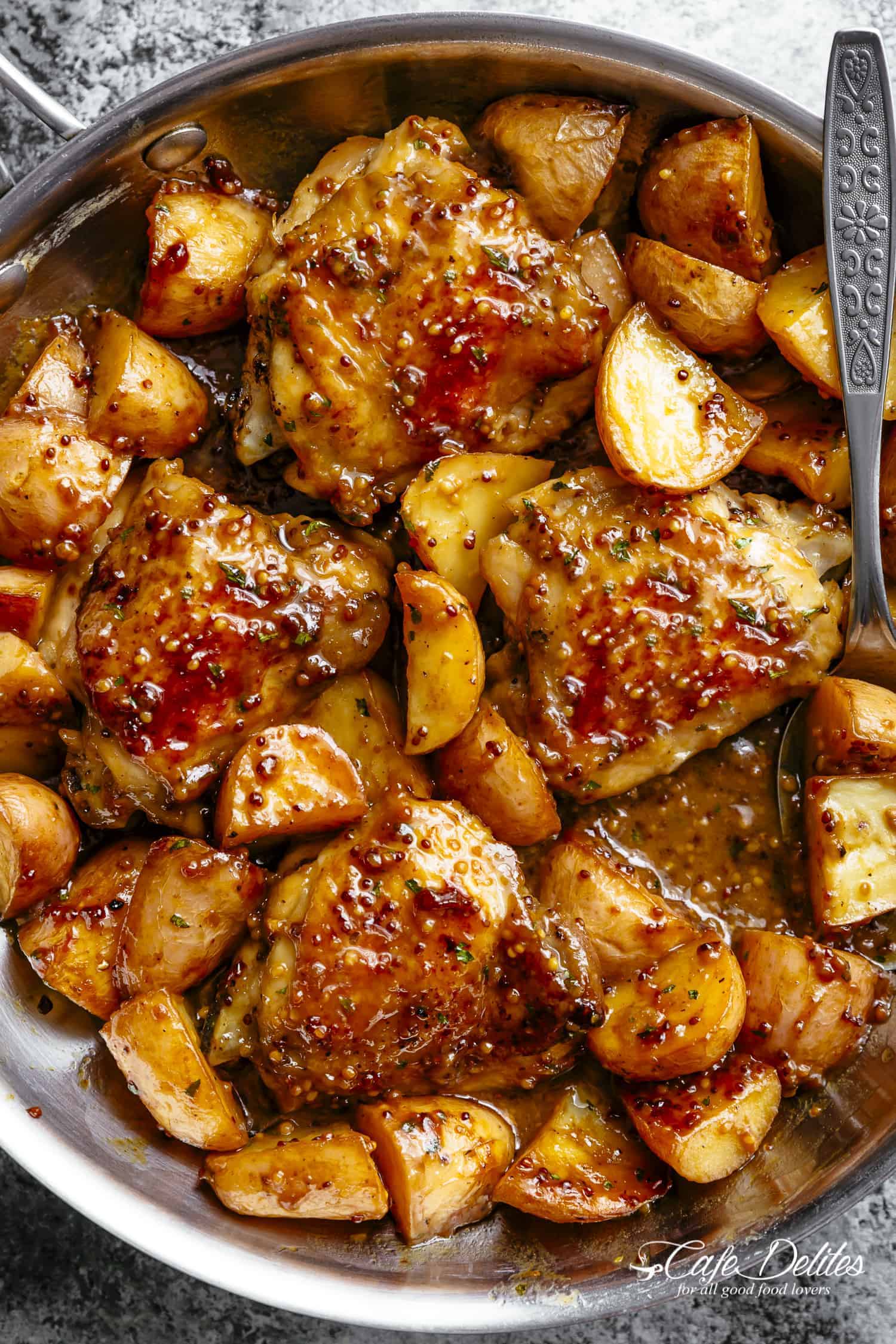
Chicken afritada is Filipino, chicken braised in a tomato sauce with potato, carrot and bell pepper, seasoned with soy sauce and patis, the Filipino fish sauce.
The name gives away the history. Afritada comes from the Spanish fritada, meaning fried, and the dish belongs to the group of Filipino tomato-braised dishes that arrived through more than three centuries of Spanish colonial rule. Afritada, menudo and kaldereta are all close cousins from that lineage, distinguished mostly by cut, additions and the presence or absence of liver paste.
What makes it Filipino rather than Spanish is the seasoning. Soy sauce and patis are doing the work that salt would do in a Spanish stew, and together they give the sauce a savoury depth that a tomato base alone would not have. That combination is characteristic of Filipino cooking generally.
It is everyday food, a weeknight dish served with white rice, straightforward to make and forgiving. It is also common at gatherings, where it scales easily.
**This is not an African dish.** It is on the African Food Network in the Worldwide collection because the page already exists and receives visitors, and removing it would break a working link.
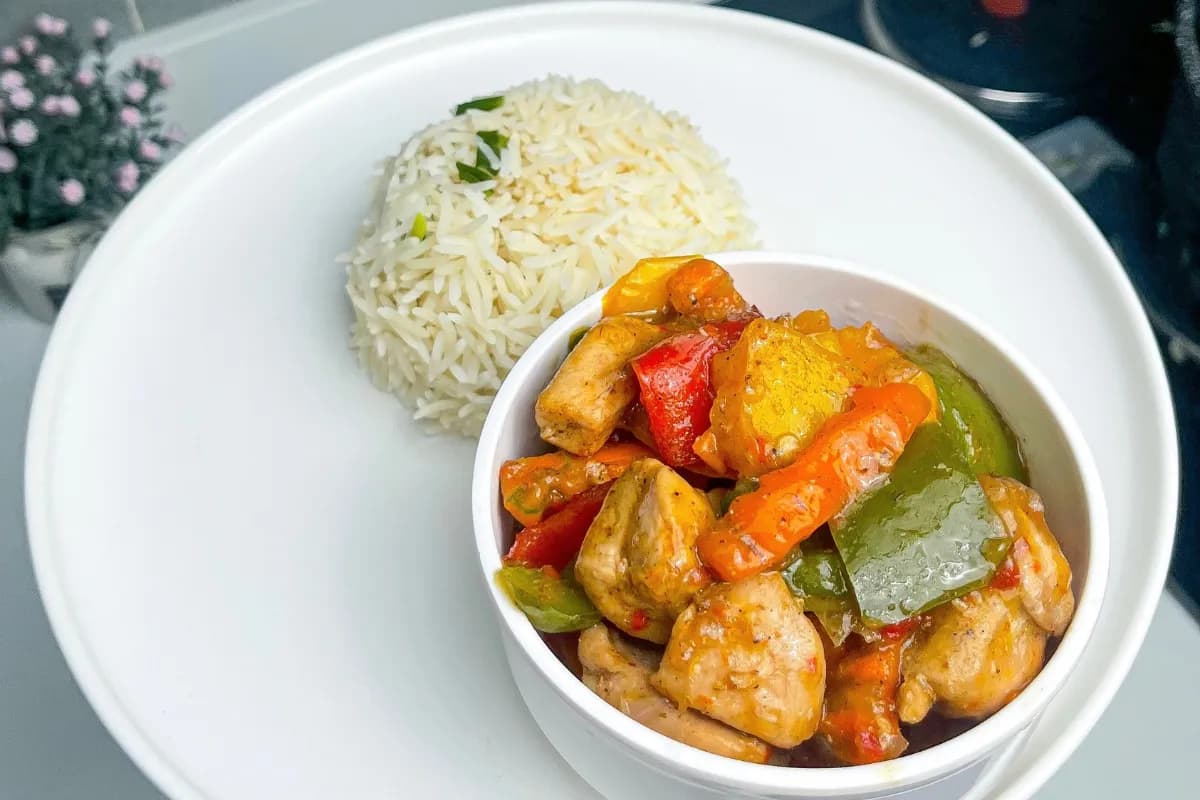
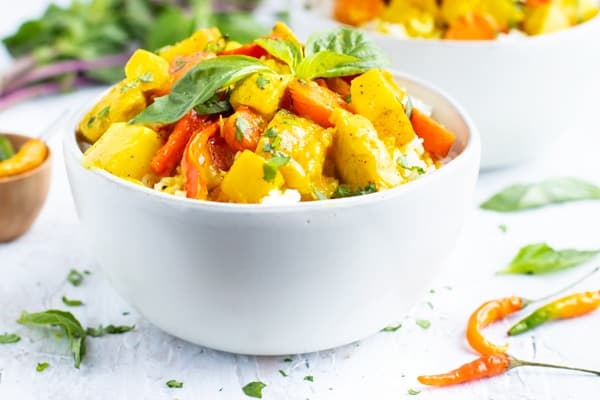
This is a Nigerian take on a curry sauce: chicken breast marinated in ginger, garlic and all purpose seasoning, cooked with carrots and bell peppers, and thickened with a cornstarch slurry rather than reduced or enriched with cream.
Two things mark it as Nigerian rather than South Asian. The first is yaji, the suya spice built on ground peanuts, paprika, cayenne, ginger and garlic, which goes in alongside the curry powder and gives an aromatic depth no Indian curry would have. The second is the cornstarch slurry, which is how a great many Nigerian sauces are thickened, giving a glossy sauce that clings rather than a reduced one.
The vegetables are meant to keep their bite. Carrots and bell peppers go in after the onion and are cooked only until slightly tender, which is characteristic of Nigerian party cooking, where texture and colour matter as much as flavour. The heat is moderate and adjustable through the scotch bonnet. Because yaji contains ground peanuts, this dish carries a peanut allergen despite nothing in its name suggesting one.
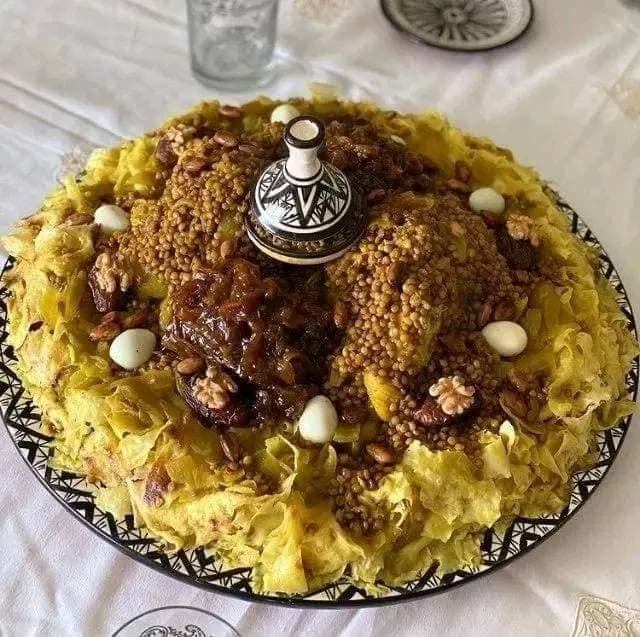
Oyster mushrooms grilled and tossed in suya spice. It is a plant-based version of the Nigerian street food, and it works better than most meat substitutions do.
**The traditional suya spice contains ground peanuts, and this recipe includes them.** The source flags it and offers to leave them out, which is honest, but it is worth stating clearly, because a peanut allergy and a suya spice blend are a genuinely dangerous combination and the name gives no warning.
Suya proper is skewered beef, ram or chicken rubbed in yaji, the spice blend of ground roasted peanuts, ginger, cayenne, garlic, onion powder and paprika, and grilled over open coals. It is Hausa in origin, from northern Nigeria, and it is sold across Nigeria, Cameroon, Niger, Ghana and parts of Sudan. Kyinkyinga is the Ghanaian name, agashe the Sudanese.
Oyster mushrooms are the right substitution and not an arbitrary one. Shredded, they have a fibrous, layered structure that genuinely resembles pulled meat, they take on the dry rub readily, and they char well. Most vegetables do neither.
The source's method is very compressed, one step reads "put in a preheated medium", with the word oven missing, and has been filled out below.
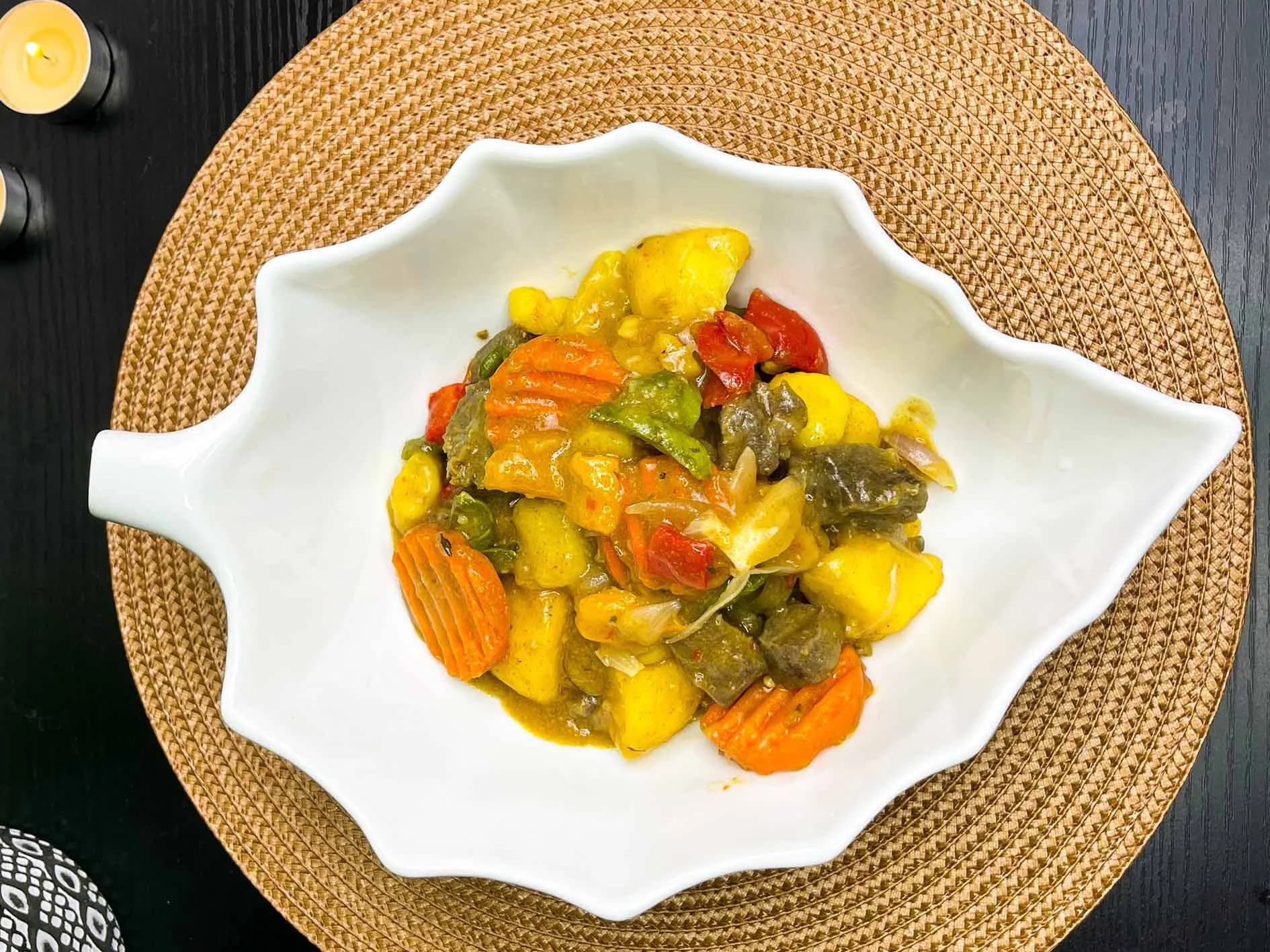
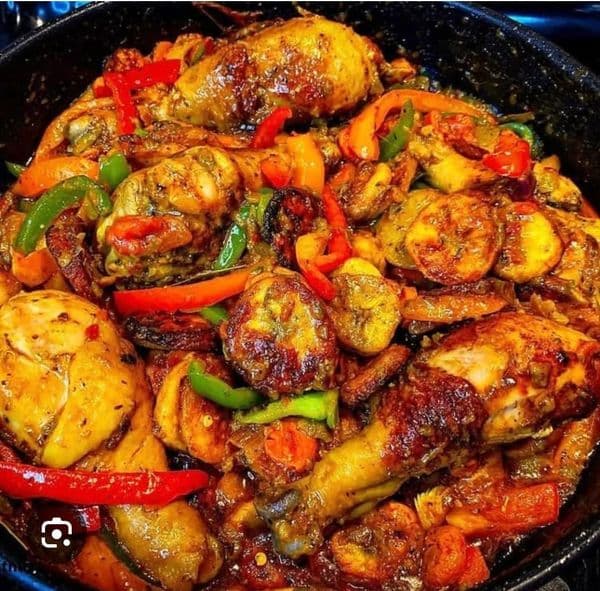
Poulet DG is Cameroonian, fried chicken and ripe plantain in a tomato and vegetable sauce, cooked as one pot and served hot.
The name is the good part. Poulet is French for chicken; DG stands for Directeur Général, Managing Director. The dish is named for the kind of person who could afford it. It emerged as a dish for those with money, at a time when chicken and plantain together in that quantity was not an everyday proposition, and the name stuck as a piece of affectionate mockery. It is now widely cooked at every level.
The construction is what makes it work. Chicken is fried and set aside; plantain is fried separately until caramelised at the edges; a sauce of tomato, onion, pepper, carrot and green beans is built in the same pan; then everything is combined briefly at the end.
That last part matters. The plantain is added late so it keeps its shape and its sweetness against the savoury sauce rather than dissolving into it.
It is best eaten immediately, the source is emphatic that it is markedly better hot.