Muamba De Galinha (Angolan Chicken Stew)
4.54.5 out of 5, 4 ratings45 min


Cookies sur African Food Network
Nous utilisons des cookies essentiels au fonctionnement du site. Nous aimerions aussi déposer des cookies de mesure d’audience et des cookies publicitaires, uniquement avec votre accord. Vous pouvez choisir séparément pour chacun. Lire notre politique relative aux cookies
Parcourez les archives par pays, par plat et par temps de cuisson.
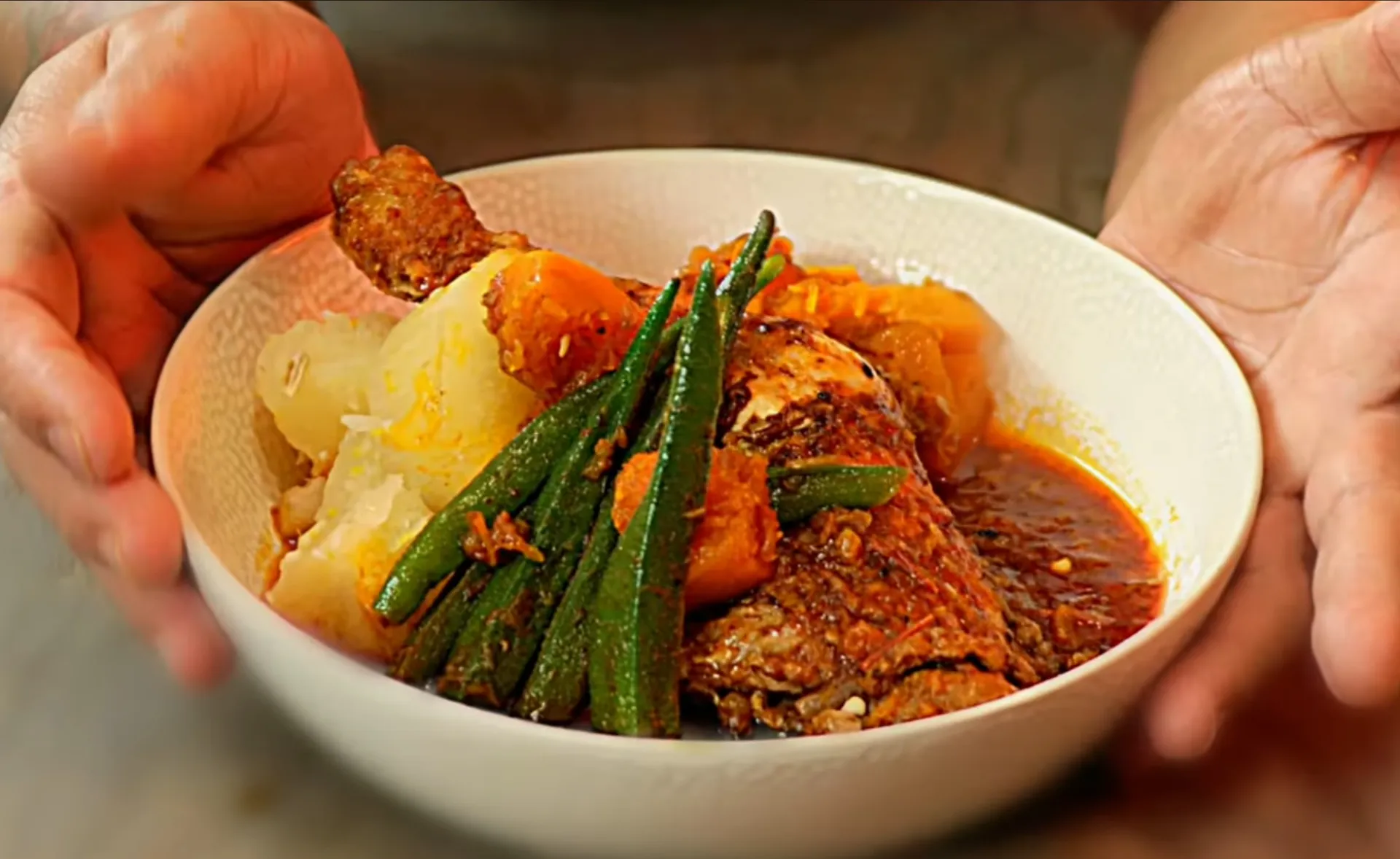
Muamba de galinha is the dish most often named as Angola's national one, and it earns the title by being the clearest single statement of what Angolan cooking is. Chicken marinated in garlic and paprika, seared in red palm oil, simmered with onion, tomato and hot pepper, thickened with okra and given body by squash. The palm oil is not a background ingredient. It is what turns the stew the deep orange that muamba is recognised by, and it carries a specific flavour that no other fat provides. Angolans call it dendem or red oil, and a muamba made with anything else is a chicken stew rather than a muamba. The name itself points somewhere older. Muamba refers to a family of dishes built on palm across Angola and the wider Congo basin, of which muamba de galinha is the chicken version and muamba de ginguba the groundnut one. The Portuguese in the name is only the galinha. It is eaten with funge, the cassava porridge, or with rice, and the version here serves it with cassava tossed in lemon and garlic, which is a contemporary treatment of a very old accompaniment.
Les mieux notées
45 minMediumAngola
Recette de Chef.donkey · Africook
Rien ici pour le moment