Nous utilisons des cookies essentiels au fonctionnement du site. Nous aimerions aussi déposer des cookies de mesure d’audience et des cookies publicitaires, uniquement avec votre accord. Vous pouvez choisir séparément pour chacun. Lire notre politique relative aux cookies

Loading
Recettes
Parcourez les archives par pays, par plat et par temps de cuisson.
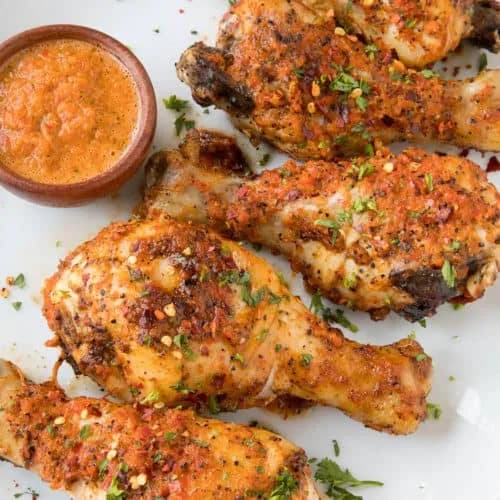
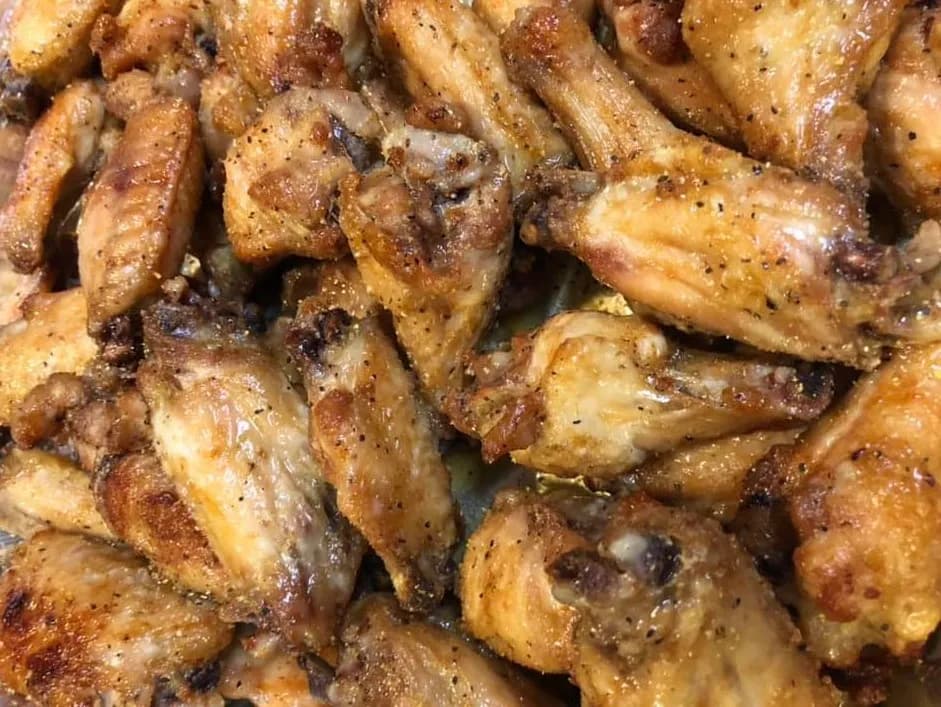
Peri peri chicken is marinated in a paste of chilli, lemon, olive oil, garlic and spices, then seared and finished in the oven. It is flame-grilled in its classic form, and it is one of the most exported dishes southern Africa has produced.
Its origins are genuinely contested. The source is direct that it is not clear who first made it, and that the question remains hotly debated between Portuguese-Angolans and Portuguese-Mozambicans. What is not in dispute is the chilli: Portuguese settlers brought chilli peppers to Angola and Mozambique, where the small African bird's eye variety naturalised, and piri piri is the Swahili word for pepper. Peri peri is central to Mozambique's history precisely because the sauce reflects the mixing of cultures there.
This version is filed as South African, which reflects where the dish is now most commercially associated rather than where it began, and that distinction is worth keeping in view. The marinade needs overnight, or at least three hours. The technique is a hard sear in an ovenproof pan followed by fifteen to twenty minutes in the oven, with the reserved marinade poured in to become the sauce.
Oyster mushrooms grilled and tossed in suya spice. It is a plant-based version of the Nigerian street food, and it works better than most meat substitutions do.
**The traditional suya spice contains ground peanuts, and this recipe includes them.** The source flags it and offers to leave them out, which is honest, but it is worth stating clearly, because a peanut allergy and a suya spice blend are a genuinely dangerous combination and the name gives no warning.
Suya proper is skewered beef, ram or chicken rubbed in yaji, the spice blend of ground roasted peanuts, ginger, cayenne, garlic, onion powder and paprika, and grilled over open coals. It is Hausa in origin, from northern Nigeria, and it is sold across Nigeria, Cameroon, Niger, Ghana and parts of Sudan. Kyinkyinga is the Ghanaian name, agashe the Sudanese.
Oyster mushrooms are the right substitution and not an arbitrary one. Shredded, they have a fibrous, layered structure that genuinely resembles pulled meat, they take on the dry rub readily, and they char well. Most vegetables do neither.
The source's method is very compressed, one step reads "put in a preheated medium", with the word oven missing, and has been filled out below.
Bamia is a stew of lamb, okra and tomato, and the name is simply the Arabic word for okra, which tells you where the emphasis lies.
It is eaten across an enormous area: all the Arab countries, Anatolia and Turkey, Greece, Afghanistan and Iran, with regional variations at every point. In Egypt it is a household staple and particularly associated with Ramadan, where it appears regularly on iftar tables.
The construction is straightforward. Lamb is browned and stewed with onion, garlic and tomato, seasoned with coriander and cardamom, and okra is added to cook in the sauce. It is often finished in the oven in a clay dish, which is worth doing if you have one, the even, enclosed heat suits it.
The okra question dominates how people feel about the dish. Okra releases a mucilaginous liquid when cut and cooked in liquid, which thickens the stew. Some cuisines prize this; others go to considerable lengths to avoid it. Using whole small okra rather than sliced, and not overworking it, keeps it to a minimum.
Small young pods are much better than large ones, which turn woody.
Tandoori chicken is chicken marinated in yoghurt and spices and roasted at very high heat in a tandoor, the cylindrical clay oven it takes its name from. The source states plainly that it originated in the Indian subcontinent, specifically the Punjab, and it sits in Worldwide Recipes under South Asian.
The tandoor is what the dish is built around. It runs far hotter than a domestic oven, which is how the chicken cooks fast enough to char on the outside while staying moist inside. Cooking it elsewhere means adapting, and Western kitchens grill or roast instead. This recipe uses a conventional oven, which the source acknowledges as an adaptation.
Two ingredients do the work. Yoghurt tenderises through its acid and lactic enzymes and keeps the meat moist, and garam masala provides the aroma. The food colouring in the ingredient list is worth knowing about: the characteristic red is achieved commercially with colouring rather than by any ingredient, and it can simply be left out with no effect on flavour. Tandoori chicken is also the foundation of butter chicken and several other cream-based curries.