Nous utilisons des cookies essentiels au fonctionnement du site. Nous aimerions aussi déposer des cookies de mesure d’audience et des cookies publicitaires, uniquement avec votre accord. Vous pouvez choisir séparément pour chacun. Lire notre politique relative aux cookies
Loading
Recettes
Parcourez les archives par pays, par plat et par temps de cuisson.
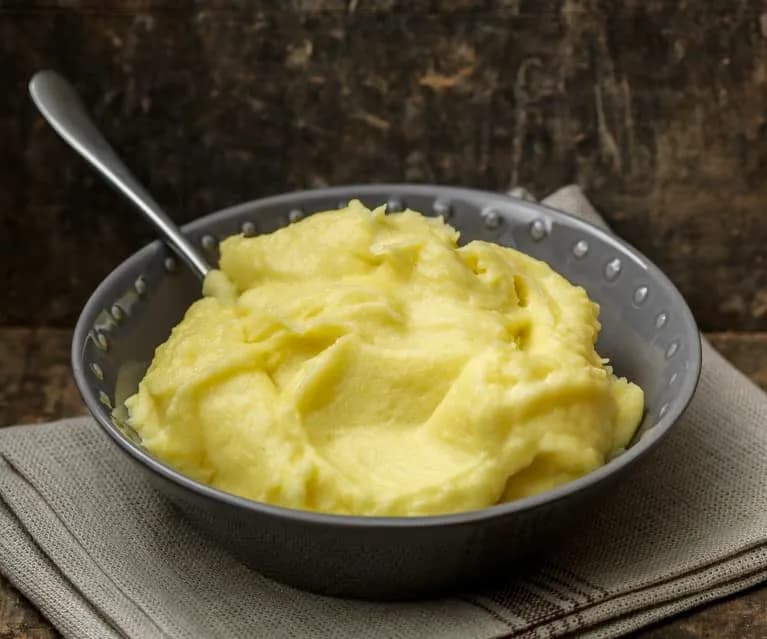
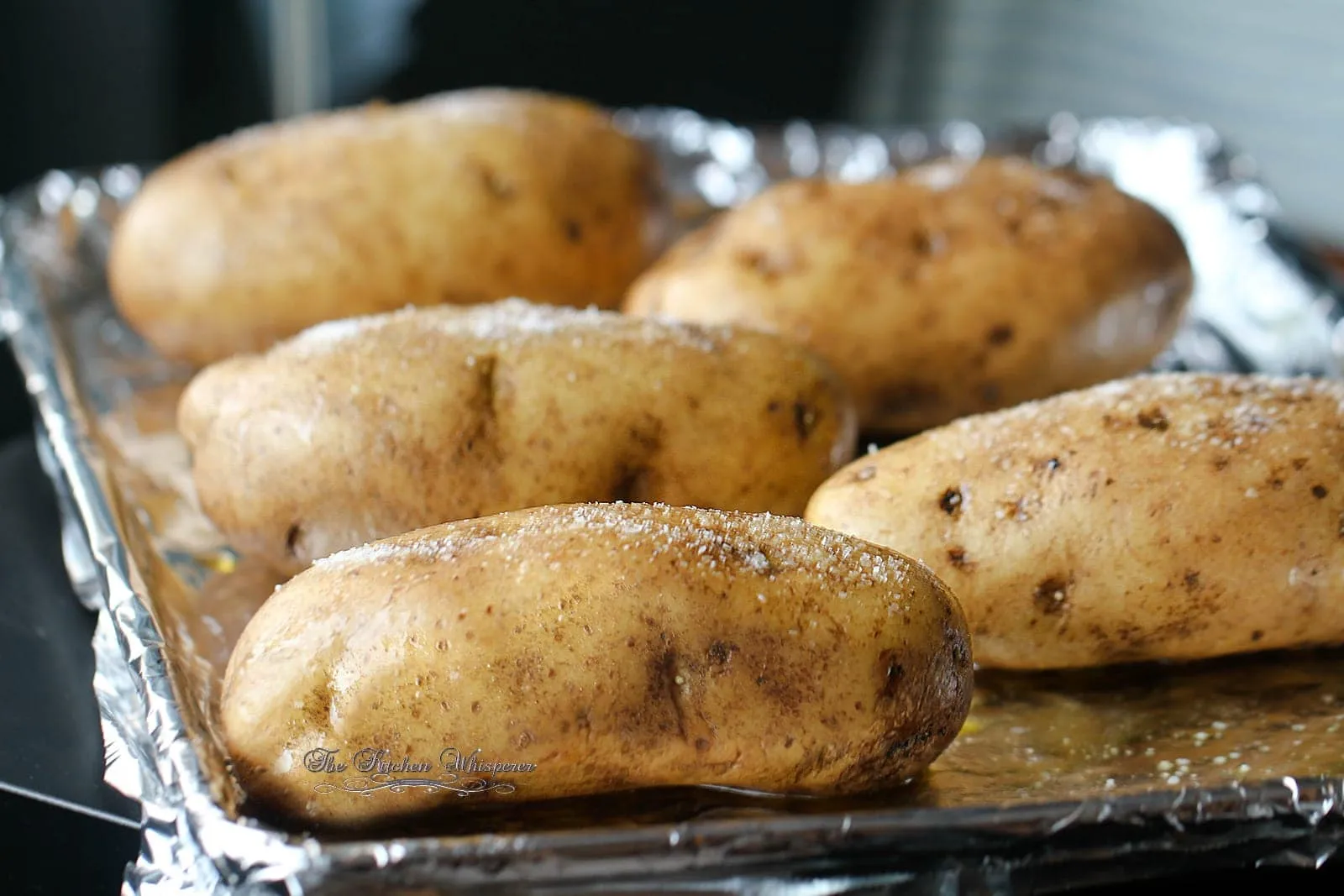
Potatoes cooked until tender, then mashed with warm butter and milk. No country is claimed, it is a European staple that has travelled everywhere, most associated in Britain with bangers and mash.
The one thing the recipe does that matters is warming the butter and milk together before they go in. Cold dairy into hot potato drops the temperature and makes the mash claggy; warm dairy is absorbed smoothly. It is a small step that nobody does and everybody should.
The other decision is the tool, and it determines the result. A hand masher leaves texture and works quickly. A ricer or food mill gives the smoothest possible mash by pushing the potato through small holes without working it. An electric mixer or food processor is the one to avoid: over-beating ruptures the starch cells and releases enough starch to turn mashed potato genuinely gluey, and there is no recovering from it.
The source's explanation of mashed versus smashed potatoes contradicts itself between paragraphs, it defines smashed as roughly mashed, then describes mashed as the chunkier of the two. The distinction generally drawn is that smashed potatoes are left rough and lumpy, often with the skins on, while mashed are worked smooth.
Ka'ak is a ring-shaped bread, crisp outside and soft within, scattered with sesame seeds. It is Libyan in this version, and made across a wide stretch of the Arabic-speaking world, Egypt, Iraq, Iran, Jordan, Lebanon, Palestine and Syria all have their own.
The shape is what defines it. Ka'ak is formed into a large ring, bigger and thinner than a bagel, which is why street vendors across the region can carry stacks of them on a pole or a cart. In Libya it is eaten at breakfast alongside hummus and falafel, and it comes in savoury and sweet versions.
The name travels further than the shape does. Ka'ak, sometimes kahk or kahqa, covers a whole family of baked goods across the Arabic-speaking world, from this ring bread to the small filled Egyptian cookies eaten at Eid, which are a completely different thing. The word means something closer to "baked good" than to any specific item.
One technique in this recipe is worth borrowing for other breads. A tray of water is placed in the bottom of the oven while it heats, so the loaves bake in a steamy environment. Steam keeps the crust soft for the first minutes, letting the bread rise fully before the surface sets, and then produces a thin, crisp finish.
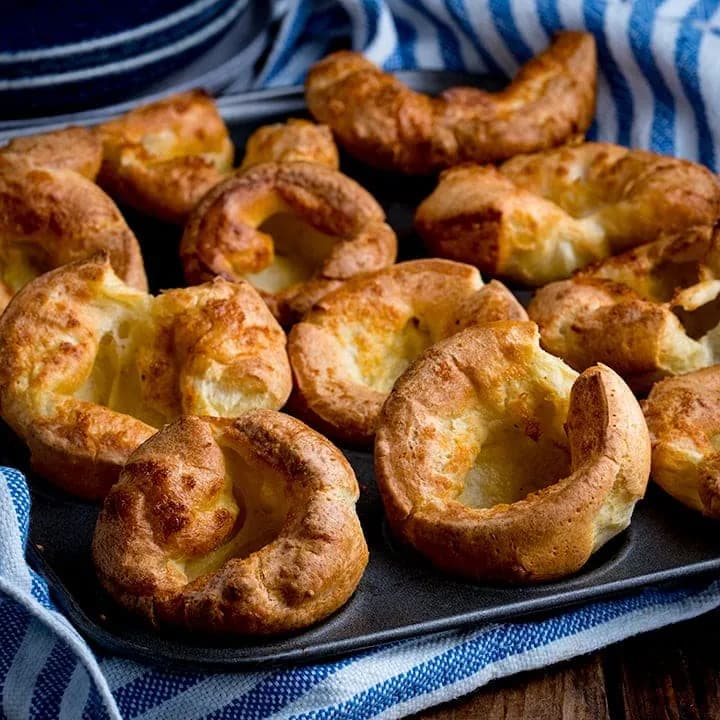
A batter of eggs, flour, milk and water poured into smoking hot fat and baked until it quadruples in volume. It is British, and it sits in Worldwide Recipes with its URL unchanged.
It is one of the few dishes where the physics is the recipe. The batter must go into fat that is genuinely smoking hot, the instant heat turns the water in the batter to steam, which inflates the structure before the egg and flour set around it. Fat that is merely hot gives you a flat, greasy disc. Preheating the tin with the fat in it for a full ten minutes is not padding.
The overnight rest is the other thing that separates good Yorkshires from adequate ones. Resting lets the flour hydrate fully and the gluten relax, which produces a more dramatic rise. The source says up to three days in the fridge and it is right, the batter genuinely improves.
This recipe is unusually precise, giving weights in grams alongside cup measures, which is rare in the archive and welcome. The water alongside the milk is deliberate: water produces more steam than milk, so it rises higher, while the milk gives flavour and colour.
Beef dripping is traditional. Lard, shortening and vegetable oil all work.
Africa has no equivalent, though popovers and Dutch baby pancakes are relatives.
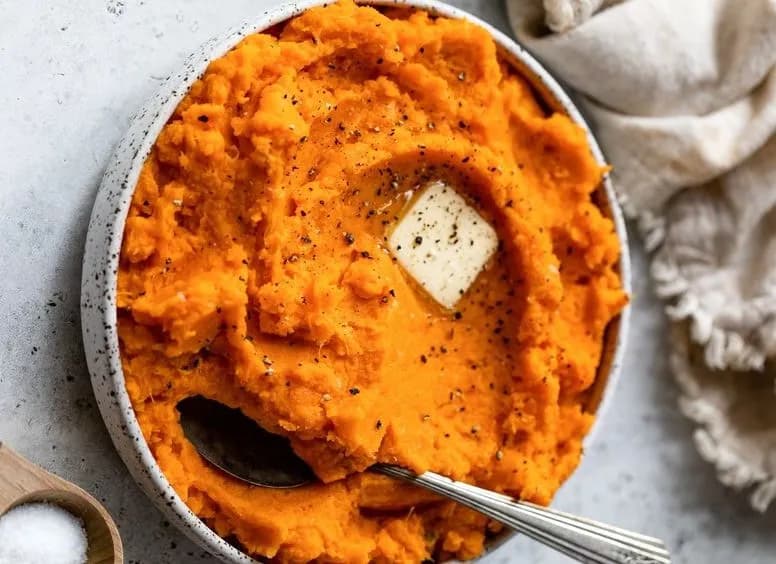
Sweet potatoes cooked until tender and mashed with butter and milk, seasoned sweet or savoury depending on preference. No country is claimed.
**This page had no recipe card in the source.** The ingredients and method below are reconstructed from its article, and that is flagged.
Sweet potato behaves differently from potato in one important way, and it changes the technique. It contains far less starch and much more sugar and moisture, which means it cannot go gluey the way ordinary potato does, you can beat it with a mixer or work it in a food processor without ruining it, which is exactly what you must not do with a floury potato. The source recommends both, and for once that advice is sound.
The other consequence is that it needs less dairy. Sweet potato is already moist, so the same quantity of milk that a floury potato absorbs will leave sweet potato loose.
The seasoning question is genuinely open. Brown sugar, maple syrup and cinnamon push it towards dessert, which is the American Thanksgiving direction; garlic, herbs and cheese push it savoury and make it work alongside meat. Both are common.
Sweet potato is not a potato. It is unrelated botanically, and West and Central Africa grow and eat enormous quantities of it.