

Nous utilisons des cookies essentiels au fonctionnement du site. Nous aimerions aussi déposer des cookies de mesure d’audience et des cookies publicitaires, uniquement avec votre accord. Vous pouvez choisir séparément pour chacun. Lire notre politique relative aux cookies

Loading
Recettes
Parcourez les archives par pays, par plat et par temps de cuisson.
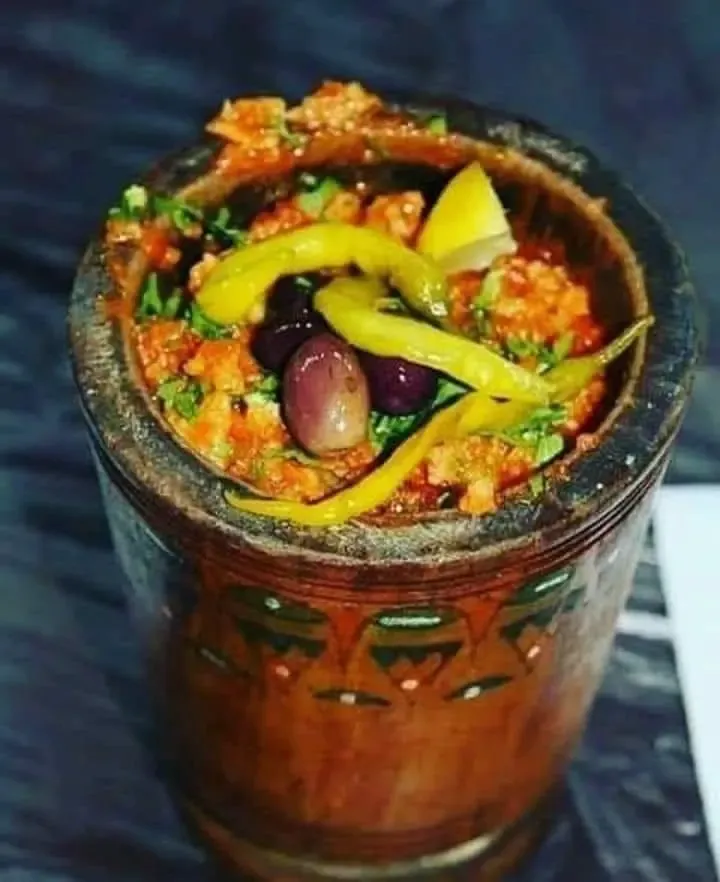
Zviti is a very hot Algerian dish from Bou Saada in M'Sila province, and it is defined as much by how it is served as by what goes into it. A semolina flatbread called rakhsis is crumbled into a tall wooden mortar, the mehrez, along with grilled peppers, tomatoes, garlic and a large quantity of chilli, and everything is crushed together with a wooden pestle.
The mortar then goes to the table. Zviti is not portioned onto plates: everyone gathers around the mehrez and eats directly from it, and in some places it is presented on a special table with a hole cut in the middle to hold the pestle upright. It also goes by the name slata mehrez, which translates as the mortar salad.
The heat is the point and Algerians are entirely open about the effect. Eating zviti involves sweating and gasping, and the description of it as a fire dish is affectionate rather than a warning. Some restaurants reduce the chilli or work olive oil and butter through it to soften it, which regulars regard as missing the idea. It is eaten as an accompaniment rather than a course, with a glass of lben, the fermented buttermilk, to cool the mouth between mouthfuls.
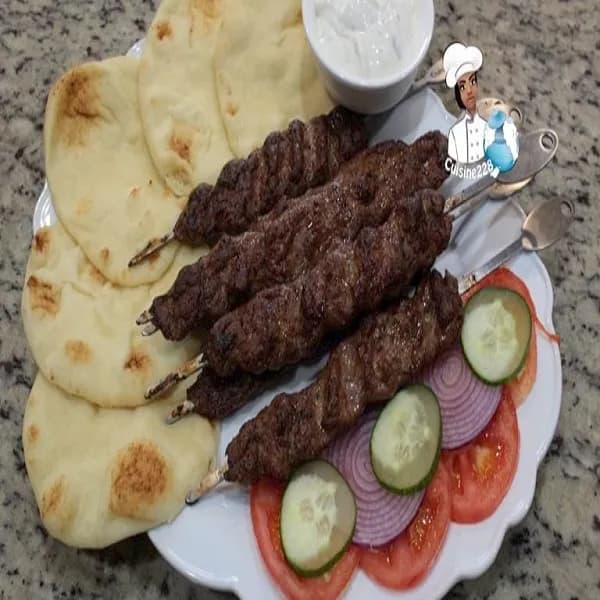
Kofta is minced meat, seasoned and shaped by hand, and it runs across an enormous stretch of the world: from the Balkans through Turkey, the Levant and Egypt, across the Arabian peninsula, into Central Asia and the Indian subcontinent, and along the North African coast. The Egyptian version is lamb or beef with onion, parsley, mint and a warm spice mix, moulded onto skewers and grilled.
Its written history is old. Recipes appear in the earliest surviving Arab cookbooks, where large ground lamb meatballs were glazed in saffron and egg yolk, a technique that later reached Europe and was known there as gilding or endoring. From the Arab world it travelled east, and nargisi kofta was served at the Mughal court in India.
In Egypt, kofta belongs to the grilled meat restaurants that exist in every town, where it is cooked alongside kebab, grilled chicken and tarb and served with rice, bread and salad. The distinction Egyptians draw between kofta and kebab is worth knowing: kebab is cubed meat on a skewer, kofta is minced meat shaped by hand. It is essentially sausage without a casing, and the comparison to a hamburger, sometimes made, misses that it is almost never served in bread.
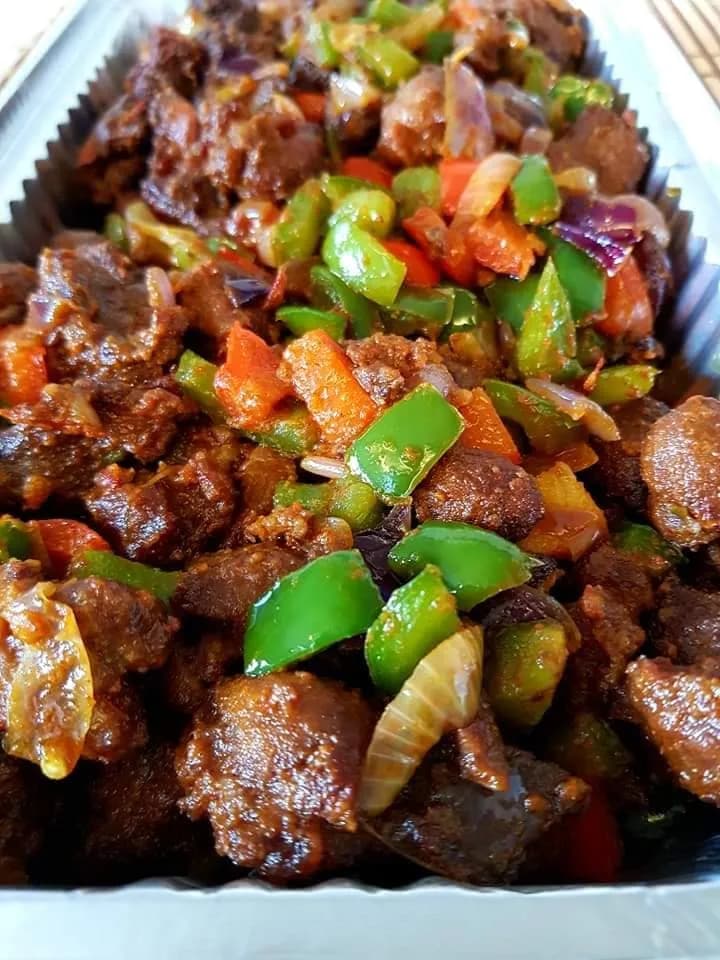
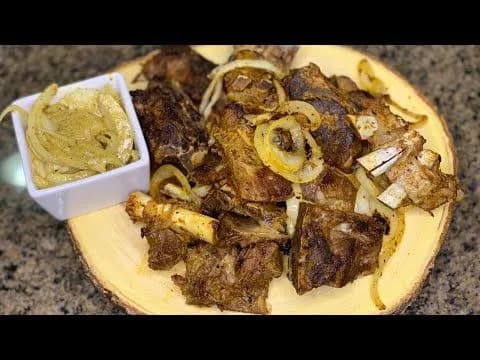
Suya is not restricted to any one cut, and liver is among the most common of the alternatives. Kidney and tripe appear too, and the offal versions are cheaper, cook faster and carry the yaji spice differently from beef, which is a large part of why they have their own following rather than being a fallback.
Liver takes spice better than muscle meat does. It is soft, mineral and slightly sweet, and it absorbs the groundnut and pepper coating almost immediately rather than needing time to marinate. It also cooks in minutes, which suits the trade: a suya vendor working a roadside grill at night needs something that goes from raw to served while the customer waits.
The name changes across West Africa without the thing changing much. Suya in Nigeria, soya in Cameroon, chinchinga or sitsinga in Ghana, and brochettes in the Francophone countries. The spice blend, yaji, is what holds it together, and it has no fixed recipe: the composition varies by vendor and by region, and each is guarded. What is consistent is ground groundnut, chilli, ginger and garlic, and a heat level that varies from cook to cook while the intensity of flavour does not.
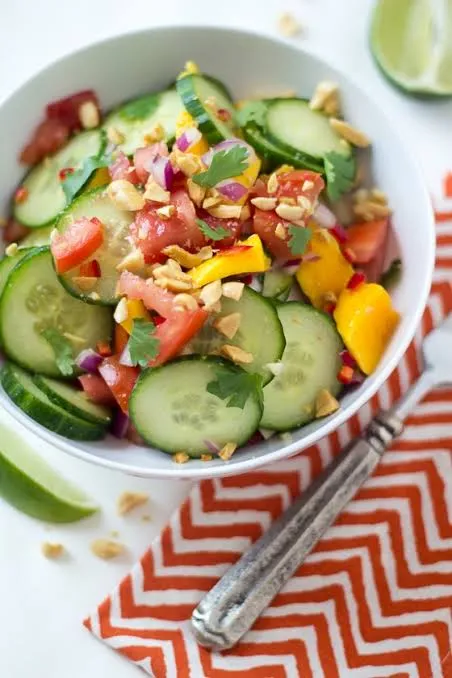
This is an East African salad of mango, cucumber and tomato with chilli, cumin and a little cinnamon, dressed with lime and finished with roasted peanuts. It is served on its own or alongside grilled meat, and its appeal is the contrast: crunchy against soft, sweet against tart.
Mangoes are not indigenous to Africa. They reached the East African coast through Persian traders around the tenth century, part of the same Indian Ocean exchange that brought rice, spices and coconut into Swahili cooking, and they have been grown and eaten there ever since. Kenya and Tanzania are now substantial producers.
The seasoning is what places it. Cumin with a dash of cinnamon in a fruit salad is a Swahili coast combination rather than a Western one, reflecting the same trade history, and the peanuts and lime give it the texture and acidity that hold the whole thing together. Salting the cucumber and onion first and letting them drain for twenty minutes is the technique that matters most: cucumber holds a great deal of water, and skipping it leaves a salad sitting in liquid within minutes of being dressed.