Nous utilisons des cookies essentiels au fonctionnement du site. Nous aimerions aussi déposer des cookies de mesure d’audience et des cookies publicitaires, uniquement avec votre accord. Vous pouvez choisir séparément pour chacun. Lire notre politique relative aux cookies
Loading
Recettes
Parcourez les archives par pays, par plat et par temps de cuisson.
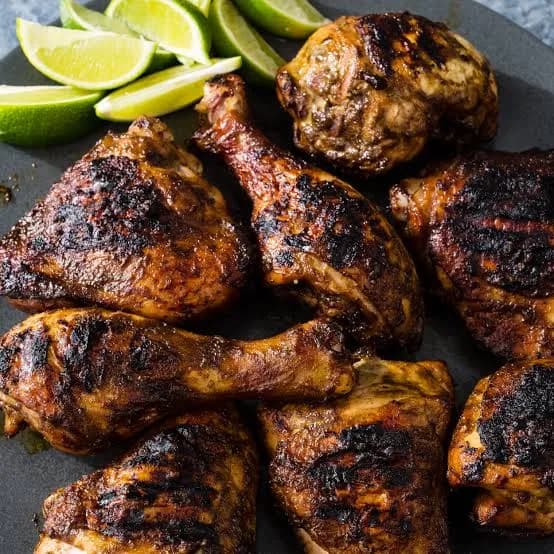
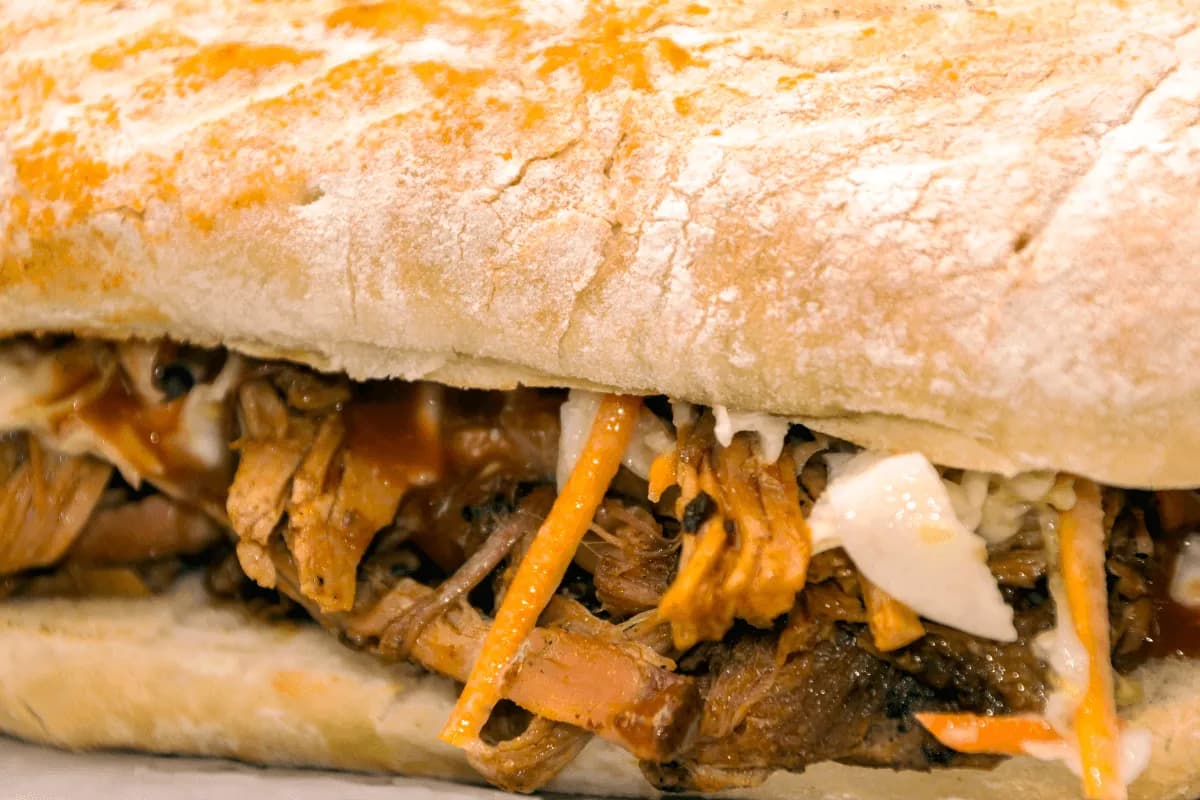
Chicken marinated overnight in a paste of scotch bonnet, allspice, thyme, nutmeg and scallion, then grilled. It is Jamaican, and it sits in Worldwide Recipes under Caribbean with its URL unchanged.
Its history is directly relevant to this site. Jerk as a technique comes from the Taíno, the indigenous people of Jamaica, and it was taken up and developed by Africans brought to the island, including the Maroons, communities of escaped enslaved people who lived independently in the interior and for whom slow-cooking meat over a covered fire was both practical and concealable. What is now Jamaica's most recognisable dish is a product of that meeting.
Two things define real jerk beyond the spice mix. The first is pimento wood, the allspice tree, burned under the meat, so the smoke carries the same aromatic compounds as the seasoning. The second is slow cooking over that smoke rather than fast grilling. Neither is available to most home cooks, which is why domestic jerk chicken is good rather than great.
The heat is not optional and should not be reduced too far. Scotch bonnet is central, and its fruity aroma matters as much as its heat.
The source's ingredient list is the only place five-spice powder appears; it is not traditional but it works.
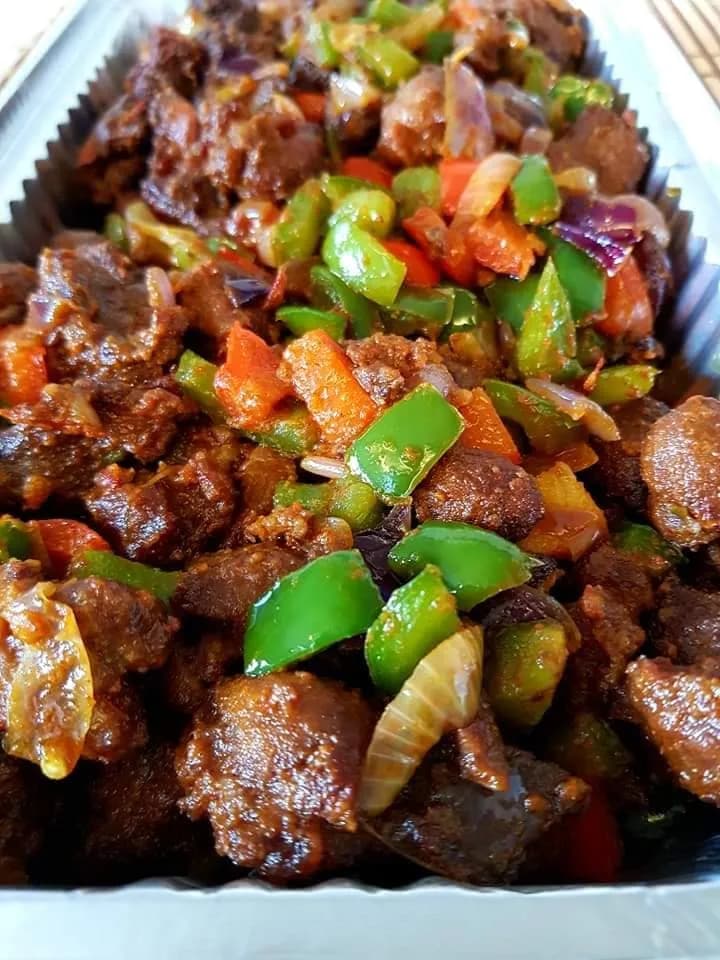
Asun is smoked or roasted goat meat tossed through a fierce pepper and onion mix, and it is one of the fixtures of the Nigerian owambe, the large Yoruba party that runs on food and music. It arrives as part of the small chops circuit, alongside puff puff and peppered snails, and it disappears fast.
Goat is the whole point. Yoruba speakers call it ogunfe, and it carries a stronger, more mineral flavour than beef that stands up to the quantity of scotch bonnet involved. The meat is simmered until tender before it ever meets fire, then roasted or grilled to dry the surface and pick up smoke, and only then does it go into the pepper mix. Skipping the first stage is the most common way it goes wrong, since goat that has not been softened stays tough no matter how long it spends in the pan.
Sliced onions and bell peppers go in for sweetness against the heat rather than for bulk. Whether asun is a starter or something else is a matter people disagree about: the source archive files it under both appetizer and dessert, and Nigerians treat it as a small chop, a side to jollof rice, or a main course with plantain, depending entirely on the occasion.
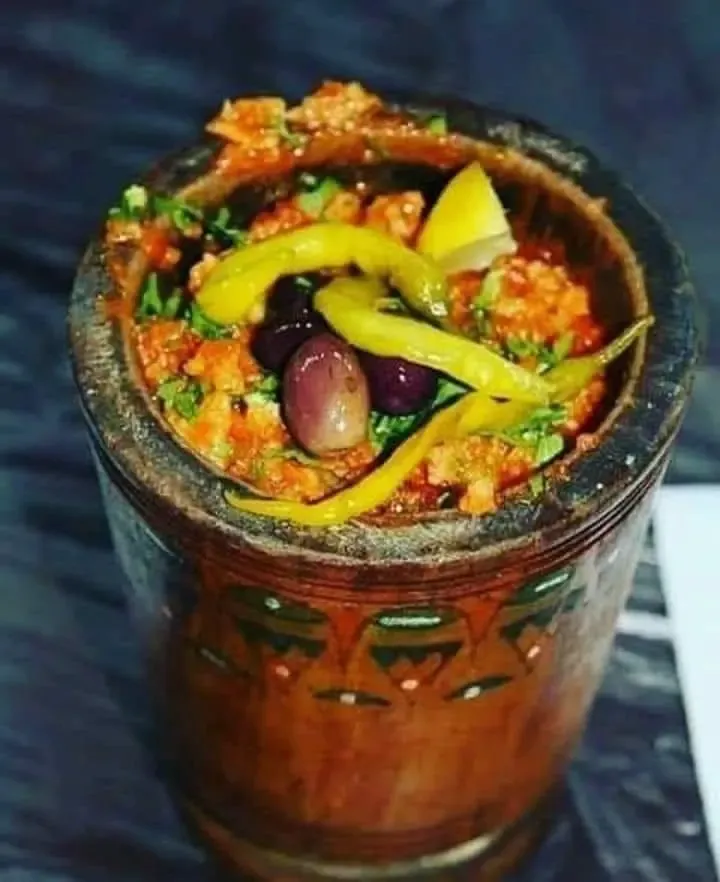
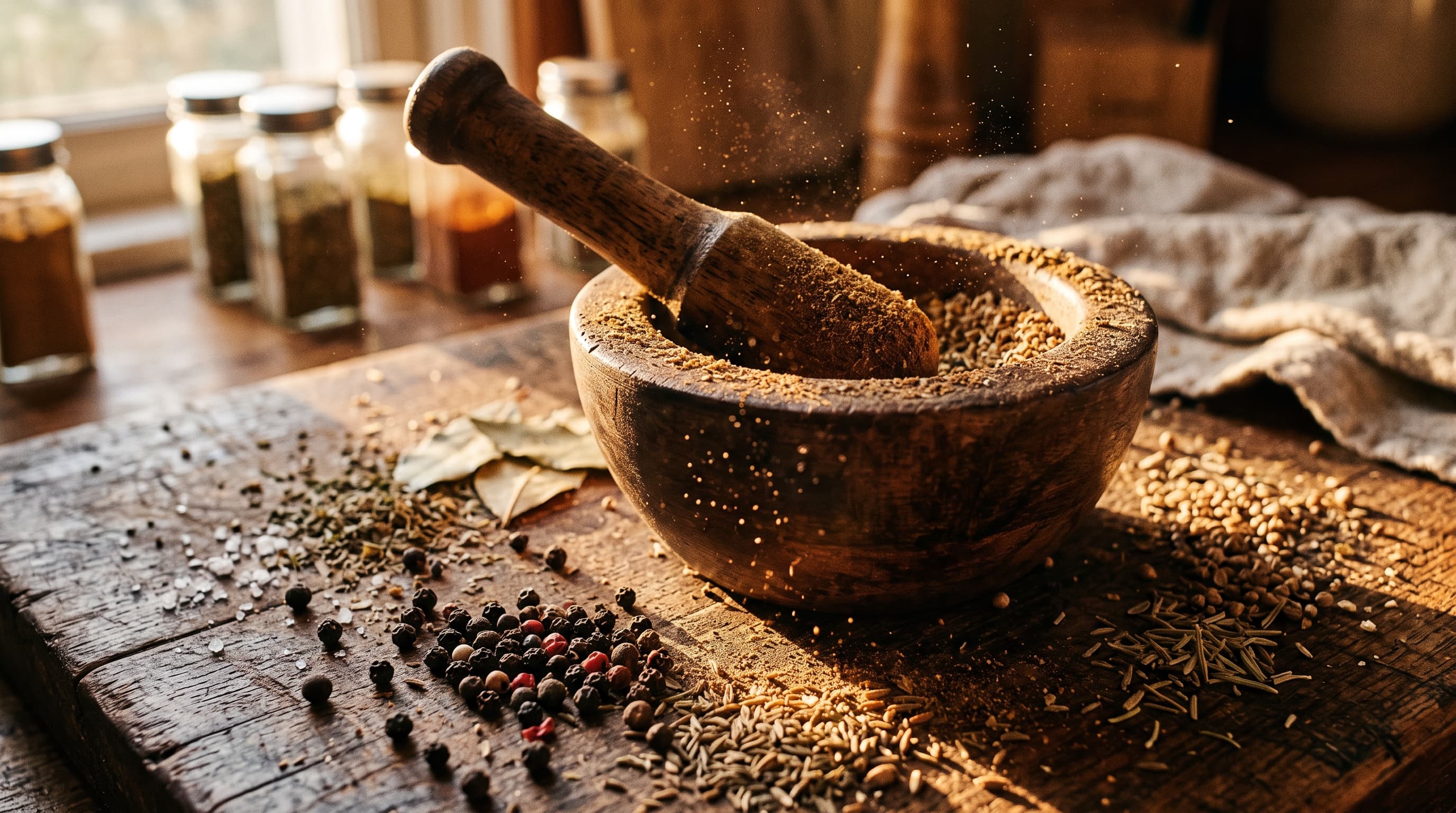
Zviti is a very hot Algerian dish from Bou Saada in M'Sila province, and it is defined as much by how it is served as by what goes into it. A semolina flatbread called rakhsis is crumbled into a tall wooden mortar, the mehrez, along with grilled peppers, tomatoes, garlic and a large quantity of chilli, and everything is crushed together with a wooden pestle.
The mortar then goes to the table. Zviti is not portioned onto plates: everyone gathers around the mehrez and eats directly from it, and in some places it is presented on a special table with a hole cut in the middle to hold the pestle upright. It also goes by the name slata mehrez, which translates as the mortar salad.
The heat is the point and Algerians are entirely open about the effect. Eating zviti involves sweating and gasping, and the description of it as a fire dish is affectionate rather than a warning. Some restaurants reduce the chilli or work olive oil and butter through it to soften it, which regulars regard as missing the idea. It is eaten as an accompaniment rather than a course, with a glass of lben, the fermented buttermilk, to cool the mouth between mouthfuls.
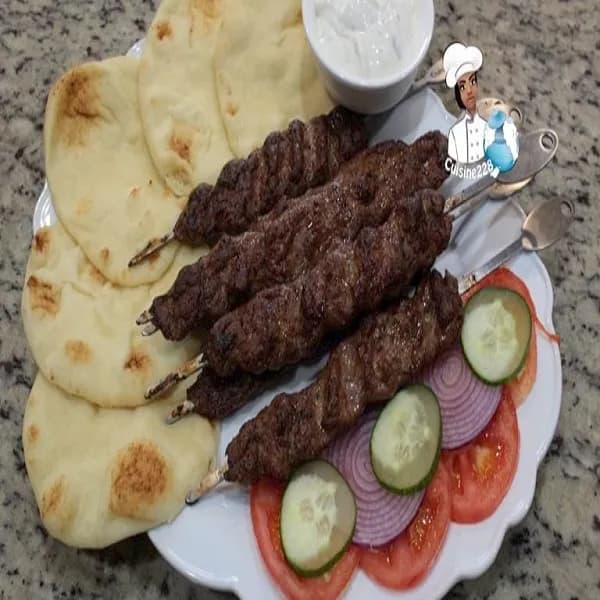
Kofta is minced meat, seasoned and shaped by hand, and it runs across an enormous stretch of the world: from the Balkans through Turkey, the Levant and Egypt, across the Arabian peninsula, into Central Asia and the Indian subcontinent, and along the North African coast. The Egyptian version is lamb or beef with onion, parsley, mint and a warm spice mix, moulded onto skewers and grilled.
Its written history is old. Recipes appear in the earliest surviving Arab cookbooks, where large ground lamb meatballs were glazed in saffron and egg yolk, a technique that later reached Europe and was known there as gilding or endoring. From the Arab world it travelled east, and nargisi kofta was served at the Mughal court in India.
In Egypt, kofta belongs to the grilled meat restaurants that exist in every town, where it is cooked alongside kebab, grilled chicken and tarb and served with rice, bread and salad. The distinction Egyptians draw between kofta and kebab is worth knowing: kebab is cubed meat on a skewer, kofta is minced meat shaped by hand. It is essentially sausage without a casing, and the comparison to a hamburger, sometimes made, misses that it is almost never served in bread.