Nous utilisons des cookies essentiels au fonctionnement du site. Nous aimerions aussi déposer des cookies de mesure d’audience et des cookies publicitaires, uniquement avec votre accord. Vous pouvez choisir séparément pour chacun. Lire notre politique relative aux cookies

Loading
Recettes
Parcourez les archives par pays, par plat et par temps de cuisson.

A batter of eggs, flour, milk and water poured into smoking hot fat and baked until it quadruples in volume. It is British, and it sits in Worldwide Recipes with its URL unchanged.
It is one of the few dishes where the physics is the recipe. The batter must go into fat that is genuinely smoking hot, the instant heat turns the water in the batter to steam, which inflates the structure before the egg and flour set around it. Fat that is merely hot gives you a flat, greasy disc. Preheating the tin with the fat in it for a full ten minutes is not padding.
The overnight rest is the other thing that separates good Yorkshires from adequate ones. Resting lets the flour hydrate fully and the gluten relax, which produces a more dramatic rise. The source says up to three days in the fridge and it is right, the batter genuinely improves.
This recipe is unusually precise, giving weights in grams alongside cup measures, which is rare in the archive and welcome. The water alongside the milk is deliberate: water produces more steam than milk, so it rises higher, while the milk gives flavour and colour.
Beef dripping is traditional. Lard, shortening and vegetable oil all work.
Africa has no equivalent, though popovers and Dutch baby pancakes are relatives.
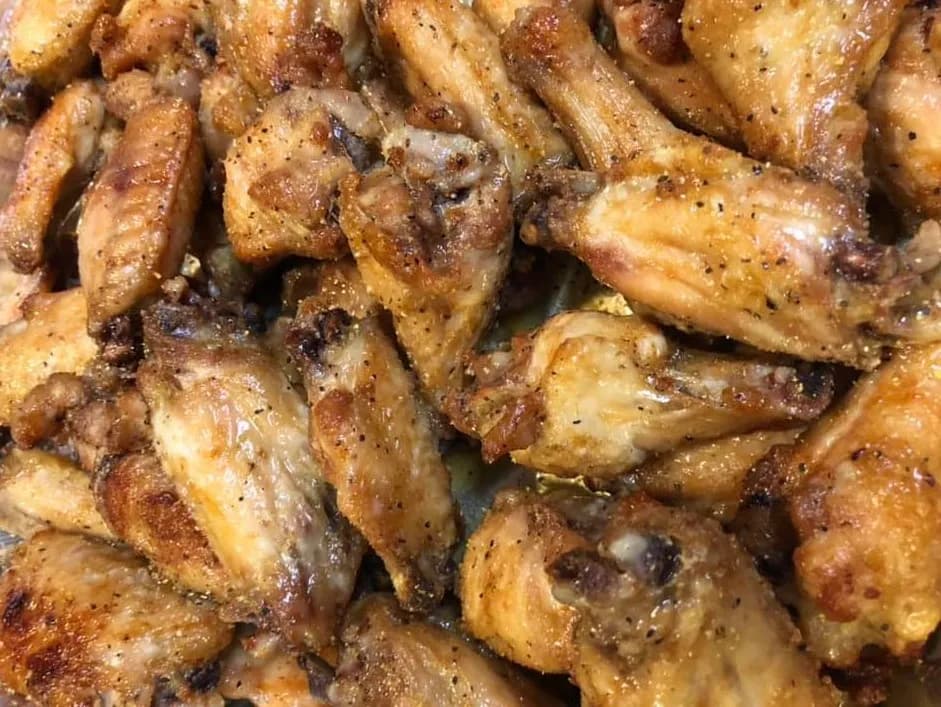
Chicken wings baked with a cornflour coating and then tossed in a sauce of lemon zest, lemon juice, honey, butter and black pepper. No country is claimed. Lemon pepper wings are American, and strongly associated with Atlanta, where lemon pepper wings from a particular style of takeaway are close to a civic institution.
The cornflour is the one technique here worth understanding, and it is genuinely effective. Tossing dry wings in cornflour before baking draws moisture from the skin and forms a thin coating that dries and crisps in the oven, giving something much closer to a fried texture without a fryer. It works because cornflour contains no gluten and does not go bready, the same reason it appears in so many Asian frying batters.
Two things have to happen for it to work. The wings must be patted properly dry first, because cornflour on wet skin turns to paste. And the sauce goes on after baking, not before, sugar in the honey burns over a thirty-minute bake, and a wet coating would undo the crisping entirely.
The source's ingredient list is scrambled, with its section headings absorbed into it, and one entry reads "½ stick honey", which is not a unit honey comes in. Rebuilt below.
Suya is skewered meat coated in yaji, a dry peanut based spice blend, and it is the best known street food in Nigeria. It comes from the Hausa people of the north, where it is also called tsire, and it spread from there across West Africa. Sudan has a close relative in agashe.
Yaji is what makes it suya rather than grilled meat. The blend is built on ground peanut, usually in the form of kuli kuli crushed to a powder, with ginger, chilli, onion powder and other seasonings, and the peanut is what gives suya its particular nuttiness and the slightly gritty coating that clings to the meat. Meat without yaji is not suya, whatever else is done to it.
Beef and ram are the traditional cuts, along with kidney, liver and tripe, and chicken is the newer arrival that has become common. It is sold at night from roadside grills, cut on a board and handed over in newspaper with sliced raw onion, tomato and cabbage, and the raw onion alongside the hot spice is not a garnish but part of how it is eaten. The one thing worth knowing before making it is that yaji contains peanut, which matters to anyone with an allergy.
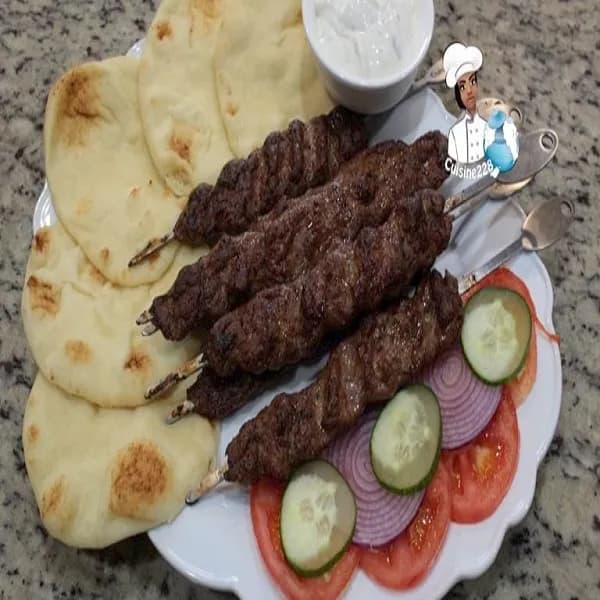
Kofta is minced meat, seasoned and shaped by hand, and it runs across an enormous stretch of the world: from the Balkans through Turkey, the Levant and Egypt, across the Arabian peninsula, into Central Asia and the Indian subcontinent, and along the North African coast. The Egyptian version is lamb or beef with onion, parsley, mint and a warm spice mix, moulded onto skewers and grilled.
Its written history is old. Recipes appear in the earliest surviving Arab cookbooks, where large ground lamb meatballs were glazed in saffron and egg yolk, a technique that later reached Europe and was known there as gilding or endoring. From the Arab world it travelled east, and nargisi kofta was served at the Mughal court in India.
In Egypt, kofta belongs to the grilled meat restaurants that exist in every town, where it is cooked alongside kebab, grilled chicken and tarb and served with rice, bread and salad. The distinction Egyptians draw between kofta and kebab is worth knowing: kebab is cubed meat on a skewer, kofta is minced meat shaped by hand. It is essentially sausage without a casing, and the comparison to a hamburger, sometimes made, misses that it is almost never served in bread.