


Maafe
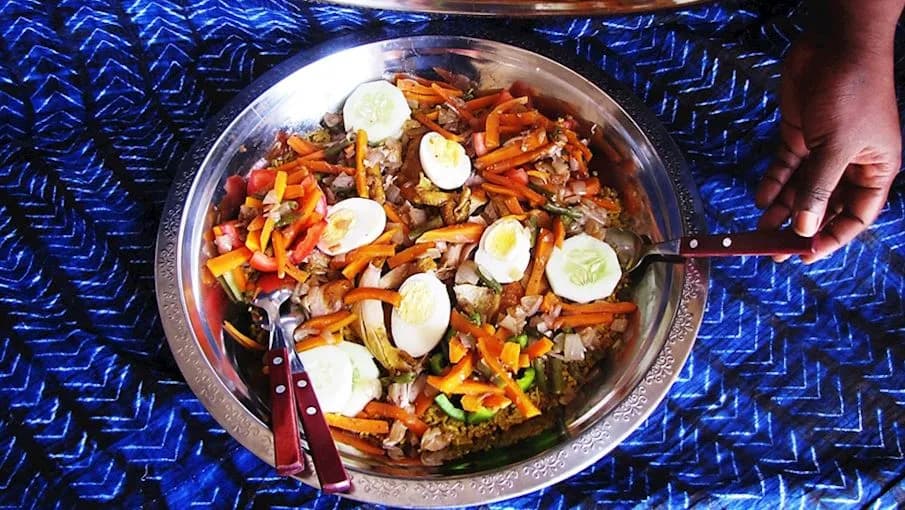
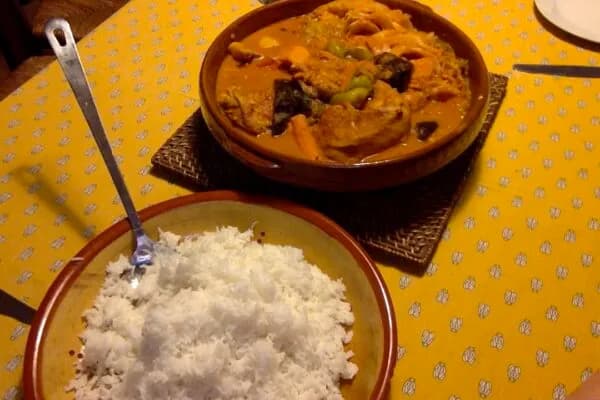
Maafe is the groundnut stew of West Africa, and its name comes from the Mandinka word for sauce. That plainness is accurate: maafe is a peanut sauce, thickened and enriched until it coats meat and vegetables, and it is one of the most recognisable things the region cooks. It traces to the Mandinka and Bambara of Mali, where it is called tigadegena in Bamanankan and domodah in Mandinka, and it spread from there into Senegal and across the rest of West Africa. Each country renamed it: maafe in Senegal, sauce d'arachide in Côte d'Ivoire, domoda in the Gambia. It also crossed the Atlantic, and peanut soups in parts of the American South carry a clear family resemblance. Its history has an economic layer. Peanut stews existed before the peanut, made with indigenous groundnuts, and the arrival of the American peanut in the 16th century gave them a better crop. What entrenched maafe was the colonial period, when groundnut cultivation was expanded enormously for export and West African kitchens found themselves with far more peanuts than they had previously used. A dish partly shaped by a cash crop economy is not a diminished dish, and Senegalese eat maafe communally from a shared platter with rice, which is the ordinary form of a Senegalese meal.
Senegal1 hr 20 minFoodChef