
Nous utilisons des cookies essentiels au fonctionnement du site. Nous aimerions aussi déposer des cookies de mesure d’audience et des cookies publicitaires, uniquement avec votre accord. Vous pouvez choisir séparément pour chacun. Lire notre politique relative aux cookies

Loading
Recettes
Parcourez les archives par pays, par plat et par temps de cuisson.
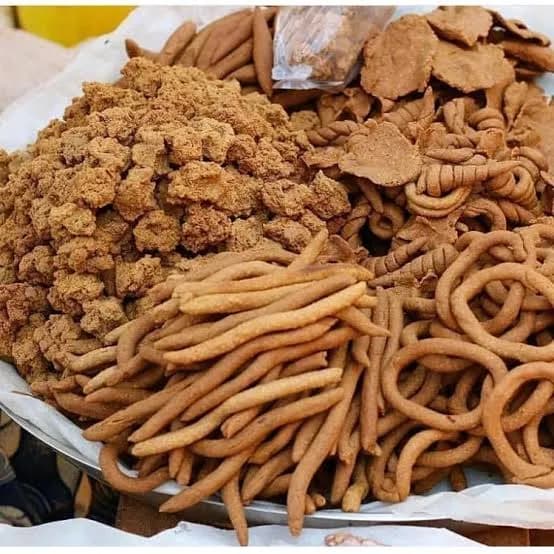
Kuli kuli is a peanut snack eaten across Nigeria, Benin, northern Cameroon and Ghana, and it is one of the most widely recognised street foods in West Africa. It is made from peanuts alone, and the technique is what makes it: the oil is deliberately pressed out of the ground paste before the remaining solids are shaped and fried.
That extraction is the point. Removing the oil leaves a dense, dry paste that fries into something genuinely crunchy rather than soft, and it also produces the frying oil as a by-product, so nothing is wasted. It is a piece of processing knowledge that predates industrial oil pressing and is still done by hand in Hausa communities in northern Nigeria, where the snack has its strongest association.
It takes different shapes in different places: small sticks, rings, flat discs and irregular pieces are all standard, and the form varies by region and by seller. English names for it, groundnut cake and peanut snack among them, are approximations rather than translations. Kuli kuli is eaten on its own, mixed into garri with sugar and water, crumbled over salad, or served alongside fura and koko. Crushed to a powder it becomes the peanut component of suya spice, which is where most people outside the region encounter it without knowing.
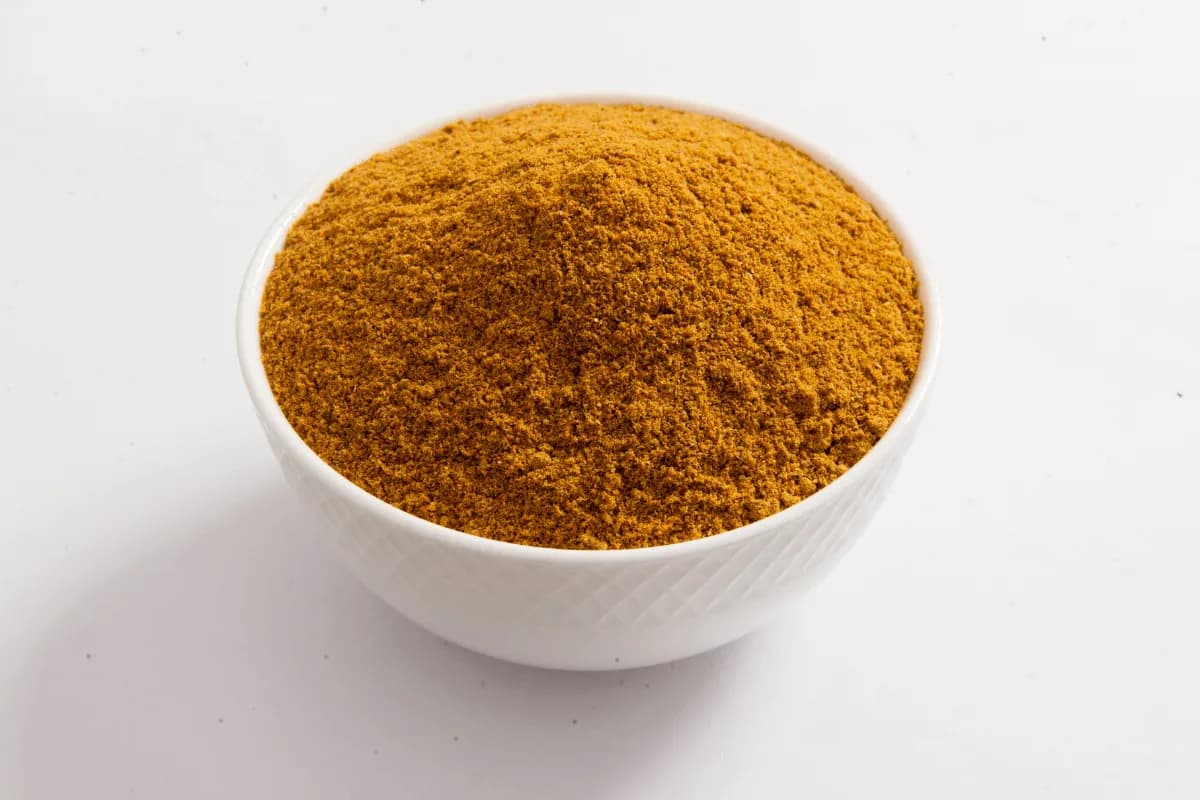
Yaji is the spice blend that makes suya suya. Ground roasted groundnuts form its base, and that is what separates it from every other dry rub in the world: a spice mixture built on a nut rather than on seeds and chillies alone. Ginger, garlic, onion and paprika go in around it, with cayenne carrying the heat.
It belongs to the Hausa of Northern Nigeria, and the recipes are held closely. Every suya vendor guards a proprietary arrangement of spices, and the specific balance is treated as commercial property rather than shared knowledge, which is why no two suya taste quite the same and why the exact composition is genuinely difficult to pin down. What is consistent is the groundnut, the aromatics and the heat.
Its use extends well past the meat it is named for. Yaji is a marinade, a dry rub applied before grilling, and a finishing powder scattered over meat as it comes off the fire, and Nigerians use it on roasted vegetables, on fish, on chips, on plantain and on nuts. It is sold ready made at Nigerian grocers, and having a jar of it in the house is the single fastest route to making Nigerian food taste like itself.
Grilled plantain is street food across West Africa, and in Nigeria it is boli, ripe plantain roasted over charcoal until the outside blackens and the sugars inside caramelise.
It is about as simple as cooking gets. No oil, no seasoning, nothing added. The plantain is put over heat and turned. What makes it work is entirely down to the fruit: a plantain that is ripe enough has developed sugars that caramelise under direct heat, and one that is not will taste starchy and dull no matter how long it is grilled.
Plantains are not bananas, despite the resemblance. They are larger, starchier, and must be cooked before eating, raw they are unpleasant and hard to digest. The ripeness scale runs from green, which is firm and starchy and used for chips and fufu, through yellow, which is what grilling wants, to almost black, which is very sweet and better fried.
Boli is sold from charcoal drums at roadsides and motor parks, usually with roasted groundnuts, and often with a pepper sauce or with fish. The pairing with groundnuts is close to fixed in Nigeria, the salt and fat against the sweetness of the plantain.
It is cheap, filling and energy-dense, which is why it has stayed street food rather than becoming restaurant food.
Groundnut milk is what you get when raw peanuts are soaked, blended with water and strained, a plant milk made from one of West Africa's most important crops, using a method that predates the shelves of alternative milks now sold everywhere.
The groundnut itself is not originally African. It came from South America and arrived through Portuguese trade, but it settled into West African farming and cooking so completely that it is now difficult to think of the region's food without it. Groundnut stew, kuli kuli, suya's spice base, roasted nuts sold by the cup at every junction, the crop runs right through the cuisine, and milk is one more thing done with it.
It is drunk for straightforward reasons. It contains no dairy, which matters in a region where lactose intolerance is common in adults, and it is made from something cheap and locally grown rather than imported. Flavourings are a matter of household preference: vanilla, a little sugar, sometimes cinnamon or dates.
The one thing it demands is that you make what you will drink. Fresh groundnut milk has nothing preserving it and separates within a day or two, so it is made in small quantities rather than stored, which is why it tends to be a morning thing, made and finished.
It should be shaken before pouring; separation is normal, not spoilage.
Les mentions alimentaires sont fournies par les contributeurs à titre indicatif. Elles ne sont pas vérifiées par AFN et dépendent des produits que vous achetez. En cas d’allergie grave, vérifiez vous-même chaque ingrédient. Cuisine, allergies et votre propre jugement