Nous utilisons des cookies essentiels au fonctionnement du site. Nous aimerions aussi déposer des cookies de mesure d’audience et des cookies publicitaires, uniquement avec votre accord. Vous pouvez choisir séparément pour chacun. Lire notre politique relative aux cookies

Loading
Recettes
Parcourez les archives par pays, par plat et par temps de cuisson.
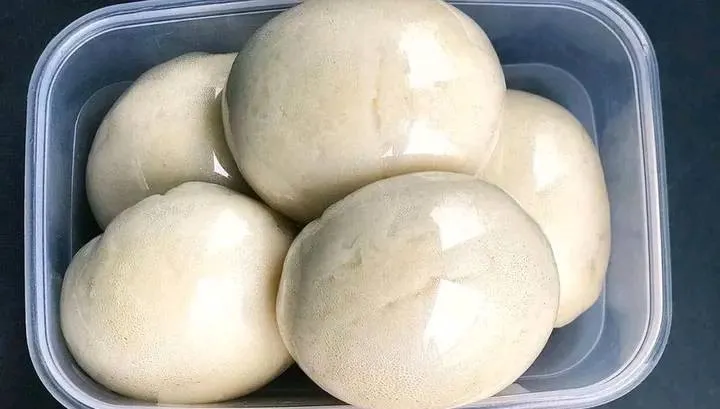
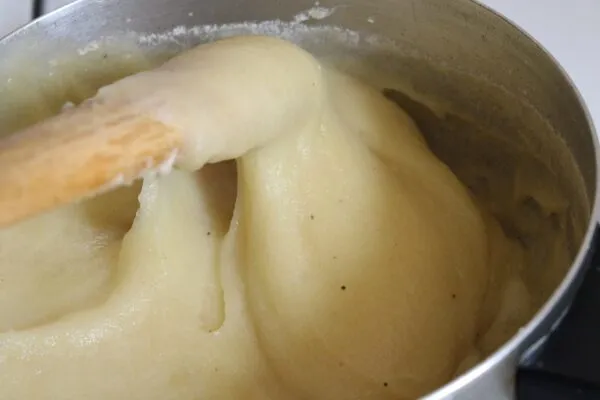
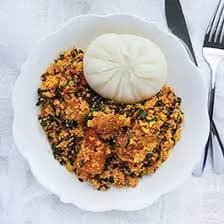
Pounded yam is white yam softened and then beaten until it becomes smooth, sticky and elastic, and it sits at the top of the Nigerian swallow hierarchy. Nigerians will argue about most things in their food and generally will not argue about this: iyan is what you serve when the occasion matters.
The pounding is the dish. The yam is softened, transferred hot to a mortar and worked with a pestle until the structure breaks down completely and the mass turns stretchy, and there is a technique to it that varies between ethnic groups and is learned rather than described. It is hard physical work, traditionally done by women though not exclusively, and the sound of it carries.
It is called iyan by the Yoruba, and the same or a closely related preparation is foutou in Côte d'Ivoire, fufu in Togo and Benin, and yam fufu in Ghana, which makes it one of the most widely made yam products in West Africa. Its texture is what distinguishes it from the rest of the swallow family: smoother than eba, more elastic than amala, and considerably more work than either. Food processors, blenders and hand mixers have made it accessible on a weeknight, and pounded yam flour has made it possible with no yam at all, which purists note without much affecting what happens in most kitchens.
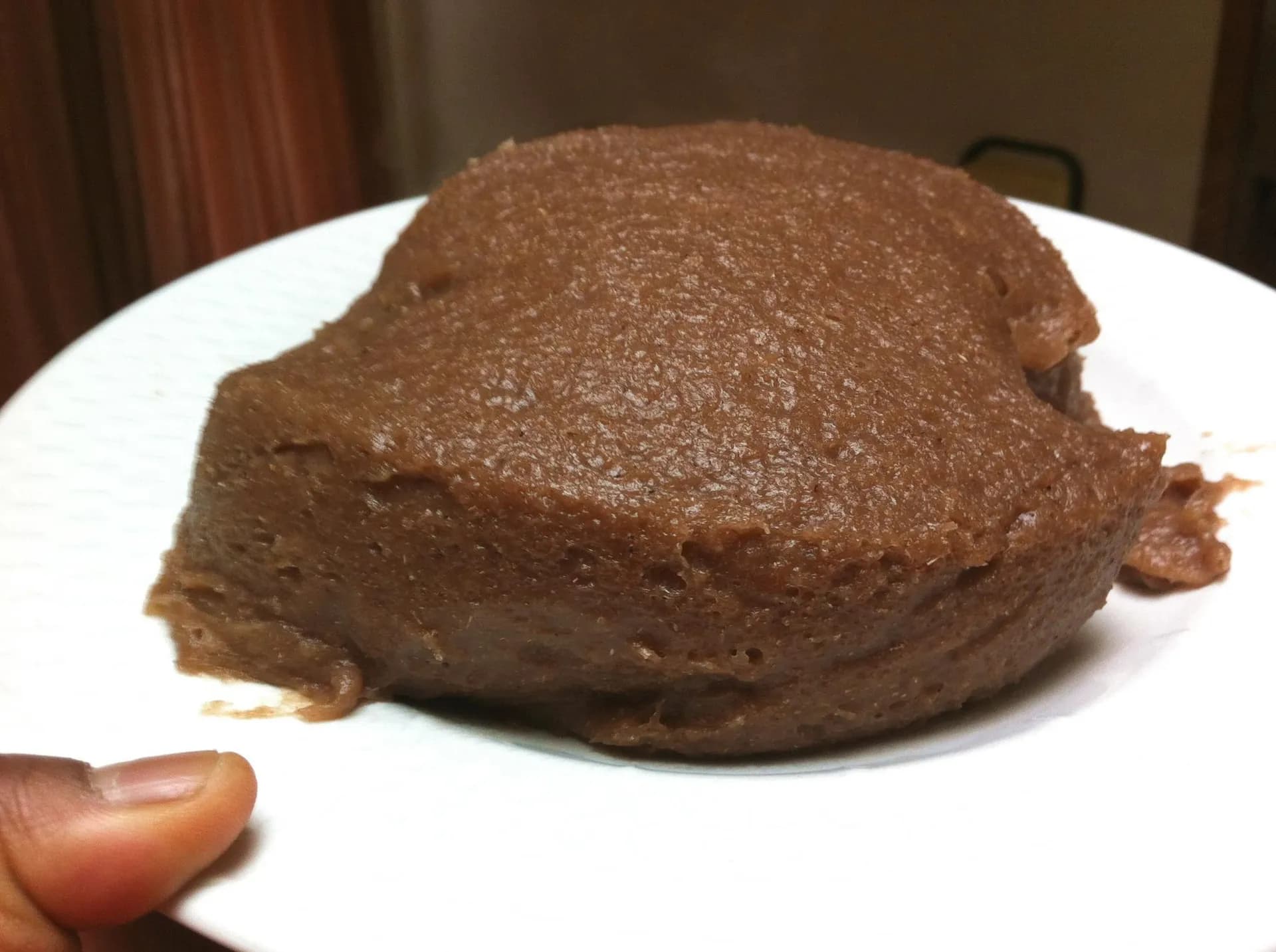
Amala is the swallow of the Yoruba southwest, and it is the darkest thing on a Nigerian table. Yam is peeled, cut, dried and milled into a flour called elubo, and the drying turns the white tuber brown. In boiling water that brown becomes near black, which is the colour amala is known by and which surprises people who expect a starch to be pale.
Its home is Oyo State, and Ibadan in particular. The pairing of amala with ewedu, the jute leaf soup, is treated in Ibadan as something close to a civic institution, and the same seriousness attaches to it in Lagos, where you will not find a buka without it on the menu. Yoruba speakers make the comparison directly: amala and ewedu stand to an Ibadan person as akpu and ofe onugbu stand to an Igbo one.
Three flours make three amala. Elubo isu, from yam, is the standard and gives the dark version. Lafun, from cassava, gives a white amala and is a different dish in practice. Elubo ogede, from unripe plantain, is lighter in colour and lower in starch. The technique is unforgiving in one specific way: the flour must go into water that has been taken off the heat, or it lumps, and lumps in amala are the fastest way to ruin it.
Fufu is starch pounded to a smooth elastic mass, and it is among the most widely eaten things in West and Central Africa. The word comes from Twi, spoken in Ghana and Côte d'Ivoire, where it means to mash or to combine, and the sound of a mortar and pestle working in rhythm is the sound of fufu being made.
What goes into it depends entirely on where you are. West Africa favours white yam, sometimes with plantain. Central Africa favours cassava. Plantain, cocoyam, semolina, rice and combinations of flours all appear, and each gives a different texture and a slightly different name. That variability is why fufu is better understood as a category than a recipe.
It crossed the Atlantic with enslaved West Africans and survived. Foo foo and fou fou in the Caribbean are made with plantain or cornmeal, coocoo in Barbados is the same idea, and Cuban, Jamaican and Puerto Rican versions carry sweet plantain and pork fat. Whatever the base, it is eaten the same way: a piece is pulled off with the fingers, an indentation is pressed in with the thumb, and it is used to scoop soup or stew. It is never eaten alone, and its slightly tangy, near neutral flavour is what lets a heavily seasoned soup do the talking.
Ogi is fermented cereal porridge, sour, smooth and pale, and it is among the first things most Nigerians ever eat. It is called akamu in Igbo and pap in English, and it is made from maize, sorghum or millet steeped in water for up to three days, wet milled, sieved to remove the husks, and then fermented for several more days until it turns distinctly sour.
That sourness is the point and it is what separates ogi from any other cereal porridge. It also does real work: fermentation makes the grain more digestible and gives ogi a probiotic character, which is a large part of why it has been the standard weaning food for Nigerian infants for generations and why it is given to people who are unwell or recovering.
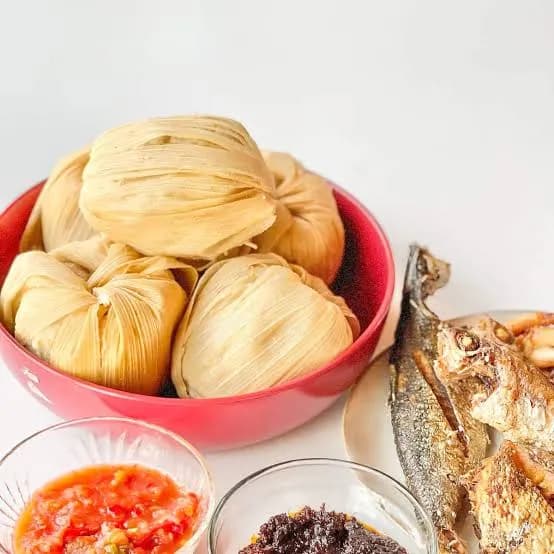
The same base goes in two directions. Thinned and cooked, it is the porridge eaten at breakfast with akara, moin moin, fried plantain or bread. Cooked much thicker and left to set, it becomes agidi or eko, sliced and eaten with pepper soup or stew. Across the region the names change without the thing changing much: koko in Ghana, uji in Kenya, where it is more often made from millet and sorghum. Three grains are used in Nigeria, and white corn, yellow corn and guinea corn each give a slightly different result.