Nous utilisons des cookies essentiels au fonctionnement du site. Nous aimerions aussi déposer des cookies de mesure d’audience et des cookies publicitaires, uniquement avec votre accord. Vous pouvez choisir séparément pour chacun. Lire notre politique relative aux cookies

Loading
Recettes
Parcourez les archives par pays, par plat et par temps de cuisson.
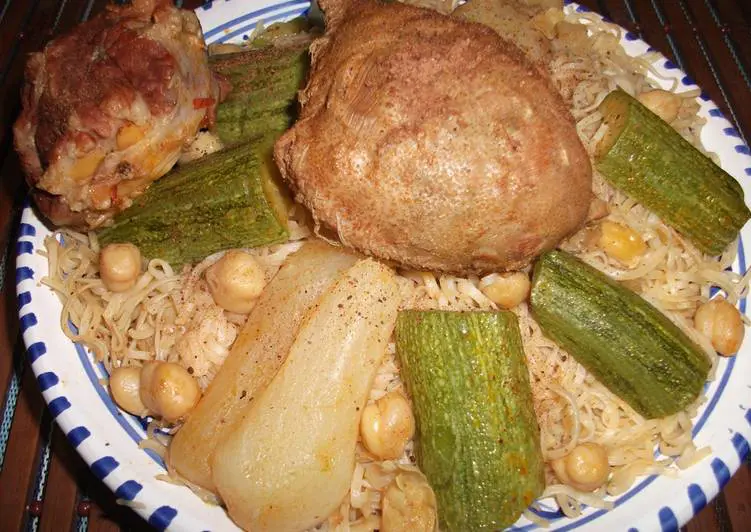
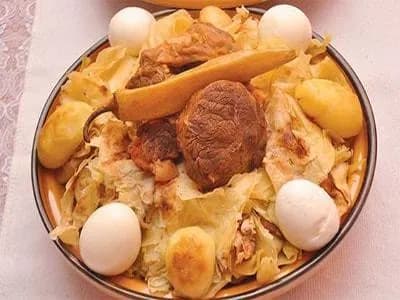
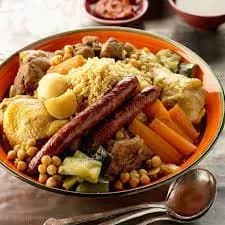
Couscous is the national dish of Tunisia, and it is also the national dish of Algeria, Morocco, Mauritania and Libya, which tells you something about how the Maghreb understands itself. The same steamed semolina appears across all five countries under names that shift with the language: kousksi in Tunisia, taam or kesksu in Algeria, seksu in Morocco, and cuscusu in Sicily, where it crossed the water.
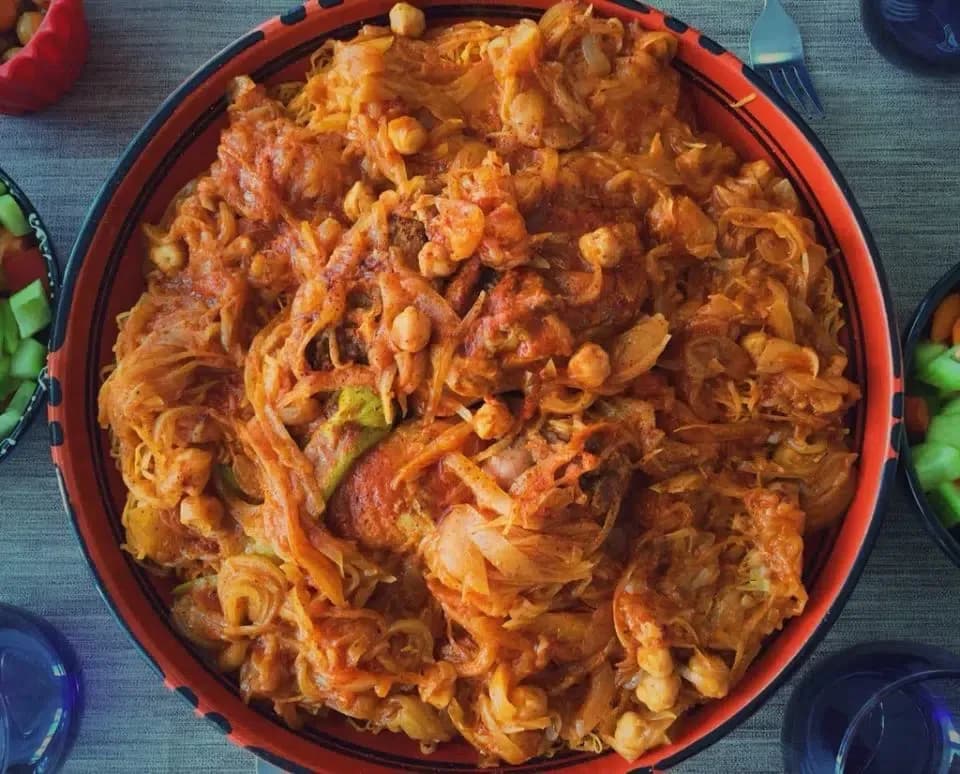
The Tunisian version is distinguished by its heat and its colour. Harissa goes into the broth rather than being offered alongside it, and the finished couscous runs orange to deep red depending on how much broth and harissa it has taken up. Caraway is the other Tunisian signature, appearing in a quantity that Moroccan and Algerian couscous would not use.
What goes with it depends on the coast. In Sfax and the other coastal cities, couscous is made with fish. Inland it more often carries lamb, sometimes with dried fruit. Turnip, carrot, courgette, potato, pumpkin and chickpeas are the usual vegetables, cooked in the broth and removed as each becomes ready. The word itself is traced either to the Arabic kaskasa, to pound small, or the Amazigh seksu, meaning rounded or well rolled, and both derivations describe the grain rather than the dish.
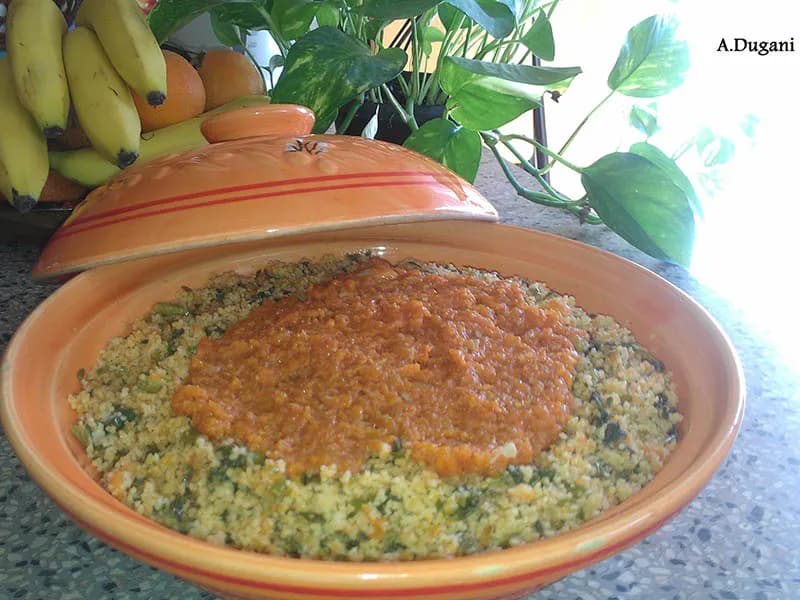
Aslooz is a Libyan couscous dish named after a plant, and the plant is the reason it belongs to a season rather than to a calendar. Aslooz is a wild weed that grows across the countryside and the mountain regions of western Libya, gathered rather than farmed, and harvested in a narrow window through January and February.
It is picked from roadsides and hillsides in the Nafusa mountains and the western districts, and only the tender twigs and flowering branches are used. Because it grows wild and its season is short, aslooz has never been a commercial crop, and it is effectively unavailable outside Libya. Libyan families abroad substitute, most often asparagus with dill, sometimes carrot with cumin leaves, and this recipe is written that way.
Everything about it is plain: steamed couscous, a tomato base, a wild green and a carrot sauce sharpened with lemon and chilli. Libyans describe it as cheap and cheerful and treat it as a family dish, made and eaten together rather than served to guests. The couscous is steamed over the greens so it takes their flavour from below, which is the technique that separates it from a couscous simply mixed with vegetables, and it is what a Libyan cook would notice first if it were skipped.
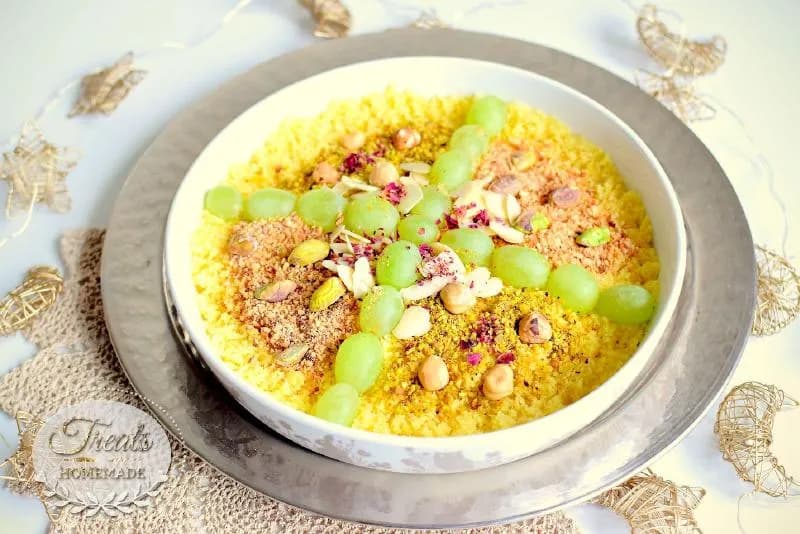
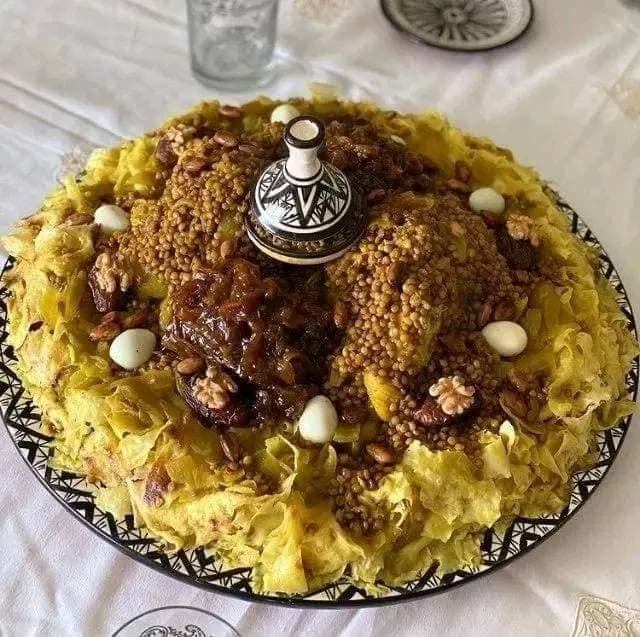
Seffa medfouna is saffron chicken hidden inside a mound of steamed, sweetened vermicelli, dusted with cinnamon, icing sugar and ground fried almonds. Medfouna means buried, and the concealment is the whole presentation.
**It is finished with a cup of ground almonds, which the title gives no indication of.**
It is the clearest example on this site of the Moroccan savoury-sweet axis. Saffron chicken cooked with ginger, turmeric and pepper is buried under vermicelli that has been sweetened with butter and icing sugar, studded with raisins, and decorated with cinnamon and almonds. Neither element is subtle, and the point is that they arrive in the same mouthful. This is the same tradition as pastilla, and it reflects the Andalusian and Arab influence that runs through Moroccan festive cooking.
Seffa on its own is the sweetened steamed vermicelli or couscous, served as a dish in its own right. Medfouna is the version with meat concealed inside.
The vermicelli is steamed four times. That is not an exaggeration in the method, repeated steaming with resting in between is what makes it light rather than claggy, and it is the same principle as double-steamed couscous.
It is a dish for a table with several courses on it, not a weeknight.
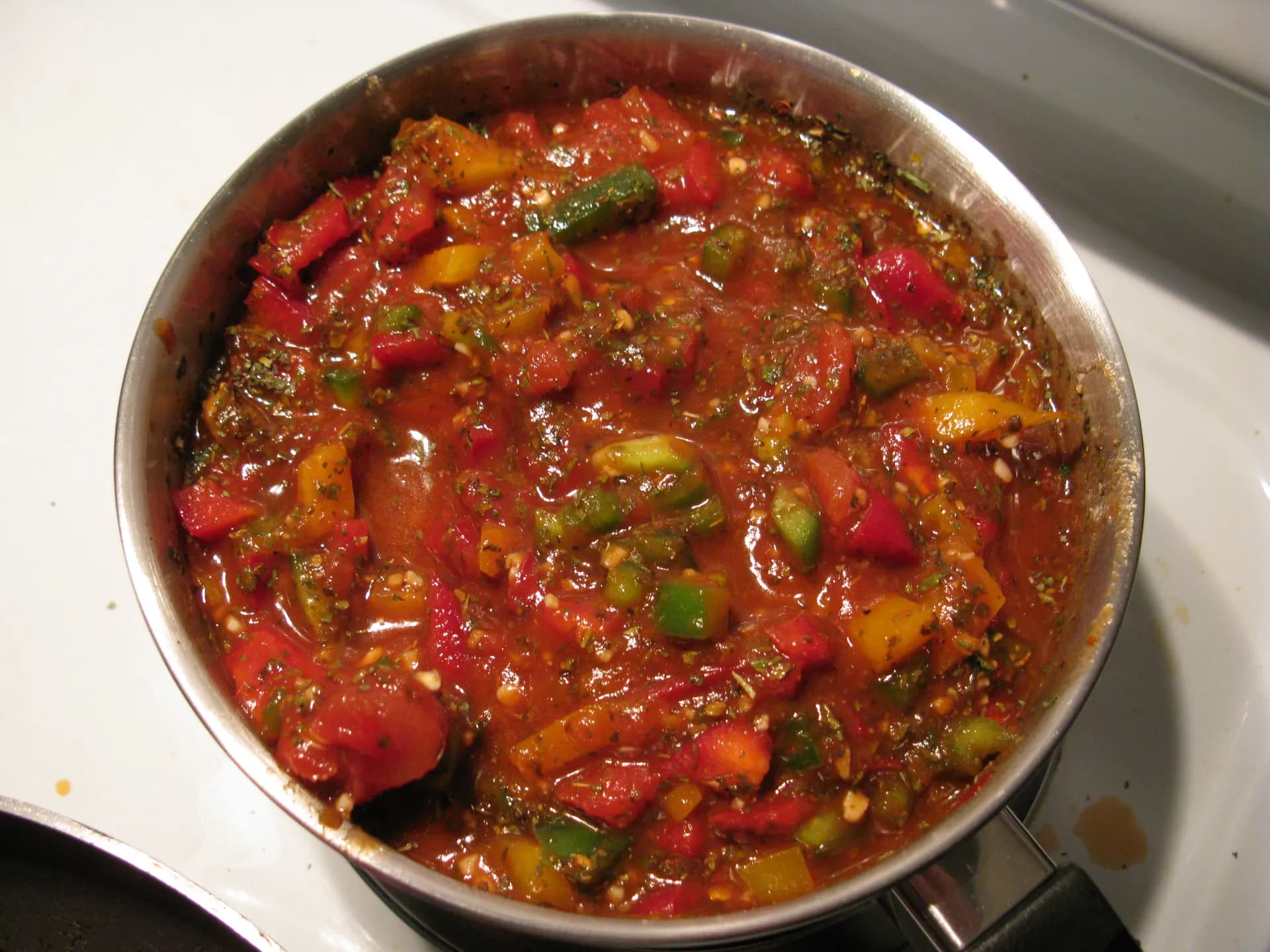
Taktouka is roasted peppers and grated tomato cooked down with onion, garlic, cumin and paprika into a thick warm salad. It is Moroccan, also popular in Algeria, and it is a mezze dish rather than a leaf salad.
The name explains the texture. It comes from the Arabic taktak, meaning to grind or pound, and the vegetables end up soft and broken down rather than crisp. That is why the source opens by pre-empting the obvious question, why a salad needs a recipe, and it is a fair point: taktouka requires cooking, and cooking is most of it.
It has regional names worth knowing. In eastern Morocco it is called flifla; in Algeria, felfla mechouia. Zaalouk, the aubergine version, is its closest sibling and works the same way.
Grating the tomatoes rather than dicing them is the technique the source recommends and it is a good one. Cutting a tomato in half and grating the cut face against a box grater extracts the pulp and leaves the skin behind in your hand, no peeling, no blanching, and a smoother result.
This dish is closely related to matbucha, the Moroccan-Jewish version, which is on this site. Matbucha is cooked longer, without onion or cumin, and the two are genuinely distinguished by community and by seasoning rather than being the same recipe under two names.