Nous utilisons des cookies essentiels au fonctionnement du site. Nous aimerions aussi déposer des cookies de mesure d’audience et des cookies publicitaires, uniquement avec votre accord. Vous pouvez choisir séparément pour chacun. Lire notre politique relative aux cookies

Loading
Recettes
Parcourez les archives par pays, par plat et par temps de cuisson.
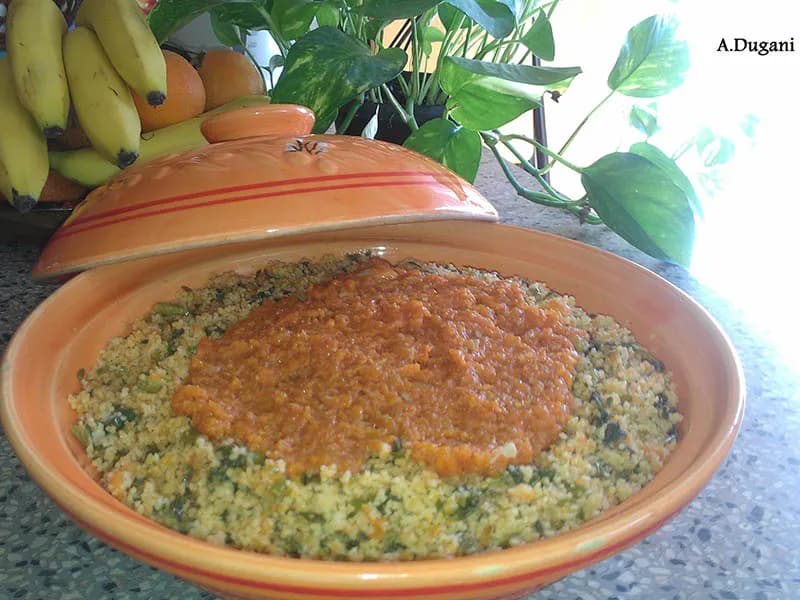
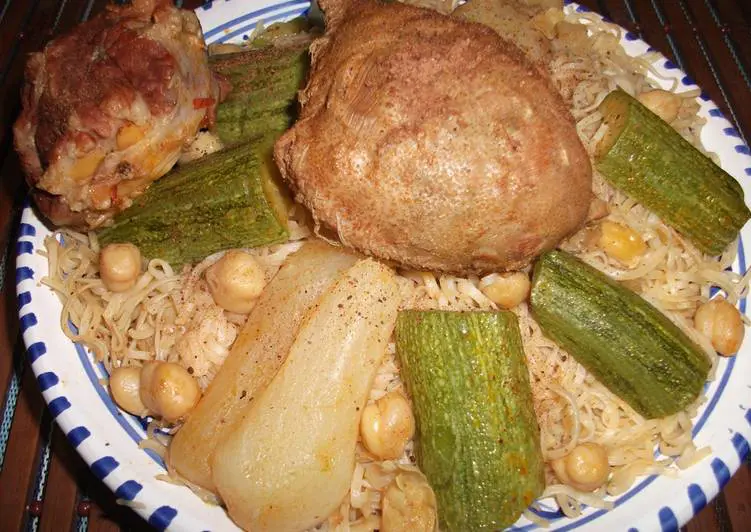
Aslooz is a Libyan couscous dish named after a plant, and the plant is the reason it belongs to a season rather than to a calendar. Aslooz is a wild weed that grows across the countryside and the mountain regions of western Libya, gathered rather than farmed, and harvested in a narrow window through January and February.
It is picked from roadsides and hillsides in the Nafusa mountains and the western districts, and only the tender twigs and flowering branches are used. Because it grows wild and its season is short, aslooz has never been a commercial crop, and it is effectively unavailable outside Libya. Libyan families abroad substitute, most often asparagus with dill, sometimes carrot with cumin leaves, and this recipe is written that way.
Everything about it is plain: steamed couscous, a tomato base, a wild green and a carrot sauce sharpened with lemon and chilli. Libyans describe it as cheap and cheerful and treat it as a family dish, made and eaten together rather than served to guests. The couscous is steamed over the greens so it takes their flavour from below, which is the technique that separates it from a couscous simply mixed with vegetables, and it is what a Libyan cook would notice first if it were skipped.
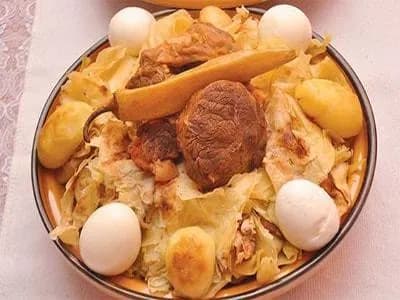
Chekhchoukha, also written chakhchoukha, is torn flatbread under a spiced meat and chickpea sauce, and the name describes the tearing. It comes from tacherchert in the Chaouia language, meaning to crumble or to tear into small pieces, and the bread is broken by hand rather than cut.
It is a Chaoui dish, from the Aurès mountains of eastern Algeria, and it spread from there into Constantine, Biskra and the rest of the country. Its origin is in shepherds' food, the substantial thing eaten on returning home on cold winter nights, and it kept that character even as it became a dish for festive occasions and celebrations rather than everyday eating.
The bread is rougag, also called trid, a very thin round flatbread made from fine semolina. It is torn, steamed briefly to soften, then heaped on a plate and covered with marqa, the sauce of diced lamb, tomato, onion and chickpeas spiced with dried red chilli, caraway, ras el hanout, black pepper and cumin. Two versions are recognised: chakhchoukha of Biskra, which is this one, and chakhchoukha dfar, which uses a different flatbread and differs in taste and thickness. Which pot it is made in also varies, with some cities using clay and others iron.
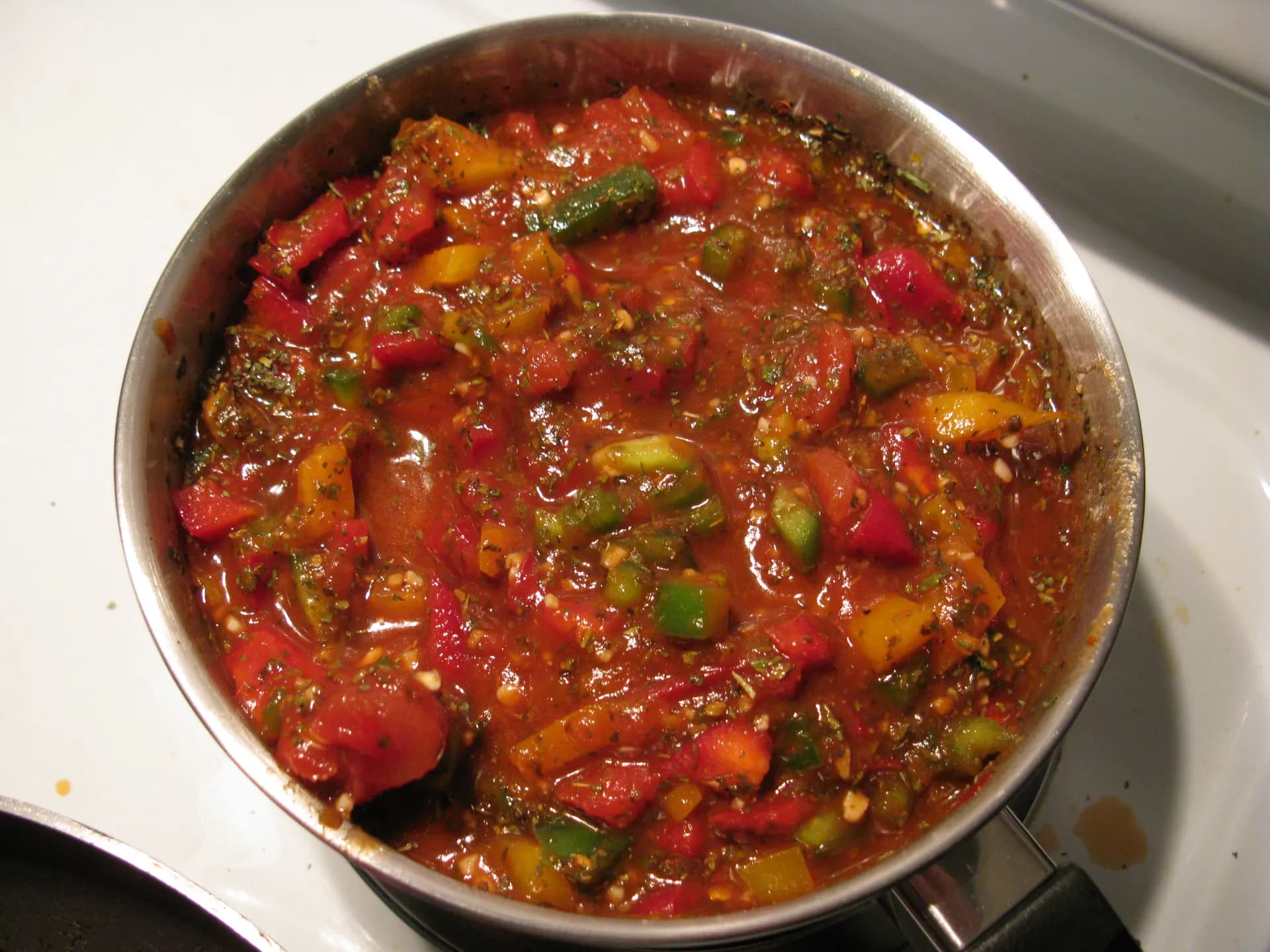
Matbucha is roasted peppers and tomatoes cooked down slowly with garlic and paprika into a thick, dark, jammy dip. It is Moroccan Jewish in origin and is now eaten across Israel and the wider Middle East as a mezze staple.
The name says what it is: matbucha means cooked salad in Arabic, which describes both the dish and the crucial technique. This is not a fresh salsa but something reduced by half over an hour or more, until the water has cooked out and the peppers and tomatoes have concentrated into something closer to a preserve. Rushing that stage gives you a thin tomato sauce, which is a different and lesser thing.
Its journey is worth recording. Matbucha travelled from Morocco to Israel with Jewish immigrants in the mid-twentieth century, and it is now so established there that it is sold in every supermarket. In Morocco it is served as part of a mezze spread; in Israel it is understood as an appetizer. Same dish, slightly different place at the table.
Red peppers rather than green is not incidental. The source notes that green peppers turn bitter in matbucha, which is correct, red peppers are ripe and sweet and reduce into something quite different.
It freezes well, which is why the recipe makes three jars.
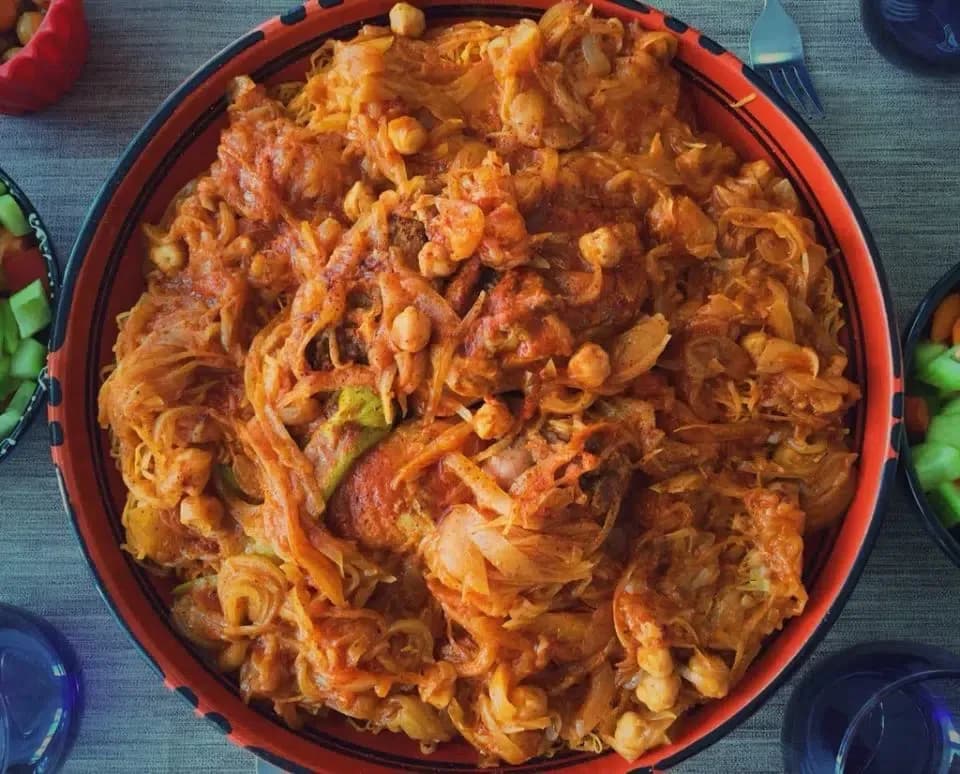
Taktouka is roasted peppers and grated tomato cooked down with onion, garlic, cumin and paprika into a thick warm salad. It is Moroccan, also popular in Algeria, and it is a mezze dish rather than a leaf salad.
The name explains the texture. It comes from the Arabic taktak, meaning to grind or pound, and the vegetables end up soft and broken down rather than crisp. That is why the source opens by pre-empting the obvious question, why a salad needs a recipe, and it is a fair point: taktouka requires cooking, and cooking is most of it.
It has regional names worth knowing. In eastern Morocco it is called flifla; in Algeria, felfla mechouia. Zaalouk, the aubergine version, is its closest sibling and works the same way.
Grating the tomatoes rather than dicing them is the technique the source recommends and it is a good one. Cutting a tomato in half and grating the cut face against a box grater extracts the pulp and leaves the skin behind in your hand, no peeling, no blanching, and a smoother result.
This dish is closely related to matbucha, the Moroccan-Jewish version, which is on this site. Matbucha is cooked longer, without onion or cumin, and the two are genuinely distinguished by community and by seasoning rather than being the same recipe under two names.
Les mentions alimentaires sont fournies par les contributeurs à titre indicatif. Elles ne sont pas vérifiées par AFN et dépendent des produits que vous achetez. En cas d’allergie grave, vérifiez vous-même chaque ingrédient. Cuisine, allergies et votre propre jugement