Nous utilisons des cookies essentiels au fonctionnement du site. Nous aimerions aussi déposer des cookies de mesure d’audience et des cookies publicitaires, uniquement avec votre accord. Vous pouvez choisir séparément pour chacun. Lire notre politique relative aux cookies

Loading
Recettes
Parcourez les archives par pays, par plat et par temps de cuisson.
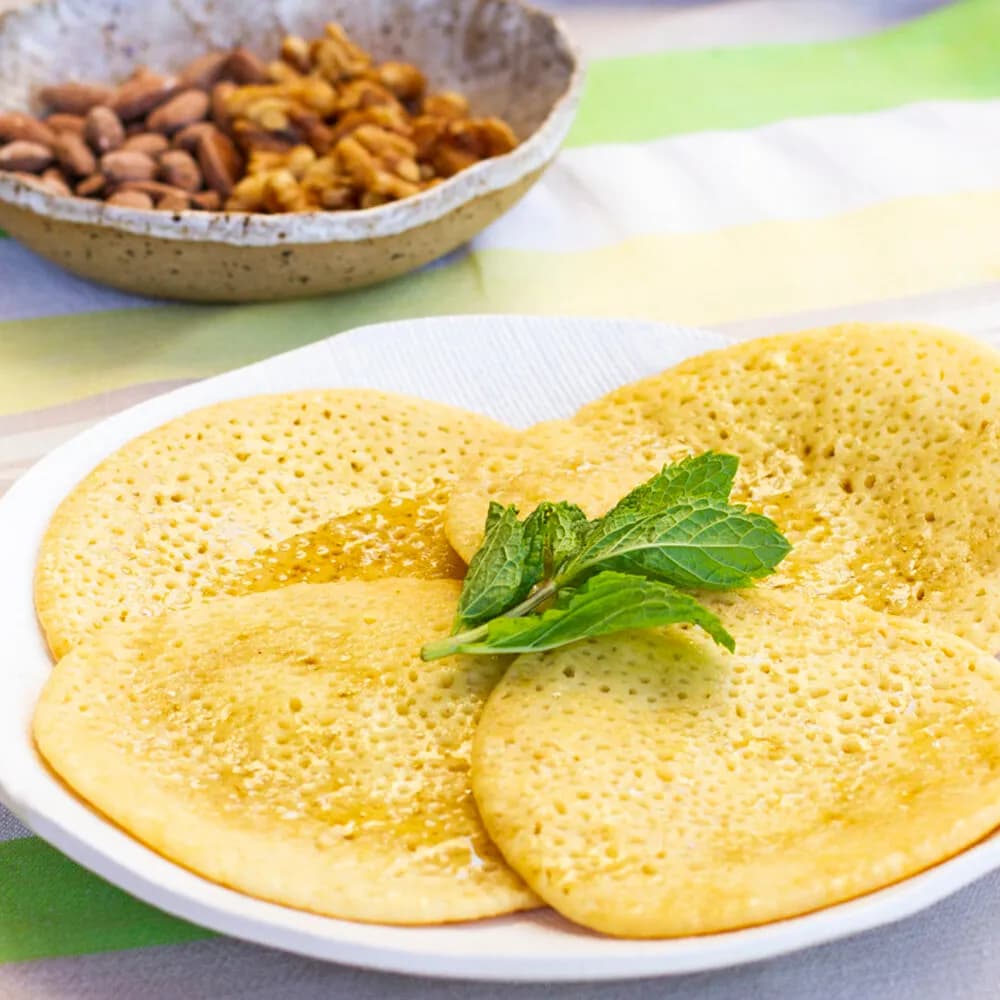
Beghrir are Moroccan semolina pancakes, cooked on one side only, whose entire surface opens into hundreds of small holes as they cook. They are served warm with a honey and butter sauce, and they are strongly associated with Ramadan, eaten at iftar to break the fast and at suhoor before dawn.
The holes are the whole thing, and they are not decoration. Yeast in a thin, blended batter produces carbon dioxide; as the pancake sets on the hot pan, the bubbles rise and burst through the surface, leaving an open honeycomb that absorbs the sauce like a sponge. That is why beghrir is never turned over, flipping it would seal the holes shut and defeat the purpose. Some regions do flip them briefly to dry the top, and those are sometimes called khringos, though in Casablanca that word means something else entirely.
Fine semolina is what makes it work, and it is also what gives beghrir its pale yellow colour. Recipes vary in how much they cut it with plain flour; the more semolina, the yellower and more characteristic the result.
The batter is very similar to that used for Arab qatayef, the lacy pancakes folded around fillings. Beghrir can be used the same way, though it is not traditional.
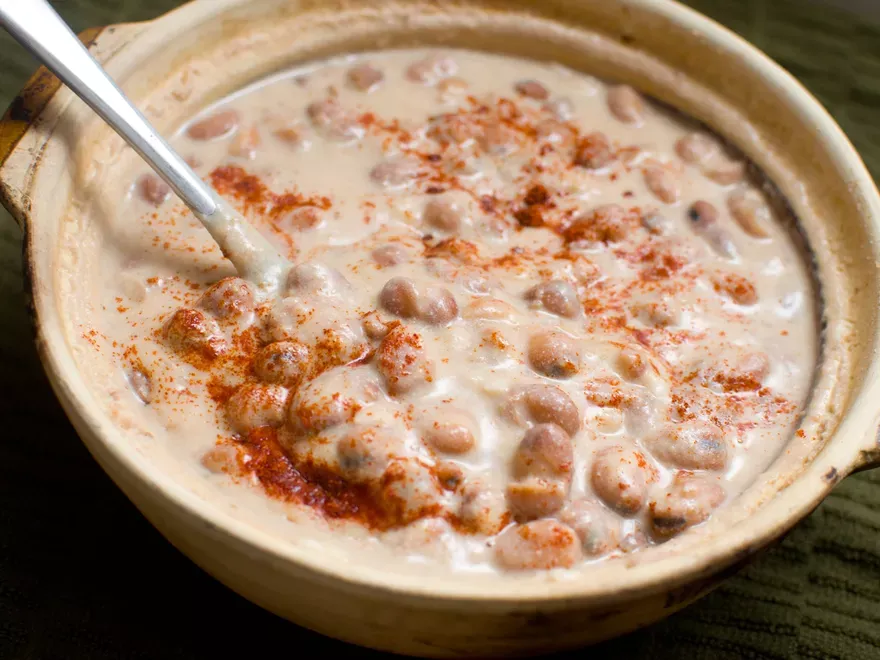
Ful medames is stewed fava beans dressed with olive oil, cumin, garlic and lemon, and it is Egypt's national dish. It is eaten at any hour, though breakfast is when it belongs most, and it is sold from carts across Cairo and Giza in the mornings.
Traditionally it is cooked and served in a large metal jug, the qedra, over a very long slow heat, often overnight, which is why street ful has a depth that a quick home version does not. What the beans are dressed with varies endlessly: parsley, onion, chilli, tomato, hard eggs, tahini.
Its versions across the region are worth knowing. In Somalia, fuul is a breakfast staple served with eggs and laxoox or canjeero flatbread, spiced with xawaash, the blend of cumin, coriander, cardamom, cloves, turmeric and more that makes it noticeably hotter than the Egyptian version. In Morocco it is bissara, made from fava beans and split green peas cooked with garlic, eaten especially in the north during cold weather. This particular recipe includes tahini, which is a Levantine addition rather than a classic Egyptian one, and it uses tinned beans rather than the overnight cook.
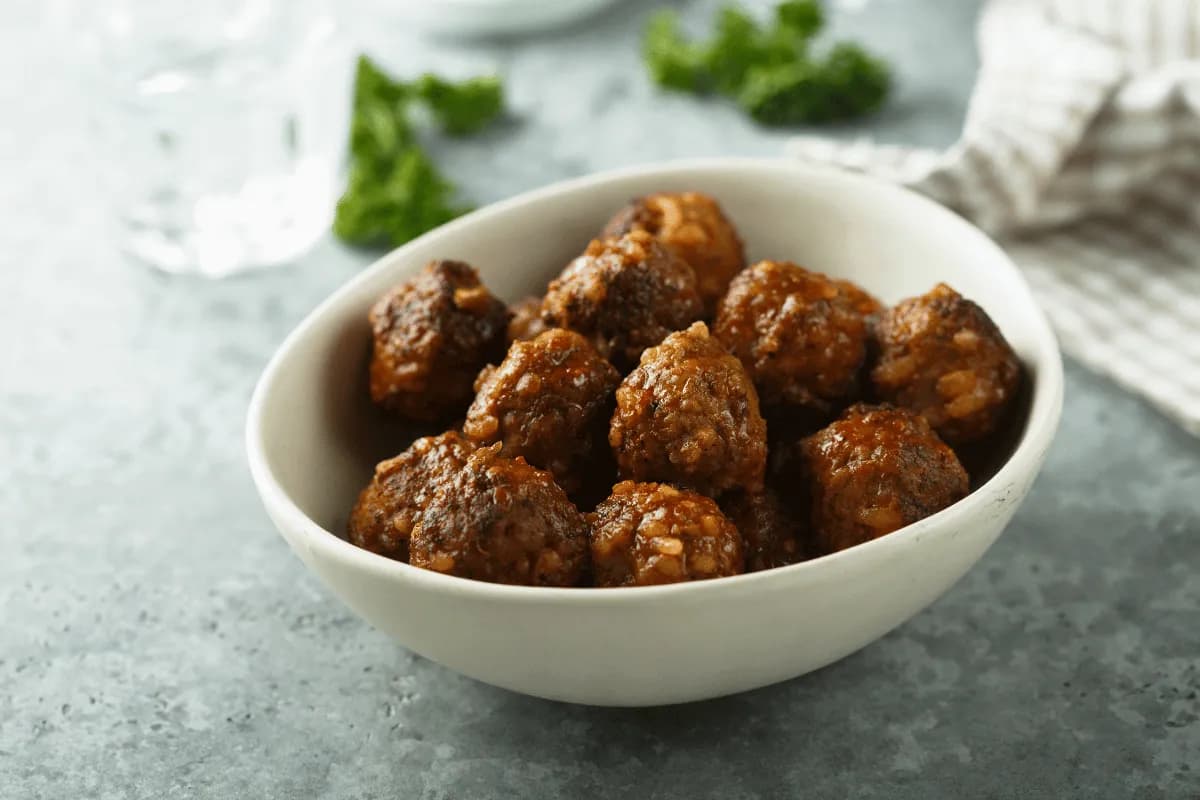
Tinned sardines puréed with egg and breadcrumbs, rolled into balls and cooked in a spiced tomato sauce. It is Moroccan, and the source is right that it is the forerunner of the sardine meatball sandwiches sold widely on the coast.
Sardines matter enormously to Morocco. The country is the world's largest exporter of tinned sardines, the fishery is a major part of the coastal economy, and sardines are cheap and abundant enough to be genuinely everyday food rather than a delicacy. That economic fact is why a sardine kefta exists at all, ground sardine is now sold ready-prepared at Moroccan fish markets, which the source notes and which tells you how ordinary the dish is.
The technique is standard kefta construction applied to fish. Puréeing rather than flaking is what makes the mixture hold together, since sardine flesh is soft and would fall apart otherwise, and the breadcrumbs and egg do the binding a meat kefta would not need.
The spicing, paprika, turmeric, ginger, coriander and cumin, is the Moroccan tagine vocabulary rather than anything specific to fish.
The source's discussion of sardine oil in paint and linoleum manufacture is accurate and not especially appetising; it has not been carried across. Nor have its omega-3 claims.
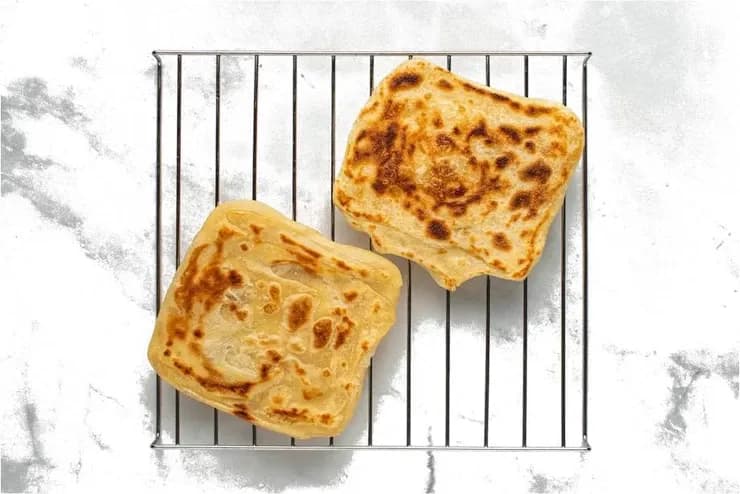
Msemen is a Moroccan flatbread made by spreading dough paper-thin, dotting it with butter and semolina, and folding it into a square, twice, before frying. The folding is what creates the layers, and the layers are the entire dish.
The name is a description of the method. Msemen means oiled in Arabic, and the recipe uses a great deal of oil: on the work surface, on the hands, in the dough, dotted through the folds. That is not excess, it is technique. Oiled hands slide over the dough rather than tearing it, which is how you get it thin enough to see the surface through.
The double fold is the structural step. Spread thin, dot with butter and semolina, fold into thirds, dot again, fold into thirds the other way. Each fold multiplies the layers, and the semolina between them keeps them from fusing, which is exactly the job flour does in a laminated puff pastry, arrived at from a completely different direction.
Two things separate msemen from its Moroccan neighbours. Beghrir is the yeasted thousand-hole pancake, a different thing entirely. Rghaif is a broader family name that msemen belongs to.
Cooking them in the order they were folded matters. The first ones have rested longest and spread most easily.