Nous utilisons des cookies essentiels au fonctionnement du site. Nous aimerions aussi déposer des cookies de mesure d’audience et des cookies publicitaires, uniquement avec votre accord. Vous pouvez choisir séparément pour chacun. Lire notre politique relative aux cookies

Loading
Recettes Nigeria
De Igbo Yam Porridge à Semovita, de Nigerian Pancake (Diet) à Amala. Toute la cuisine Nigeria, telle qu'on la prépare chez soi.
Palm wine is the sap of palm trees, collected and left to ferment, and it is drunk across West and Central Africa. It is called nsafufuo in Ghana and emu in Nigeria, where ogogoro refers to the distilled spirit made from it rather than the wine itself.
Tapping is a specialised job. Tappers climb to the upper part of the tree, where the sap is drawn from the crown, or a felled trunk is opened and the sap collected in jars. What comes out is white, sweet and barely alcoholic, and it begins fermenting the moment it is exposed to the wild yeasts in the air. Within about two hours it has developed roughly the alcohol content of a beer, and it keeps getting stronger and more sour from there.
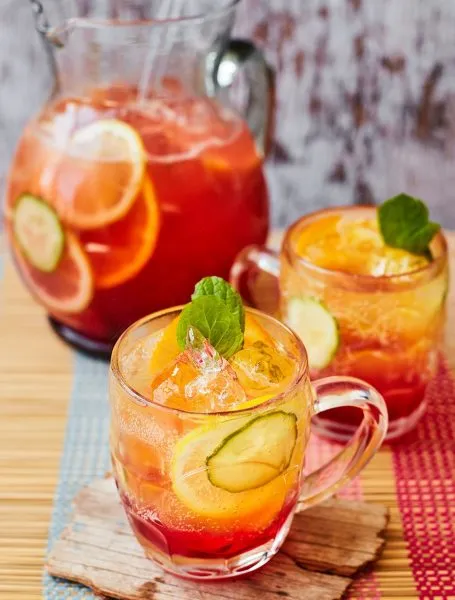
That speed explains everything about how it is sold. Traditional producers sell immediately after extraction because the drink changes hour by hour: sweet and mild in the morning, sharp and considerably stronger by evening. There is no way to hold it at a chosen point without modern processing. This recipe is the simplest possible serving, palm wine over ice with citrus and berries, and its purpose is to show what to do with a bottle rather than to teach a technique.
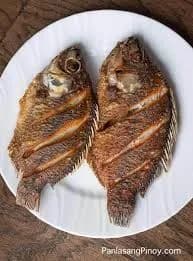
Frying a tilapia whole is one of the most common ways it is eaten across West Africa, and it is a different proposition from cooking fillets. The skin crisps, the flesh stays moist against the bone, and the head and tail crisp up alongside, which many people consider the best part.
Tilapia is a freshwater fish of shallow streams, ponds, rivers and lakes, native to Africa and now farmed on an enormous scale worldwide. That scale is why it is cheap and widely available, and it has become one of the most consumed fish in the world. It is bony, which puts some people off, and worth the small amount of care that eating it requires.
The technique here is scoring and shallow frying rather than deep frying. Diagonal cuts across both sides let the spice paste reach the flesh rather than sitting on the skin, and they help the fish cook evenly through the thickest part. Turmeric, garlic, black pepper and habanero form the rub. Tilting the pan so the head and tail are submitted to the oil in turn is a small detail that matters: those parts sit above the oil line otherwise and stay soft while the middle crisps.
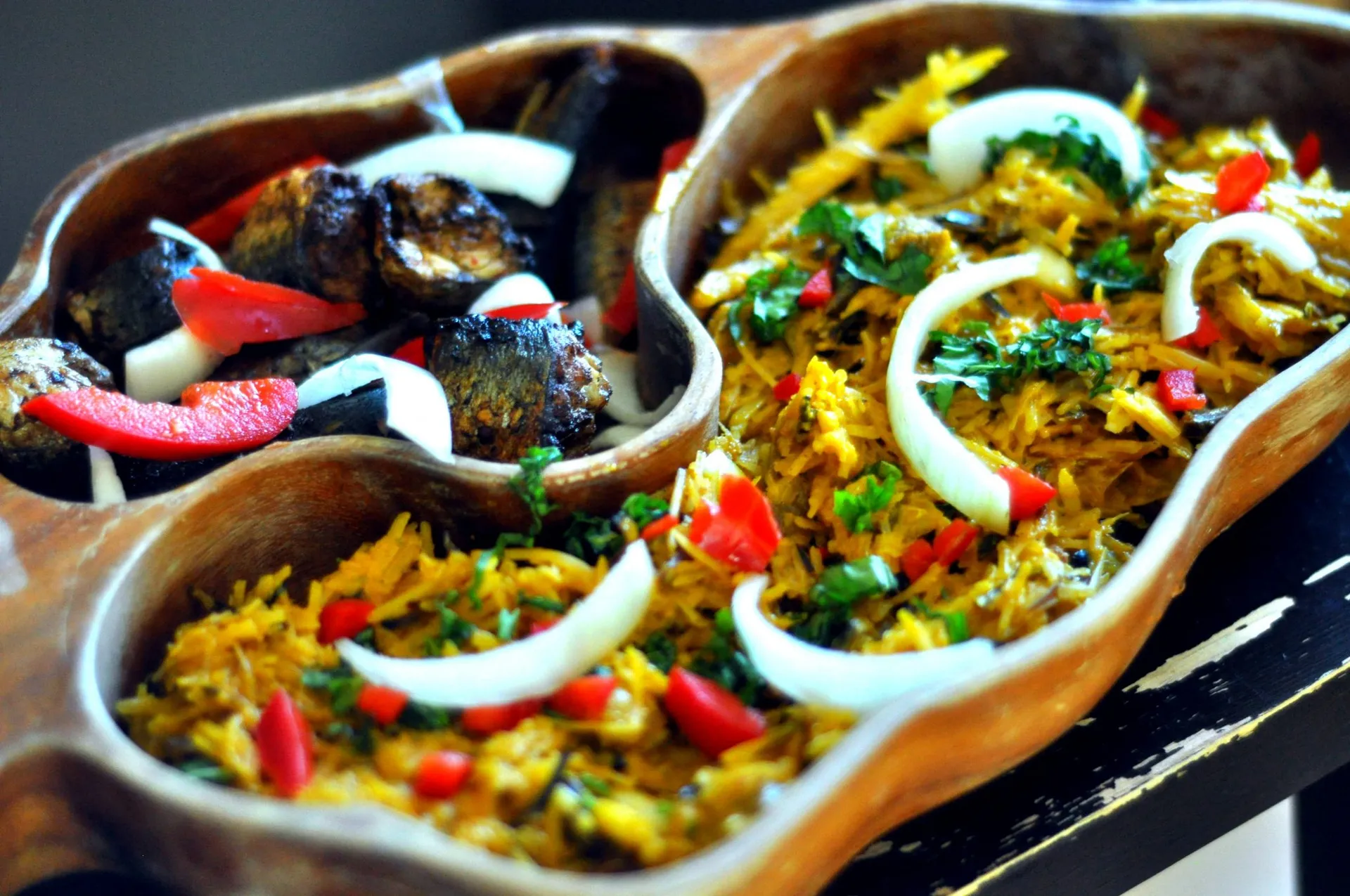
African salad is the Igbo dish of abacha and ugba, and it is a salad only in the loosest sense. Abacha is cassava that has been cooked, shredded on a special grater, soaked overnight, rinsed and dried in the sun. Ugba is fermented oil bean seed, cooked for hours, sliced, rinsed and left to ferment. Neither is cooked when the dish is assembled.
That is the striking thing about it: almost the entire preparation happens off the stove. Palm oil is turned into a thick yellow paste by working it with potash solution, and everything else is folded into that paste in sequence. The order matters, and Igbo cooks are firm about it, because the components will not distribute evenly if they all go in together.
It belongs to ceremony. At an Igbo wedding, abacha is reserved for the important guests, and it is served with chilled palm wine, which is the pairing anyone from the region will name. Despite being filling enough to be a meal, it is treated as a snack rather than a main course. It can be served cold or warmed briefly, and the choice between the two is a matter of household preference rather than correctness.
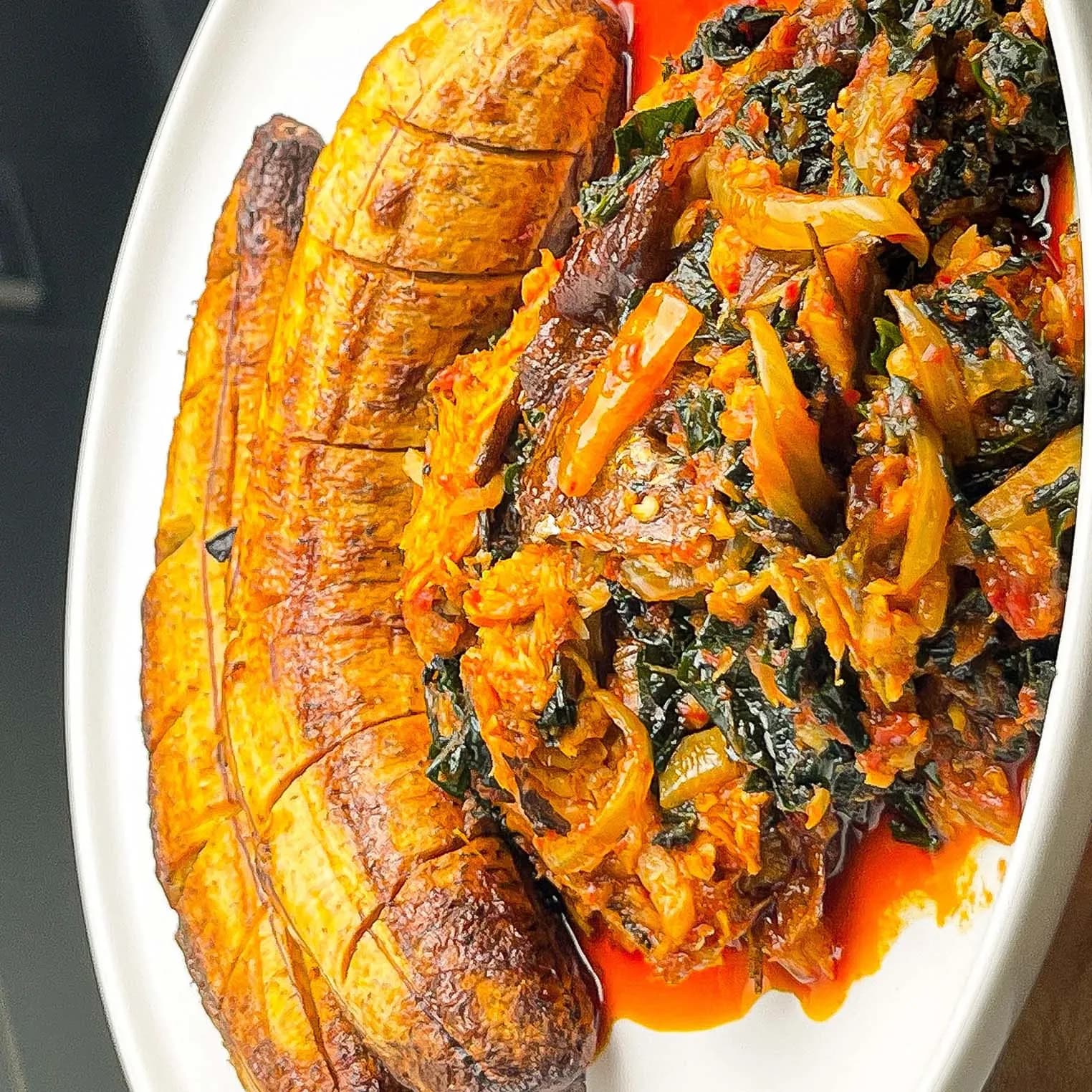
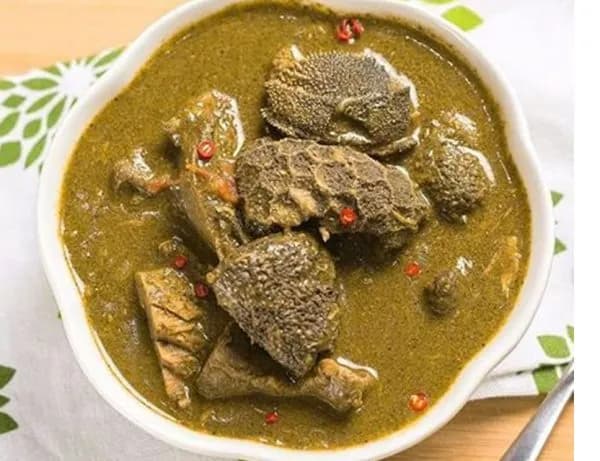
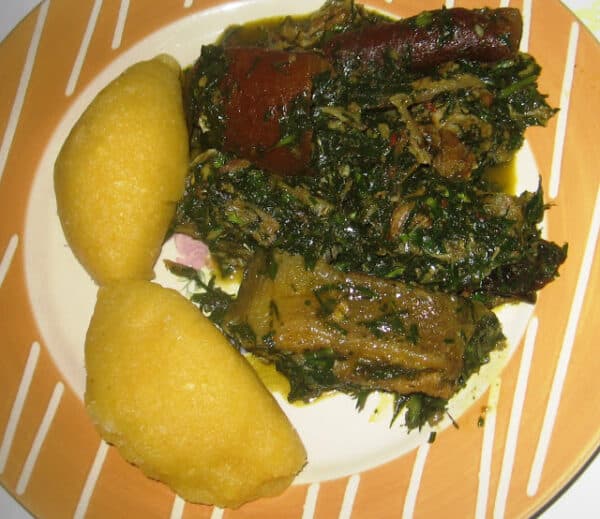
Afang soup belongs to the Efik and Ibibio people of Cross River and Akwa Ibom in southeastern Nigeria, and it is built on two vegetables that do quite different jobs.
Afang, okazi to the Igbo, and known botanically as Gnetum africanum, is a tough, wiry forest leaf with a faintly bitter edge. It is sliced extremely finely, almost shredded, because whole it would be unpleasant to eat. Waterleaf is the counterweight: soft, quick to wilt, and full of moisture, which is what gives the soup its body without much added liquid.
The pairing is the point, and it is what separates afang from edikang ikong, the other great vegetable soup of the same region. Edikang ikong uses waterleaf and ugu, the pumpkin leaf, and reads as sweeter and greener. Afang uses waterleaf and okazi, and carries that characteristic bitterness. People from the region can tell them apart instantly, and the leaf is the whole distinction.
Around the vegetables sits an assortment that scales with the household budget, beef, shaki, dried and fresh fish, periwinkle, crayfish, palm oil, pepper. It is a soup that has long been read as a marker of a generous table, and it is served with any of the swallows.