Nous utilisons des cookies essentiels au fonctionnement du site. Nous aimerions aussi déposer des cookies de mesure d’audience et des cookies publicitaires, uniquement avec votre accord. Vous pouvez choisir séparément pour chacun. Lire notre politique relative aux cookies

Loading
Recettes Nigeria
De Igbo Yam Porridge à Semovita, de Nigerian Pancake (Diet) à Amala. Toute la cuisine Nigeria, telle qu'on la prépare chez soi.
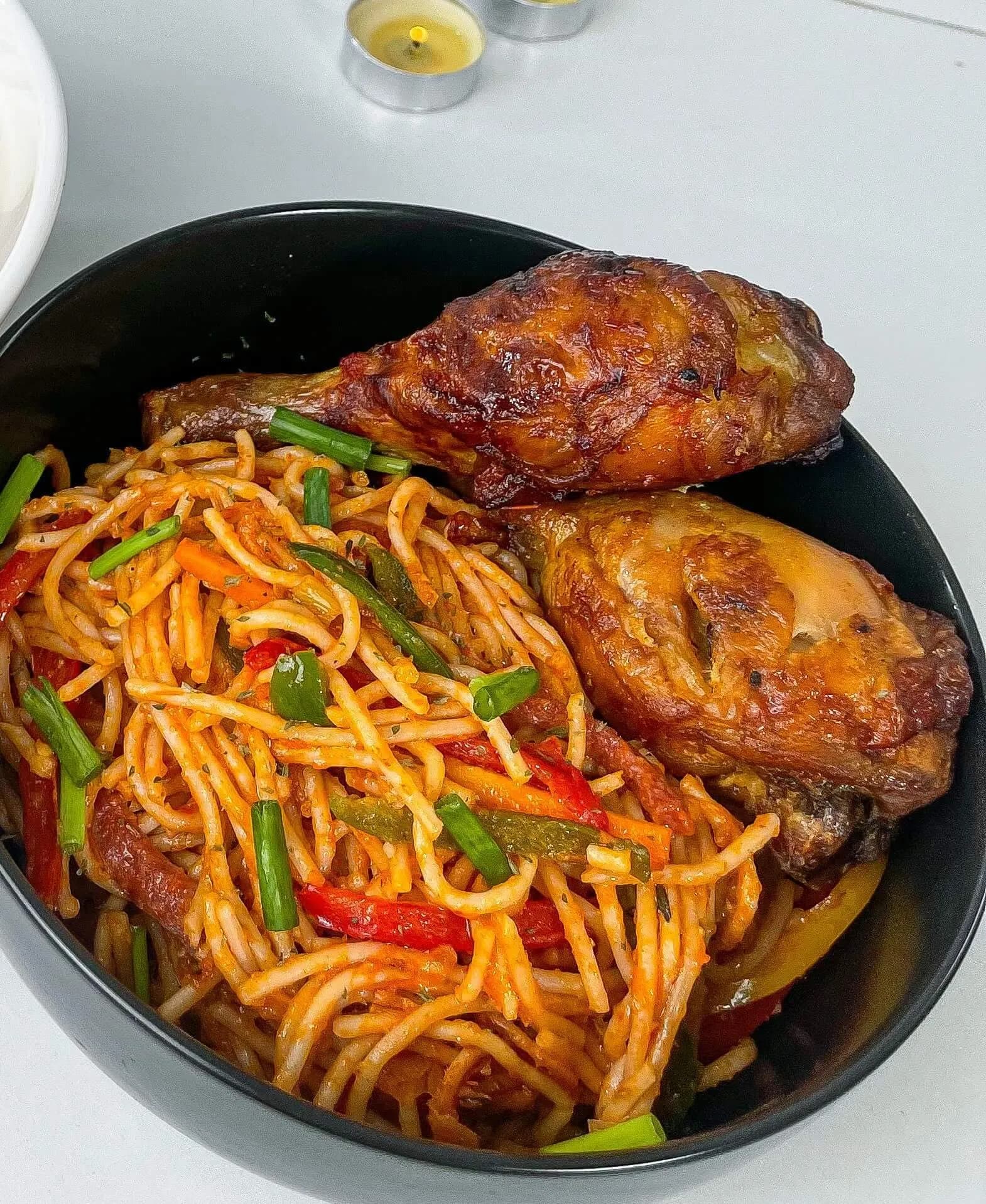
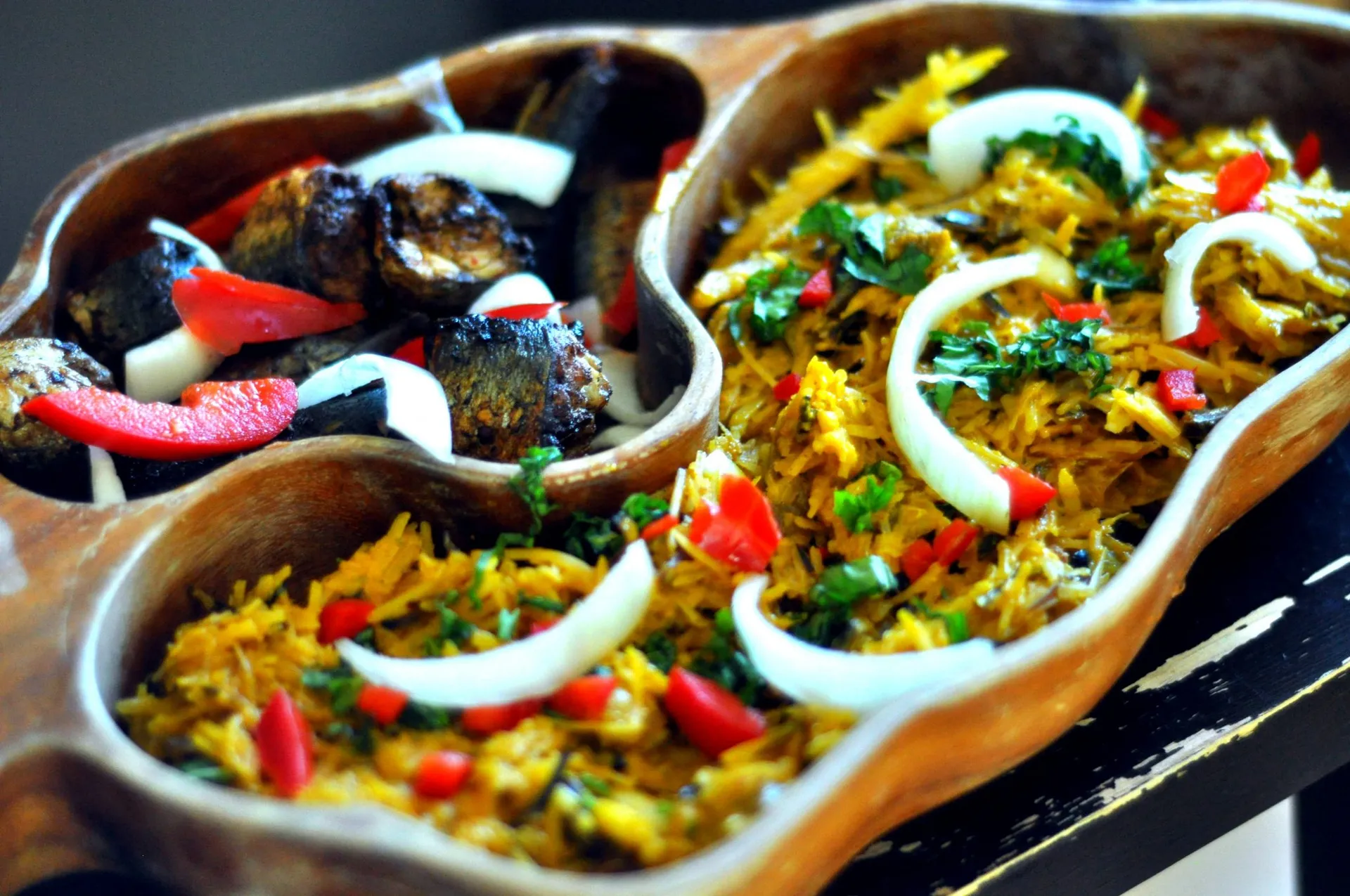
Jollof spaghetti applies the jollof method to pasta, and it is one of the most widely made contemporary dishes in Nigerian home kitchens. The pepper base is built exactly as it would be for rice, with blended tomato, tatashe and scotch bonnet reduced in oil with onion, ginger and garlic, and the spaghetti is finished in it so the strands take on the colour and the flavour rather than merely wearing it.
Spaghetti arrived in Nigeria through mid twentieth century trade and has become one of the country's most eaten starches, particularly in urban households where it is quick and cheap. What Nigerians did with it is characteristic: rather than adopting Italian technique, they applied their own most important cooking method to it. The same has happened with jollof couscous, jollof penne and jollof noodles.
It is weekday food rather than occasion food. Where jollof rice is the centrepiece of a party, jollof spaghetti is what gets made on a Tuesday, often with sausage or leftover chicken and whatever vegetables are in the house. It is served with eggs, fried plantain or chicken, and its status as a real Nigerian dish rather than a novelty is no longer in question among the people who eat it.
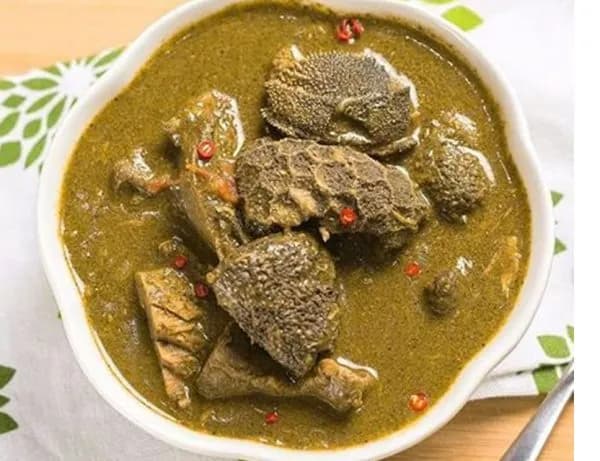
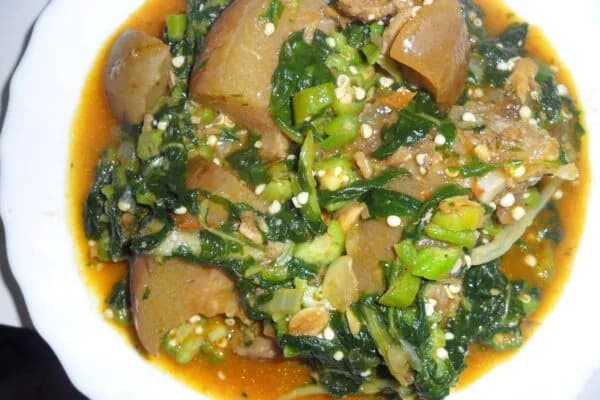
Okro soup is among the quickest Nigerian soups to make and among the most eaten. Okra is chopped, cooked briefly in a stock built on assorted meat, dried fish and crayfish, finished with palm oil, and taken off the heat while it is still green. The whole thing takes minutes once the vegetables are cut, which is the trade off: most of the work is chopping.
Okra is native to Africa, with its origin generally placed in the Ethiopian highlands, and it has spread from there across the continent and well beyond it. The draw it produces, the viscous quality that thickens the soup, is the entire point in West African cooking and the thing that people elsewhere often try to eliminate. Here it is what makes the soup work with a swallow: it slides.
The names change across Nigeria. Ila asepo among the Yoruba, okwuru among the Igbo, miyan kubewa in Hausa, otong among the Efik, and okro generally. Potash, called kaun, is traditional for increasing the draw and is now optional and somewhat contested, with many cooks leaving it out entirely. Used at all it must be used sparingly, since too much kills the elasticity it is meant to increase. It is eaten with eba, fufu, semo, amala or pounded yam.
Oyster mushrooms grilled and tossed in suya spice. It is a plant-based version of the Nigerian street food, and it works better than most meat substitutions do.
**The traditional suya spice contains ground peanuts, and this recipe includes them.** The source flags it and offers to leave them out, which is honest, but it is worth stating clearly, because a peanut allergy and a suya spice blend are a genuinely dangerous combination and the name gives no warning.
Suya proper is skewered beef, ram or chicken rubbed in yaji, the spice blend of ground roasted peanuts, ginger, cayenne, garlic, onion powder and paprika, and grilled over open coals. It is Hausa in origin, from northern Nigeria, and it is sold across Nigeria, Cameroon, Niger, Ghana and parts of Sudan. Kyinkyinga is the Ghanaian name, agashe the Sudanese.
Oyster mushrooms are the right substitution and not an arbitrary one. Shredded, they have a fibrous, layered structure that genuinely resembles pulled meat, they take on the dry rub readily, and they char well. Most vegetables do neither.
The source's method is very compressed, one step reads "put in a preheated medium", with the word oven missing, and has been filled out below.
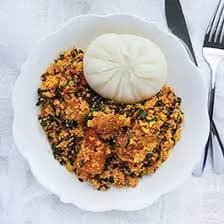
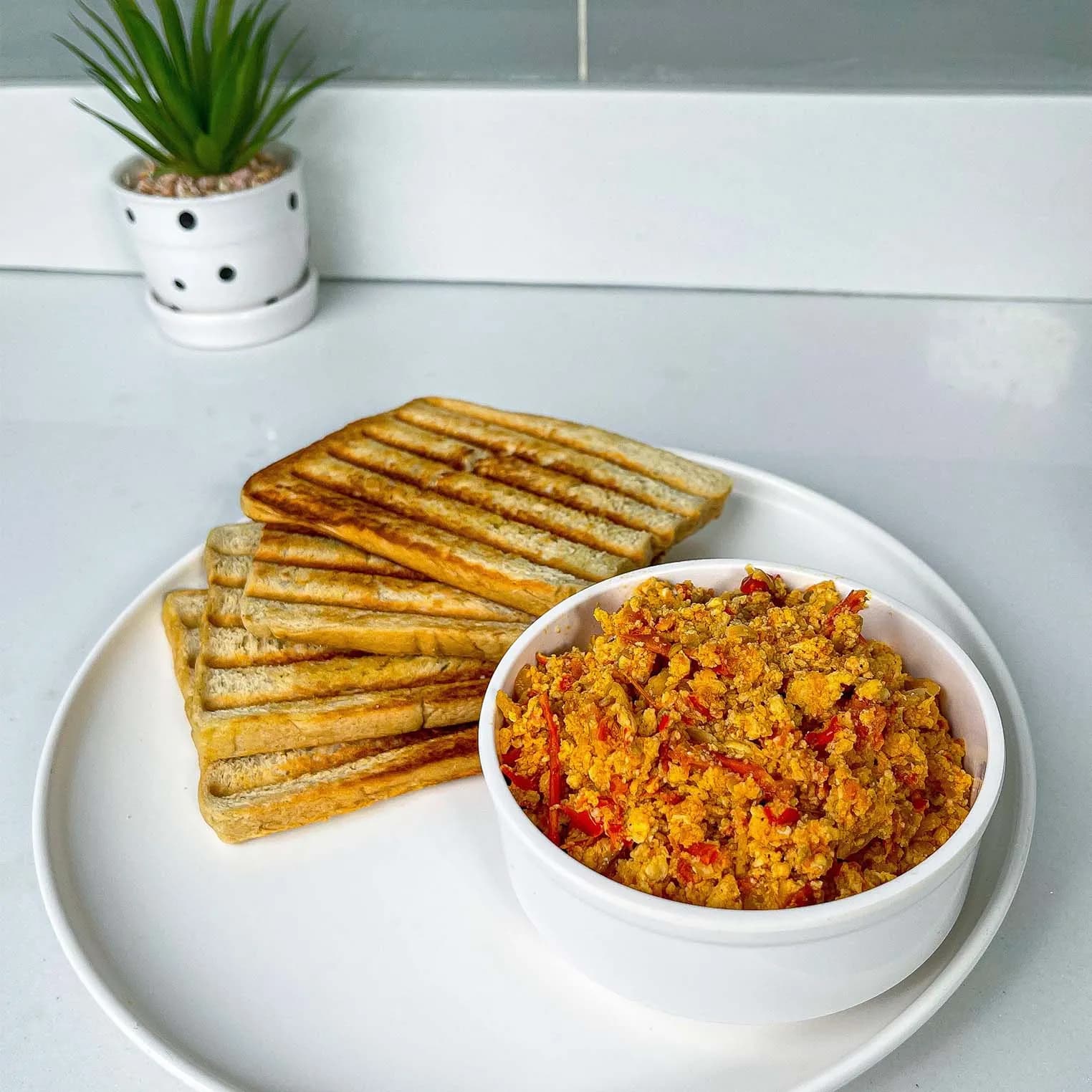
Egg sauce is a Nigerian breakfast staple: eggs cooked into a base of tomato, onion and scotch bonnet until scrambled through it. It is what plain yam is most often eaten with, and it is one of the fastest hot meals in the Nigerian repertoire.
What separates it from an omelette or from scrambled eggs is that the tomato base comes first. Onion and pepper are softened, tomatoes cooked down until they release their juices and soften, the seasoning goes in, and only then do the beaten eggs. The eggs are stirred through so the whole thing becomes one sauce rather than eggs with sauce on top.
Two ingredients in this version are worth noticing. Sesame oil in place of vegetable oil is unusual in a Nigerian kitchen and gives a distinctly nutty background, and curry powder alongside is a Nigerian habit rather than an Indian one. Both are the contributor's choices rather than the standard. Egg sauce is genuinely close to what is elsewhere called egg stew, and the two names are used for much the same dish across Nigeria and Ghana, with the difference usually being consistency rather than method.