Nous utilisons des cookies essentiels au fonctionnement du site. Nous aimerions aussi déposer des cookies de mesure d’audience et des cookies publicitaires, uniquement avec votre accord. Vous pouvez choisir séparément pour chacun. Lire notre politique relative aux cookies

Loading
Recettes Nigeria
De Nigerian Pancake (Diet) à Gullisuwa, de Nigerian Buns à Nigerian Egg Roll. Toute la cuisine Nigeria, telle qu'on la prépare chez soi.
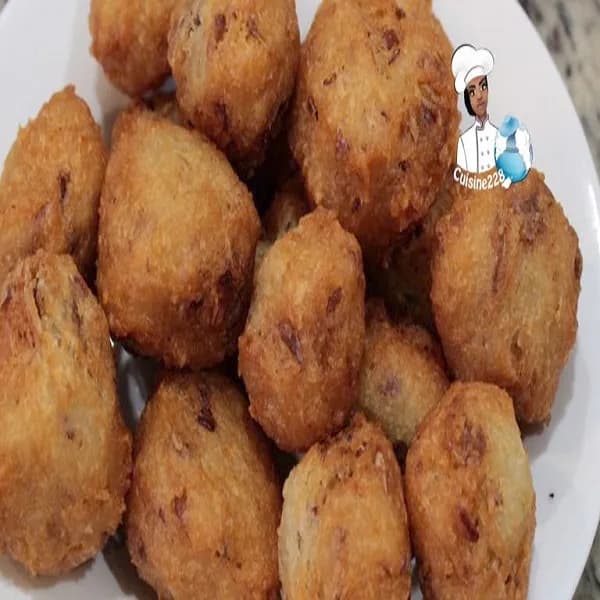
Gullisuwa is a Hausa fried pastry from Northern Nigeria, made from wheat flour worked with ground roasted peanuts and fried until crisp. The groundnuts are what distinguish it. They give the pastry a toasted, faintly sweet base that a plain flour dough does not have, and groundnuts are one of the defining crops of the northern Nigerian savannah.
It belongs to celebration rather than to the everyday. Gullisuwa appears at weddings, at festive occasions and as street food, made in quantity because it keeps well and travels well, and it is offered to guests as part of the spread rather than served as a course. That is the usual position of a fried snack in Hausa hospitality: present, plentiful and not the point of the meal.
Its exact origin is not documented. What can be said is that it belongs to the Hausa, that it has been made for generations, and that Northern Nigeria's long trade and cultural connection with the Sahara and the Arab world is visible in a good deal of its sweet and fried food. Beyond that, the specific lineage of gullisuwa is not recorded, and the honest position is to say so rather than to construct one.
Nigerian buns are fried dough balls with a crunchy outer crust and a soft, cake like interior. They sit alongside puff puff and chin chin in the small group of fried snacks that account for most of what Nigerians eat between meals, and the differences between the three are understood precisely by anyone who grew up with them.
Buns are the rich one. Where puff puff is yeast raised and made from almost nothing, buns use baking powder for lift and include egg, butter and milk, which produces a denser, sweeter, more substantial thing with a genuinely crunchy shell. They also absorb less oil in the frying, which is a real practical advantage and a point people make in their favour.
They are everywhere: sold from roadside trays and by hawkers, made at home for children after school, brought to parties and picnics, and eaten with tea at breakfast. The flavouring is open, with nutmeg the most common and cinnamon and vanilla both standard, and every household has a version that is slightly sweeter or slightly denser than the next. They are best hot and are still good at room temperature, which is most of what a snack needs to be.
Oyster mushrooms grilled and tossed in suya spice. It is a plant-based version of the Nigerian street food, and it works better than most meat substitutions do.
**The traditional suya spice contains ground peanuts, and this recipe includes them.** The source flags it and offers to leave them out, which is honest, but it is worth stating clearly, because a peanut allergy and a suya spice blend are a genuinely dangerous combination and the name gives no warning.
Suya proper is skewered beef, ram or chicken rubbed in yaji, the spice blend of ground roasted peanuts, ginger, cayenne, garlic, onion powder and paprika, and grilled over open coals. It is Hausa in origin, from northern Nigeria, and it is sold across Nigeria, Cameroon, Niger, Ghana and parts of Sudan. Kyinkyinga is the Ghanaian name, agashe the Sudanese.
Oyster mushrooms are the right substitution and not an arbitrary one. Shredded, they have a fibrous, layered structure that genuinely resembles pulled meat, they take on the dry rub readily, and they char well. Most vegetables do neither.
The source's method is very compressed, one step reads "put in a preheated medium", with the word oven missing, and has been filled out below.
Dan wake is a northern Nigerian dish of dumplings made from bean flour and kuka, the powdered leaf of the baobab tree. The name translates from Hausa as son of beans, and the dumplings cook in water until they float, then are drained and dressed with oil and spice, and eaten with a salad of raw vegetables and hard egg.
Kuka is what colours it and what makes it northern. Baobab leaf powder is used across the Sahel as a thickener and a green vegetable, and its slightly mucilaginous quality helps bind the bean flour dough. Potash, kanwa, is the third component, a traditional alkaline salt used across West African cooking to soften and to alter texture, and it is what gives dan wake its particular chew.
It is deliberately plain on its own. The dumplings carry almost no seasoning and rely entirely on what is put on them: yaji, the peanut based suya spice, fried oil, sliced onion, cabbage, tomato and cucumber, and often a sauce alongside. That construction, a neutral base plus an assertive dressing, is common across northern Nigerian street food and it is why dan wake is sold from stalls rather than mainly cooked at home.