Nous utilisons des cookies essentiels au fonctionnement du site. Nous aimerions aussi déposer des cookies de mesure d’audience et des cookies publicitaires, uniquement avec votre accord. Vous pouvez choisir séparément pour chacun. Lire notre politique relative aux cookies

Loading
Recettes Nigeria
De Edo Black Soup à Gullisuwa, de Liver Suya (Liver Kebab) à Kuli Kuli. Toute la cuisine Nigeria, telle qu'on la prépare chez soi.
Suya is not restricted to any one cut, and liver is among the most common of the alternatives. Kidney and tripe appear too, and the offal versions are cheaper, cook faster and carry the yaji spice differently from beef, which is a large part of why they have their own following rather than being a fallback.
Liver takes spice better than muscle meat does. It is soft, mineral and slightly sweet, and it absorbs the groundnut and pepper coating almost immediately rather than needing time to marinate. It also cooks in minutes, which suits the trade: a suya vendor working a roadside grill at night needs something that goes from raw to served while the customer waits.
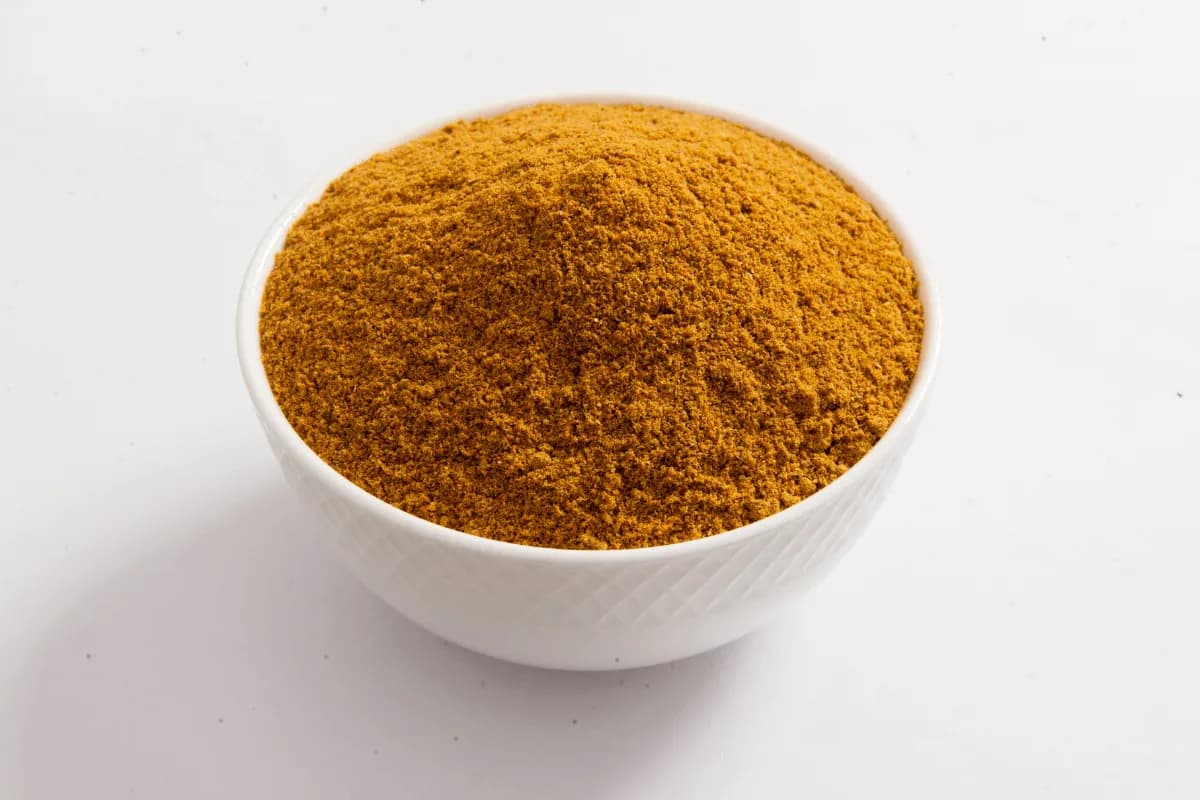
The name changes across West Africa without the thing changing much. Suya in Nigeria, soya in Cameroon, chinchinga or sitsinga in Ghana, and brochettes in the Francophone countries. The spice blend, yaji, is what holds it together, and it has no fixed recipe: the composition varies by vendor and by region, and each is guarded. What is consistent is ground groundnut, chilli, ginger and garlic, and a heat level that varies from cook to cook while the intensity of flavour does not.
Oyster mushrooms grilled and tossed in suya spice. It is a plant-based version of the Nigerian street food, and it works better than most meat substitutions do.
**The traditional suya spice contains ground peanuts, and this recipe includes them.** The source flags it and offers to leave them out, which is honest, but it is worth stating clearly, because a peanut allergy and a suya spice blend are a genuinely dangerous combination and the name gives no warning.
Suya proper is skewered beef, ram or chicken rubbed in yaji, the spice blend of ground roasted peanuts, ginger, cayenne, garlic, onion powder and paprika, and grilled over open coals. It is Hausa in origin, from northern Nigeria, and it is sold across Nigeria, Cameroon, Niger, Ghana and parts of Sudan. Kyinkyinga is the Ghanaian name, agashe the Sudanese.
Oyster mushrooms are the right substitution and not an arbitrary one. Shredded, they have a fibrous, layered structure that genuinely resembles pulled meat, they take on the dry rub readily, and they char well. Most vegetables do neither.
The source's method is very compressed, one step reads "put in a preheated medium", with the word oven missing, and has been filled out below.
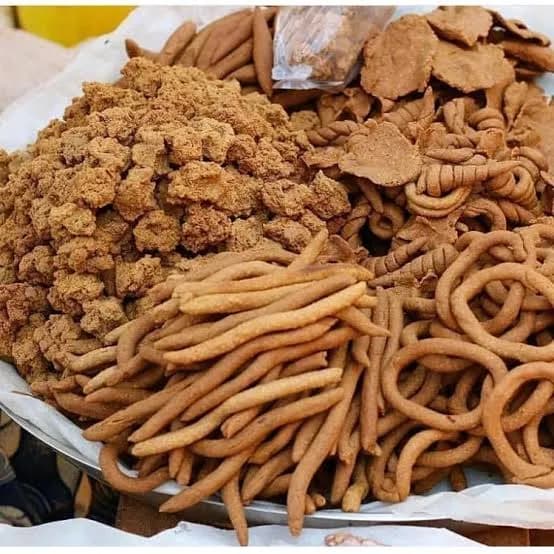
Kuli kuli is a peanut snack eaten across Nigeria, Benin, northern Cameroon and Ghana, and it is one of the most widely recognised street foods in West Africa. It is made from peanuts alone, and the technique is what makes it: the oil is deliberately pressed out of the ground paste before the remaining solids are shaped and fried.
That extraction is the point. Removing the oil leaves a dense, dry paste that fries into something genuinely crunchy rather than soft, and it also produces the frying oil as a by-product, so nothing is wasted. It is a piece of processing knowledge that predates industrial oil pressing and is still done by hand in Hausa communities in northern Nigeria, where the snack has its strongest association.
It takes different shapes in different places: small sticks, rings, flat discs and irregular pieces are all standard, and the form varies by region and by seller. English names for it, groundnut cake and peanut snack among them, are approximations rather than translations. Kuli kuli is eaten on its own, mixed into garri with sugar and water, crumbled over salad, or served alongside fura and koko. Crushed to a powder it becomes the peanut component of suya spice, which is where most people outside the region encounter it without knowing.
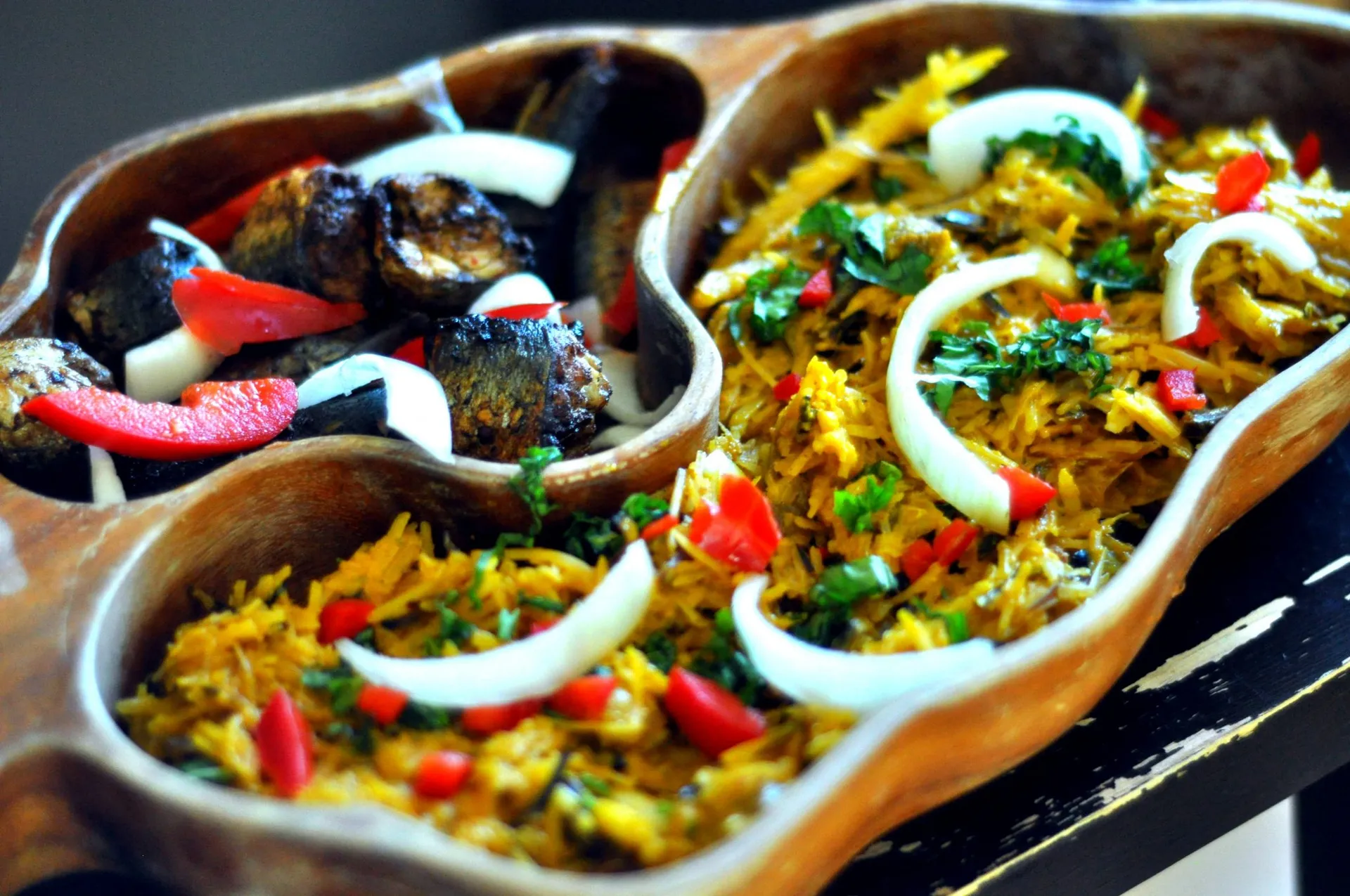
African salad is the Igbo dish of abacha and ugba, and it is a salad only in the loosest sense. Abacha is cassava that has been cooked, shredded on a special grater, soaked overnight, rinsed and dried in the sun. Ugba is fermented oil bean seed, cooked for hours, sliced, rinsed and left to ferment. Neither is cooked when the dish is assembled.
That is the striking thing about it: almost the entire preparation happens off the stove. Palm oil is turned into a thick yellow paste by working it with potash solution, and everything else is folded into that paste in sequence. The order matters, and Igbo cooks are firm about it, because the components will not distribute evenly if they all go in together.
It belongs to ceremony. At an Igbo wedding, abacha is reserved for the important guests, and it is served with chilled palm wine, which is the pairing anyone from the region will name. Despite being filling enough to be a meal, it is treated as a snack rather than a main course. It can be served cold or warmed briefly, and the choice between the two is a matter of household preference rather than correctness.