Nous utilisons des cookies essentiels au fonctionnement du site. Nous aimerions aussi déposer des cookies de mesure d’audience et des cookies publicitaires, uniquement avec votre accord. Vous pouvez choisir séparément pour chacun. Lire notre politique relative aux cookies

Loading
Recettes Nigeria
Parcourez les archives par pays, par plat et par temps de cuisson.
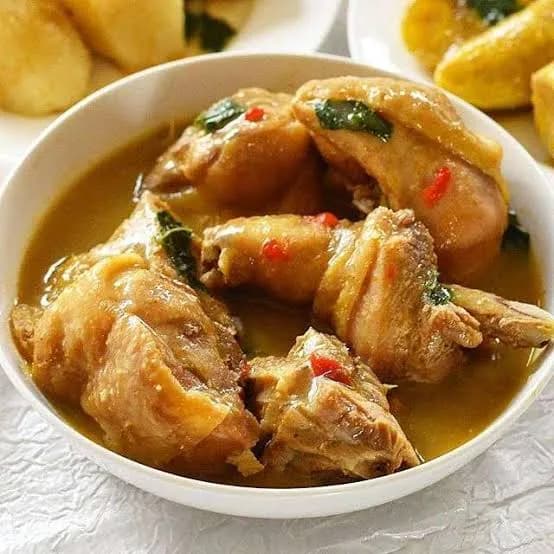
Chicken pepper soup is the most widely made of Nigeria's pepper soups, largely because chicken is the most widely available protein. The structure is the same across the family: a thin, clear, aggressively spiced broth with nothing in it for body, where the flavour comes entirely from the spice blend and the stock the protein gives up.
Ehuru is the ingredient that matters. Also called ehiri or calabash nutmeg, it is the aromatic seed that defines the pepper soup profile, and Nigerian cooks are emphatic that nothing substitutes for it. Uziza seed and uda, the negro pepper, complete the blend. Scent leaf, called nchanwu in Igbo, goes in at the very end for aroma.
It occupies a specific place in Nigerian life beyond simply being eaten. Pepper soup is what people are given when they are unwell, when they have come in cold, or when they cannot face anything heavier, and it is a fixture of bars and restaurants across the country as much as of home kitchens. Hard chicken, meaning an older laying hen rather than a young broiler, is preferred for the deeper stock it produces, and it is eaten on its own or with rice, agidi, yam or unripe plantain.
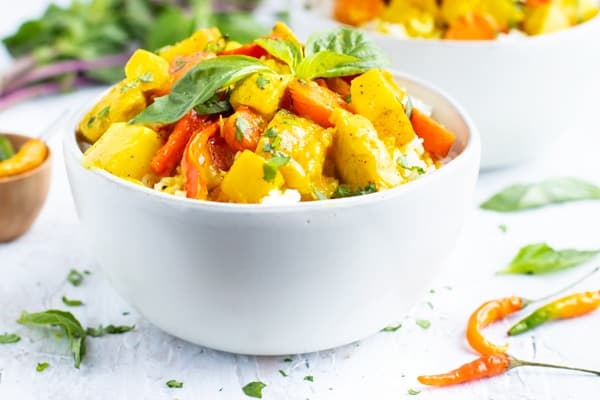
Coconut chicken curry is a one-pan dish of chicken simmered in coconut milk with a curry spice blend and whatever vegetables are to hand, broccoli, cabbage, peppers, potato, carrot.
The word curry is worth being precise about. It is not a single spice or a single dish. It comes from English usage during colonial rule in India, applied broadly to spiced saucy dishes, and it now covers an enormous range of unrelated cooking across South Asia, Southeast Asia, the Caribbean and East Africa. A curry powder sold in a jar is a blend, and the blends differ substantially between manufacturers and regions.
Coconut milk versions belong mainly to the coastal and tropical end of that range, southern India, Thailand, Malaysia, the Caribbean, and the Swahili coast of East Africa, where coconut is grown and used heavily.
This particular recipe is a general one rather than a regional tradition, which is its strength: it tolerates substitution well and is designed to be varied.
**Filed as Worldwide**, the recipe as written makes no specific national claim, so attributing it to any one cuisine would be inventing detail.
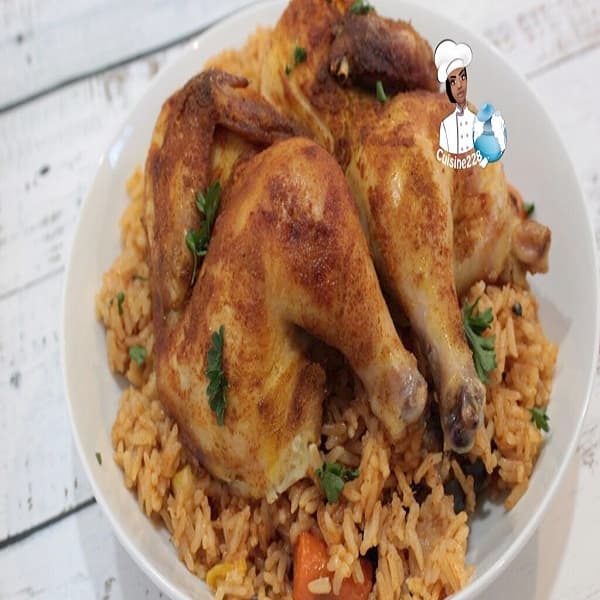
Oven-baked jollof takes the standard West African one-pot and moves it into the oven, where the heat surrounds the dish rather than coming from below.
The reason to bother is practical. Stovetop jollof burns from the base, and getting it right means managing heat carefully, too high and the bottom catches badly, too low and the rice steams unevenly. In an oven the heat is even, the rice cooks through without attention, and the pot cannot scorch in the same way. For anyone who has ruined jollof on a hob, that is a real argument.
What you trade away is the smoky note. That flavour comes precisely from the bottom of the pot catching slightly, and an oven does not give it. Cooks who want both build the base on the hob and finish in the oven.
Everything else is unchanged: the same reduced tomato, red pepper, onion and chilli base, the same long-grain parboiled rice, the same rule about not stirring once it is covered.
It scales well, which makes it useful for cooking for numbers.

