

Chapati
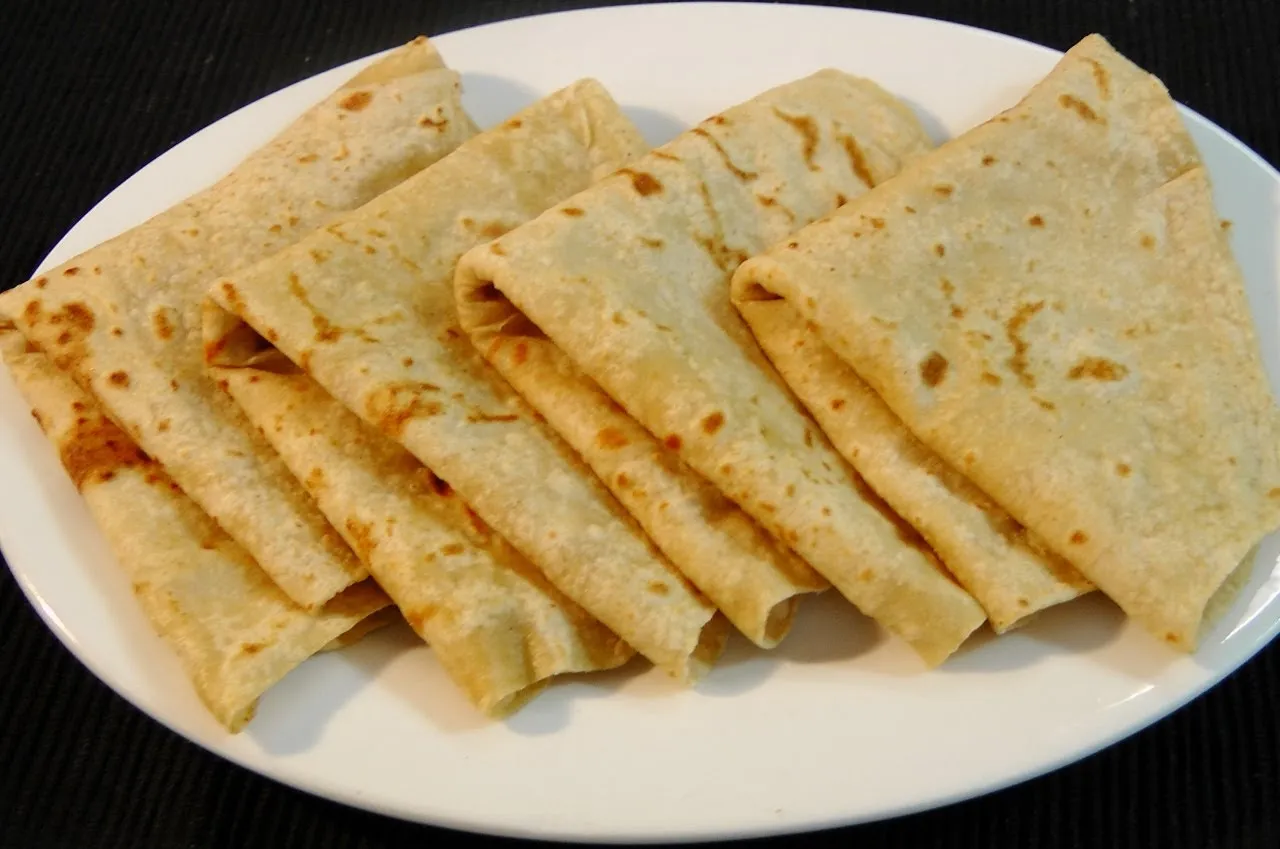
Chapati is Indian in origin and thoroughly East African in practice. It arrived with Indian merchants and indentured labourers in the nineteenth and twentieth centuries, and it is now a fixture in Kenya and Tanzania, eaten with stews, beans and greens in households that have made it entirely their own. The name describes the method. Chapat means slap or flat, and it refers to the traditional way of forming thin rounds by slapping the dough between wetted palms. It is unleavened, made from wheat flour, water, salt and oil, traditionally mixed in a vessel called a parat and cooked on a tava griddle. The East African version has diverged from the Indian one. Kenyan chapati is softer, richer and often layered, made with more oil and sometimes rolled and coiled before the final rolling out to create flaky layers. This recipe is a plainer version and uses white flour, though the source's own prose describes whole wheat, which is what Indian chapati uses. The hour of resting is what matters most: without it the dough fights back and will not roll thin.
Kenya1 hr 35 minFoodChef