Nous utilisons des cookies essentiels au fonctionnement du site. Nous aimerions aussi déposer des cookies de mesure d’audience et des cookies publicitaires, uniquement avec votre accord. Vous pouvez choisir séparément pour chacun. Lire notre politique relative aux cookies

Loading
Recettes Ghana
Parcourez les archives par pays, par plat et par temps de cuisson.
Tilapia is native to Africa, including Ghana, and it is one of the fish Ghanaians eat most. It belongs to the Cichlidae family, grows fast, and has a mild flavour and tender flaky flesh that takes on whatever seasoning it is given, which is why it appears in so many different preparations.
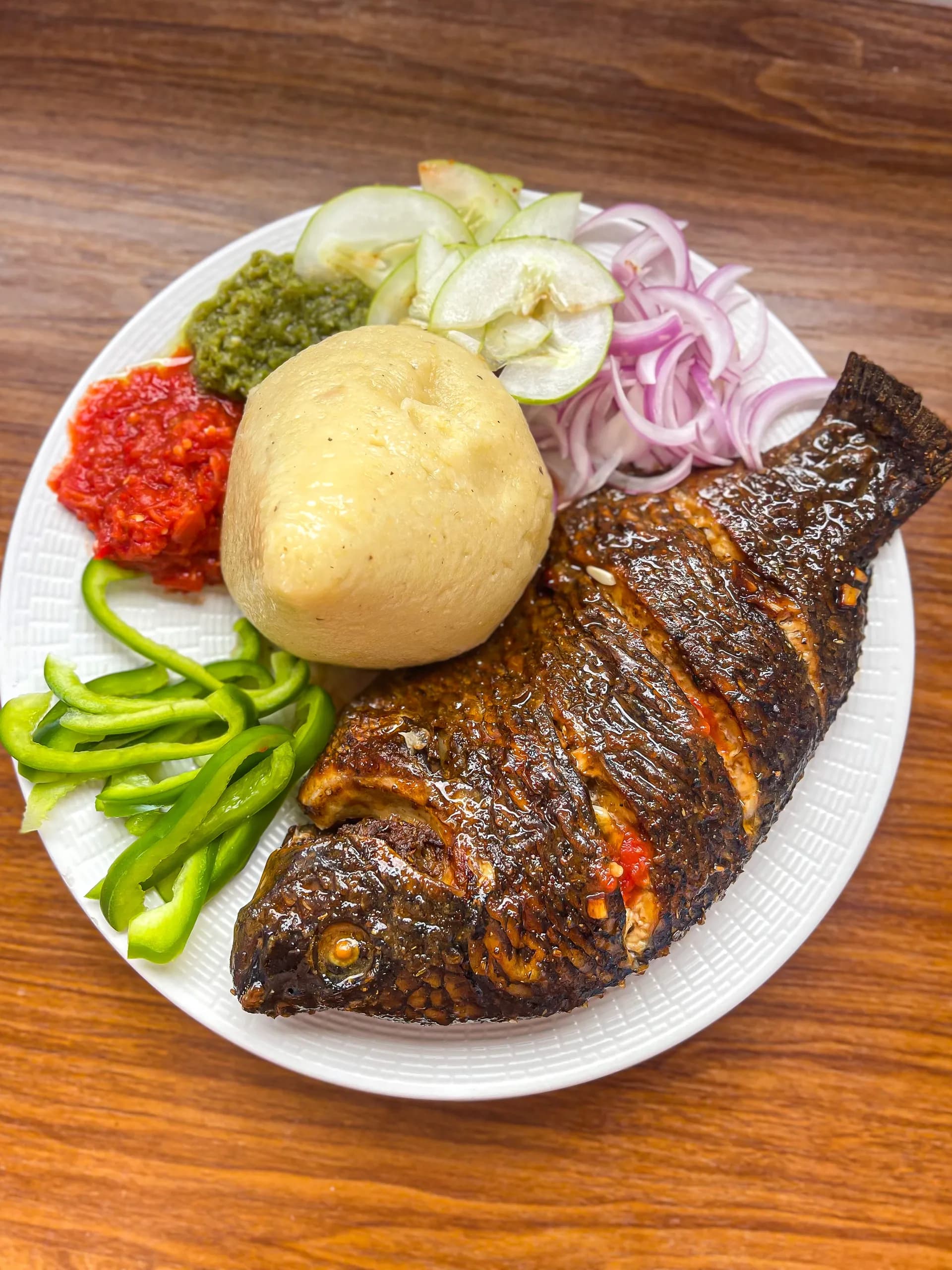
In Ghana it is most closely associated with banku, the fermented corn and cassava dough. Grilled tilapia with banku and a fierce pepper sauce is one of the country's defining meals, sold from roadside grills and chop bars and eaten with the fingers. The tang of the fermented banku against the mild fish is the whole reason the pairing works.
This version bakes rather than grills, which is the practical domestic method and gives a cleaner result without a charcoal grill. The seasoning is a marinade rather than a rub, built on oil, garlic, ginger, chilli and soy sauce, and the source names two commercial Ghanaian spice blends among the ingredients. Any all purpose seasoning stands in. Banku and tilapia is generally eaten as lunch or dinner rather than breakfast, though the source is relaxed about that, noting there are no strict rules.
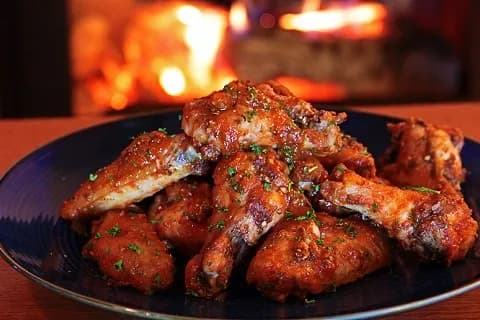
Grilled shito wings are chicken wings grilled and then coated in shito, Ghana's dark chilli sauce, and returned briefly to the heat so the sauce sets onto the skin. It is a modern preparation built on a traditional condiment rather than an inherited dish, and it is none the worse for that.
Shito is the whole point. The word is Ga, the language of Accra, and simply means pepper, though it has come to name the specific dark sauce made from dried fish, ground prawn, chilli, ginger, garlic and tomato cooked down in oil. Its smokiness and depth are what a plain grilled wing lacks, and glazing rather than marinating with it keeps that character intact.
The order matters. The wings are seasoned and marinated plainly first, with salt, oil, pepper, lime and soy, then grilled through, and only then coated in shito and given a short final spell at reduced heat. Shito applied at the start would burn long before the chicken cooked, since it is already a cooked, oily, sugar-free but solids-heavy sauce. Doing it this way gives a wing that is properly cooked underneath and lacquered on the outside.
Whole tilapia scored, marinated in an oil-based spice mixture, oven-grilled, then coated in a fresh green pepper base and returned to the heat. The two-stage seasoning is what makes it, and it is a West African approach rather than a simple marinade.
The first stage is a dry-spice oil: vegetable oil with fish seasoning, white and black pepper, ginger, garlic, onion powder and lemon juice, worked into the cuts. The second is a green pepper base built in a food processor from green and red scotch bonnets, bell peppers, spinach, dill, coriander, ginger, garlic and onion, fried briefly in oil and then smeared over the part-cooked fish.
That green base is the interesting part. Blending leafy greens and fresh herbs into a pepper sauce is characteristic of Ghanaian and wider West African fish cookery, and it gives colour and a fresh, sharp finish that a marinade applied only at the start cannot. The scoring is not decorative either: two or three cuts on each side let both stages of seasoning reach the flesh rather than sitting on the skin. Tilapia is native to African fresh waters and is the fish most associated with Ghanaian grilling, usually eaten with banku.