Cachupa
4.54.5 out of 5, 4 ratings4 hr 30 min


Cookies sur African Food Network
Nous utilisons des cookies essentiels au fonctionnement du site. Nous aimerions aussi déposer des cookies de mesure d’audience et des cookies publicitaires, uniquement avec votre accord. Vous pouvez choisir séparément pour chacun. Lire notre politique relative aux cookies

Parcourez les archives par pays, par plat et par temps de cuisson.
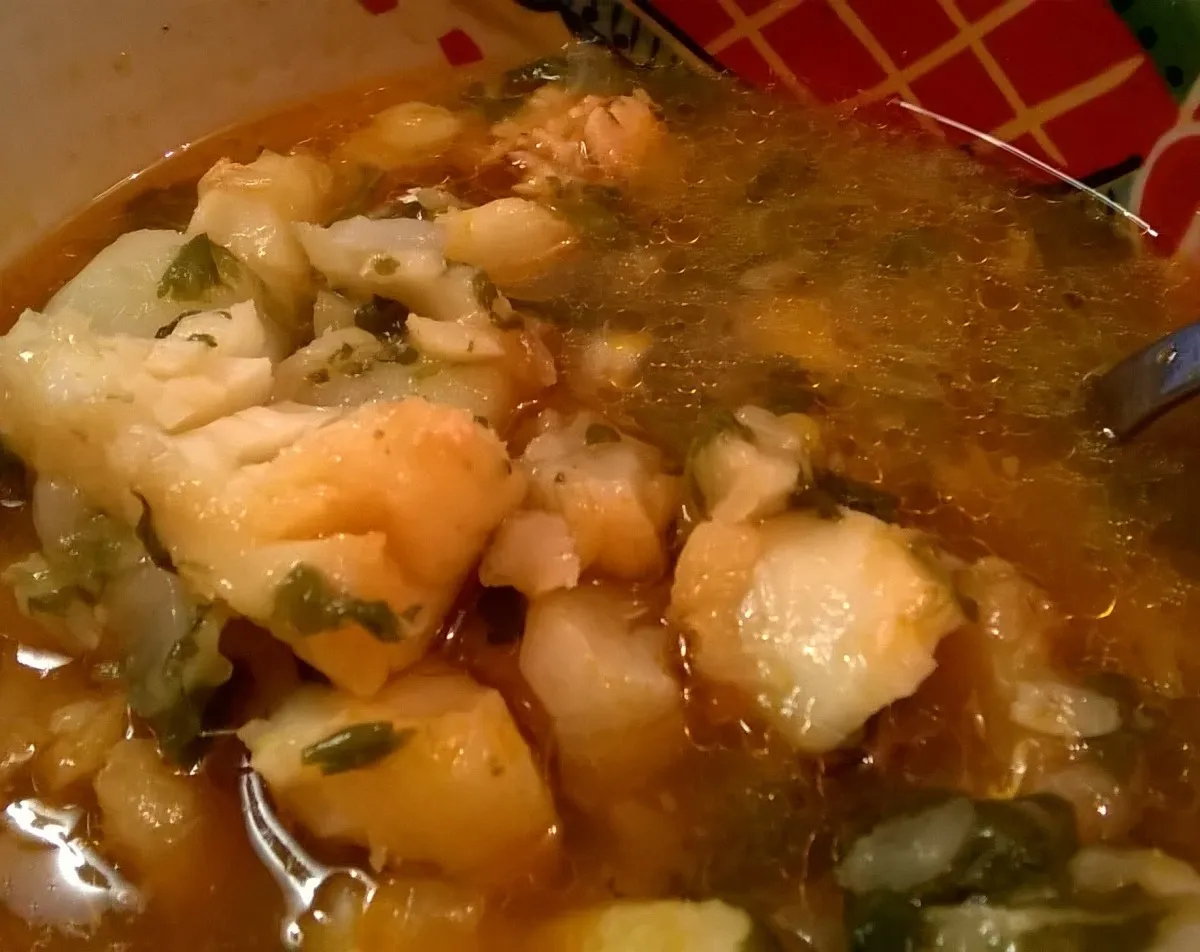
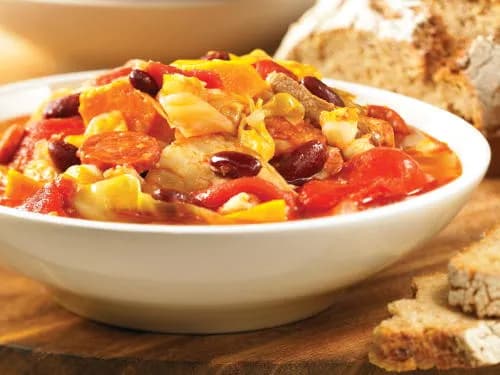
Cachupa is the national dish of Cape Verde, a slow cooked stew of hominy corn, several kinds of bean, root vegetables and preserved meats or fish. Every island has its own version, every family has its own version, and Cape Verdeans are clear that no two pots are ever quite the same. Corn and beans are the constant. Beyond that it takes in cassava, sweet potato, collard greens or kale, and whatever protein is to hand: corned beef, salt pork, chouriço or linguiça, or freshly caught fish. It reflects an archipelago where imported preserved meat and locally caught fish sat alongside a limited range of crops, and where nothing was wasted. The name is contested in the diaspora. In Cape Verde itself only cachupa is used, on any island, while some Cape Verdean families who have been in the United States for generations say munchupa, and the disagreement between the two runs along generational lines. There is also cachupa rica and cachupa pobre, the rich and poor versions, distinguished by how much meat goes in, and leftover cachupa refried with egg and sausage the next morning is called cachupa refogada and is regarded by many as the better meal.
Les mieux notées
4 hr 30 minMediumCape Verde
Recette de Blessing · Africook
Rien ici pour le moment
Tout effacer