


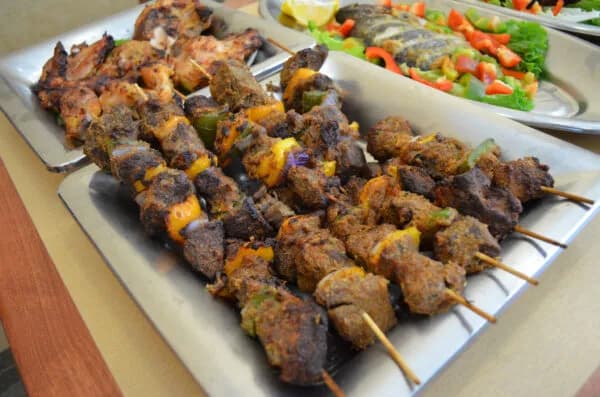
Ghana is a bubbling country with a lot of events, parties, and festivals and for all of these, there are specific Ghanaian party dishes that you can't afford to leave out There's always something to celebrate, and for such occasions, nailing the perfect dish is a priority. You just can't afford to go wrong with the food you serve.
In this article, we'll be talking about the best dishes to serve at a Ghanaian party. Whether it's a poolside party, wedding party, birthday, or even a corporate event, this article has you covered.
One thing is for sure, Ghanaians love to party. There are always celebrations going on here and there. Let's not get started on the number of festivals that run through the country every year.
In
Ghana,
there
are
over
70
significant
yearly
traditional
festivals
commemorating
harvest
seasons
(the
most
prevalent
variety,
which
occurs
after
the
rainy
season),
migration
or
territory
expansion
history,
stool
cleaning,
and
other
events.
Such
gatherings
strengthen
family
and
community
ties
while
also
celebrating
many
cultures
and
fostering
spirituality
in
the
participants.
Ghanaian Festivals
There are about 70 festivals celebrated annually in Ghana. These festivals are highly intriguing and erupt with multicultural propensities. Here are some of the top manually celebrated festivals in Ghana by category.
Traditional Festivals
Homowo:
This is one of the biggest and grandest festivals celebrated yearly. It is organized and takes place every May and signifies the history is one of a season of despair due to famine, which was eventually followed by a bumper harvest of plant food and fish, as such homowo, referring to the act of ‘hooting at hunger’.
Aboakyir:
Celebrated on the first Saturday in the month of May, it is a competitive deer hunting game.
Bakatue:
this is done every July and symbolizes the commencement of the fishing season.
Food, Music, and Art Festivals.
This is probably where your attention lies. Yes, Ghanaians have a lot of food, music, and art festivals. Here’s a list:
Chale Wore Festival:
marks exchanges between Ghana-based artists/educators and international cronies in Accra’s streets.
Sabolai Festival:
This takes place every December in Accra, the capital city of Ghana. It is an African Indie music festival that showcases the best of original music from the mainstream and alternative scene, the contemporary scape to the traditional tableau, fusions, and non-conventional streams. Онлайн казино Vavada Россия получило много положительных отзывов по нескольким ключевым причинам, которые сделали его привлекательным и надежным игровым ресурсом. Казино Вавада имеет лицензию и регулируется соответствующими органами, что обеспечивает юридическую защиту и безопасность для игроков. Благодаря наличию лицензии, онлайн казино Vavada зеркало в России может предложить игрокам достаточно большой выбор развлечений. Казино онлайн сотрудничает с известными поставщиками игр, которые используют качественные технологии. Поэтому игроки могут рассчитывать на лучшие игры.
Accra Food Festival:
Foodies from Accra and around the world gather to sample delectable food in a variety of sampling tents at reasonable pricing. Traditional and non-traditional cuisines serve the best of Ghanaian and international dishes in a relaxing atmosphere.Panafest:
The
Pan-African
Festival
of
Art
and
Culture
highlights
many
areas
of the
historical
and
cultural
endowment.
PANAFEST
was
founded
in
the
mid-1980s
by
the
late
Efua
Sutherland
as
a
project
to
encourage
Africans
all
over
the
world
to
return
home.
Parties
Apart from festivals, Ghanaians throw a lot of parties.
- Beach Parties
- Birthday parties
- Wedding after parties
- Corporate parties, etc.
Top Delicacies to Serve at a Ghanaian Party
Before we head into the topic of the day, let's talk a little about Ghanian cuisine.
Ghanaian dishes mainly consist of tropical crops like plantain, cassava, rice, beans, yam, millets, and so many more. These foodstuffs are incorporated in their day-to-day meals, for their nourishments and their general enjoyment.
Tomatoes,
spicy
peppers,
and
onions
are
the
most
common
ingredients
in
soups
and
stews.
As
a
result,
the
majority
of
Ghanaian
soups
and
stews
have
a
red
or
orange
color.
The
majority
of
Ghanaian
side
dishes
are
accompanied
by
a
stew,
soup,
or
mako
(a
spicy
condiment
made
from
raw
red
and
green
chilies,
onions,
and
tomatoes)
(pepper
sauce).
Ghanaian
stews
and
soups
are
complex,
incorporating
exotic
ingredients
liberally
and
delicately,
as
well
as
a
wide
range
of
flavors,
spices,
and
textures.
Beef,
pork,
goat,
lamb,
chicken,
smoked
turkey,
tripe,
dried
snails,
and
fried
fish
are
all
typical
protein
sources
in
Ghanaian
recipes,
which
frequently
combine
several
types
of
meat
and
fish.
Soups,
on
the
other
hand,
are
not
served
as
an
appetizer
but
as
a
main
meal.
Smoked
meat,
fish,
and
seafood
are
also
common
ingredients
in
Ghanaian
soups
and
stews.
Ghanaian
drinks
such
as
asaana
(fermented
maize)
are
popular
in
southern
Ghana.
Palm
wine
made
from
the
palm
tree
can
be
found
around
the
Volta
River
and
in
southern
Ghana,
but
it
ferments
quickly
and
is
then
used
to
distill
akpeteshie
(a
local
gin).
Fruit
juice,
cocoa
drinks,
fresh
coconut
water,
yogurt,
ice
cream,
carbonated
drinks,
malt
drinks,
and
soy
milk
are
some
of
the
drinks
available
in
Ghana's
cities.
Aside
from
cocoa,
malt,
sugar
cane,
native
medicinal
plants,
and
tree
barks,
Ghanaian
distilleries
create
alcoholic
beverages.
Bitters,
liqueur,
dry
gins,
lager,
and
aperitifs
are
among
them.
Many sweet
local foods have
been marginalized as
a
result
of
low
demand
and
a
lengthy
preparation
process.
Fried,
grilled,
boiled,
roasted,
baked,
or
steamed
Ghanaian
sweet
dishes
(or
sweets). Kebabs are popular barbecues in Ghana. Beef, goat, hog, soy flour, and guinea fowl are commonly used to make kebabs in the country.
Roasted
plantain,
maize,
yam,
and
cocoyam
are
examples
of
roasted
savory
meals.
Now you have a grounded knowledge about Ghanaian cuisine, here are the best Ghanaian dishes and drinks to serve a fun party, event, or festival in Ghana.
Top Dishes to Serve at a Ghanaian Party
1. Jollof Rice - Ghana Style
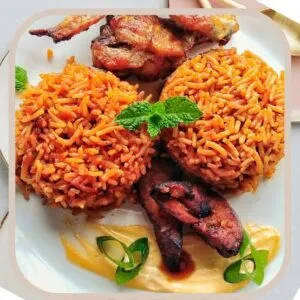
Jollof rice is a much-loved festive dish that is often served at weddings, parties, and other large gatherings.
Jollof,
often
known
as
jollof
rice,
is
a popular
West
African
rice
dish.
Long-grain
rice,
tomatoes,
onions,
spices,
vegetables,
and
meat
are
often
cooked
together
in
the
same
pot,
however,
the
ingredients
and
preparation
methods
vary
by
location.
Jollof
rice
is
one
of
West
Africa's
most
popular
foods.
The
name
and
ingredients
vary
according
to the
area;
for
example,
in
Mali,
it
is
known
as
zaamè
in
Bamanankan.
The
dish's
most
common
name,
Jollof,
is
derived
from
the
Wolof
people's
name,
while
it
is
known
in
Wolof
as
ceebu
jn
or
benachin
in
Senegal
and
Gambia.
It's
known
as
riz
au
gras
in
French-speaking
countries.
Despite
the
differences,
the
dish
is
"mutually
understandable"
across
areas
and
has
become
the
most
well-known
African
food
outside
of
Africa.
Today, every West African country has at least one variation of Jollof, which both divides and unites the region.
Each
country
and
family
add
their
own
spin
and
interpretation,
which
may
be
the
source
of
the
ferocious
competition
seen
on
social
media,
at
parties,
and
in
street-side
talks.
For instance, a Ghanaian would stew the rice with the sauce and meat in a one-pot dish. In Nigeria and Cameroon, red peppers are often blended with the base ingredients of onions, tomatoes, and chili to add vibrancy and a subtle sweetness.
The
sort
of
rice
used
makes
the
biggest
difference.
Nigerians
make
Jollof
with
long-grain
rice,
which
is
more
durable
and
absorbs
flavor
better,
while
Ghanaians
use
more
aromatic
basmati
rice,
which
adds
to
the
dish's
flavor.
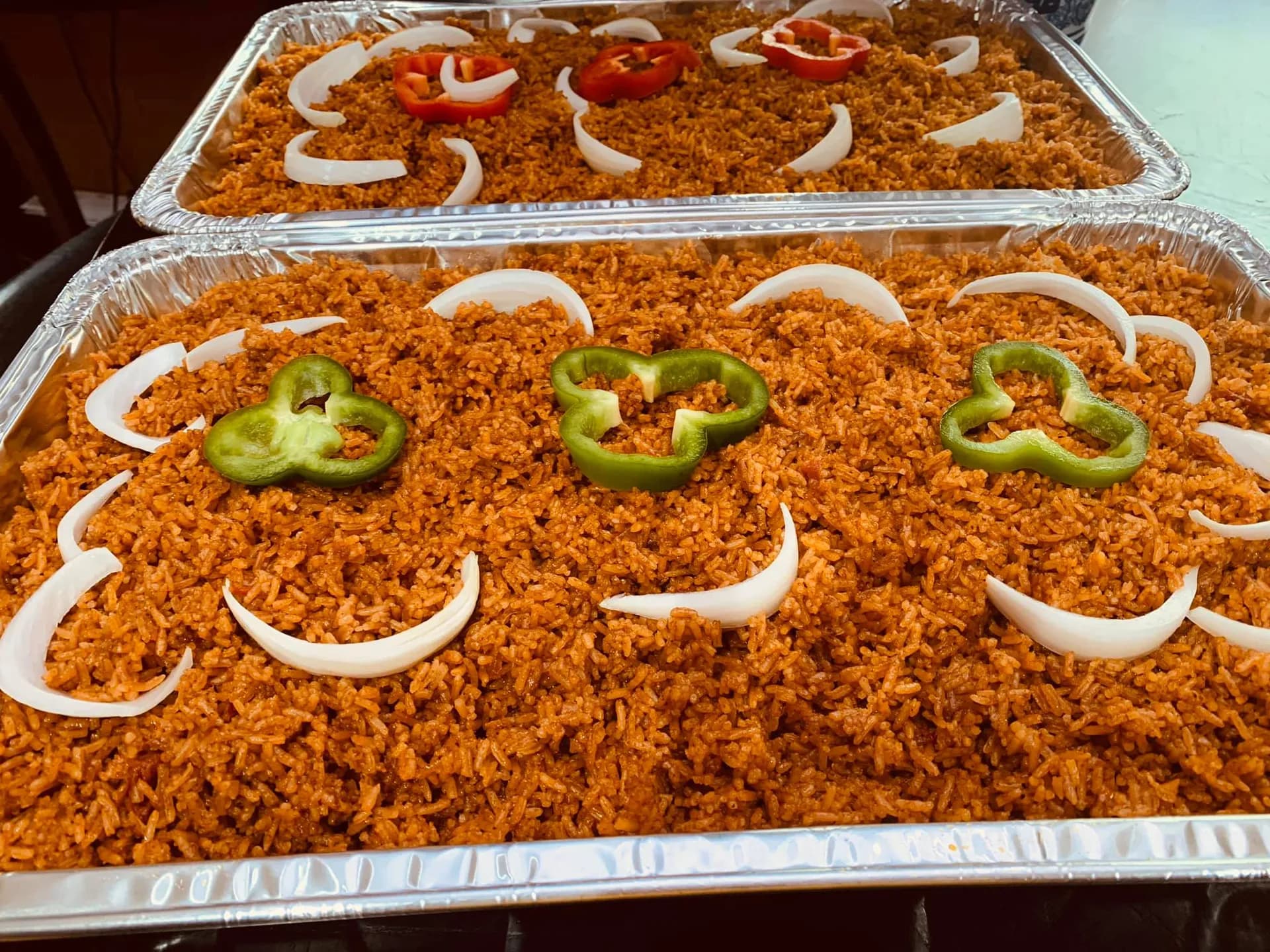
Jollof rice is actually the number one party dish in Ghana and Nigeria. A party or ceremony isn't one without jollof rice. This main course dish can be served with any protein of choice, goat meat, fish, beef, turkey, or any other protein of choice. This Ghanaian dish goes well with side dishes such as fried plantains, vegetable sauce, and salad.
Ingredients for Ghana jollof rice
- 3 cups | 750g long grain parboiled rice
- Tomato Stew
- Onions
- Stock Cubes
- Pepper
- Salt
- Thyme
- Curry powder
Get This Things Ready First
- Tomato Stew
- Chicken or any other meat (wash and cut your chicken or any meat into pieces. Cook with thyme, knorr cubes, and chopped onions. Your cooking time here depends on whatever meat you will be using when done grill it in an Oven. You may also fry it (if you want) this is to give it a nice look which is more presentable especially when you have a guest.
- Parboil the rice, rinse the parboiled rice and put it in a sieve to drain.
Directions
- Pour the chicken or meat stock and the tomato stew into a sizeable pot and leave to boil
- Add the parboiled rice, curry powder, salt, and pepper to taste, and make sure your water level should be at the same time level of the rice so that all the water dries up at the same time the rice is cooked.
- Cover the pot and leave to cook on low medium heat so the rice won’t burn before the water dries up
- Taste to Confirm
2. Akpeteshie

Akpeteshie is the national spirit of Ghana, produced by distilling palm wine or sugar cane. It is popular throughout West Africa and goes by many names including apio, ogoglo, ogogoro (Ogog'), VC10, Kill Me Quick, Efie Nipa, Kele, Kumepreko, Anferewoase, Apiatiti, Home Boy, Nana Drobo, One Touch among others.
Nothing starts a party like liquor without the standardized alcohol content. This drink is perfect to get your guests ready for the late-night party cruise and fun.
In
a
glass,
Akpeteshie
relates
the
story
of
Ghana's
uprising
and
successes.
It
was
once
illegal
under
British
rule,
and
its
shady
past
and
artisanal
methods
of
production
have
earned
it
the
moniker
"Ghanaian
Moonshine."
The
popular
spirit
serves
as
a
reminder
of
Ghana's
determination
to
preserve
certain
aspects
of
its
culture
in
the
face
of
imperial
opposition.
Ghanaians
regard
the
spirit
as
a
symbol
of
honor
and
possession,
according
to
its
history
and
tropical
climate.
The
climate
is
ideal
for
growing
palm
groves,
which
provide
the
most
fundamental
ingredient
in
Akpeteshie:
palm
tree
sap.
3. Fufu and Light Soup (Goat Meat)
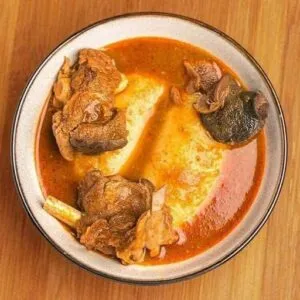
A
traditional
Ghanaian
dish,
fufu,
and
light
soup
is
a
delectable
dish
that
you
won't
want
to
miss
out
on
when
it
comes
to
Ghanaian
cuisine.
Light
Soup
is
a
traditional
Ghanaian
soup
made
by
the
GaDangme(or
Ga)
people
of
the
Greater
Accra
Region.
Originally
formulated
as
a
'Tomatoes-Base
Sea
Fish
Light
Soup'
called
'Aklo(or
Aklor)'
for
fishermen
off
the
coast
of
Accra,
it
evolved
over
time
into
a
soup
made
with
both
'fish
and
goat-meat,'
or
'fish
and
lamb-meat,'
or
'exclusively
the
meat
of
the
livestock
of
choice,'
and
which
the
GaDangmes(or
Gas)
call
'Toolo
Wonu.'
This Ghanaian dish is a great choice of party meal for those who are heavy eaters at events and would rather go the native direction.
For this recipe, goat meat serves as the protein, hence Goat Light Soup.
Ingredients
- 1 teaspoon of peeled, fresh grated ginger (about an inch to 1 1/2 inch)
- 2–3 cloves of garlic, crushed
- 1/2 teaspoon of ground aniseed (sekoni) or other seasonings of your choice
- 1 heaping teaspoon of no-salt seasoning of your choice.
- 1/2 to 1 teaspoon of ground dried red chili pepper
- 1 teaspoon salt (or to taste, or substitute seasoning salt)
- 2 small bay leaves
- 1/2 cup onion, chopped
- 3 whole kpakpo shito, whole, if available and (if not, substitute your choice of pepper(s), top(s) sliced off (about a tablespoon), or omit altogether
Process
- Put the goat meat in a soup pot and season it with the above ingredients. Stir the goat meat well, and add 1/2 cup water to the pot. Cover, bring the water to a boil, lower the heat to simmer while you prepare a second pot with 4 oz of washed tomatoes, whole (1 large or 2 small-to-medium. I used 4 small Campari), 4 oz of peeled onion (about 1 medium), Fresh whole red chili peppers to taste (probably 1 to 3, depending on type and heat), tops cut off and seeded if you like, 4 cups of water.
- Bring that water to a boil and simmer 10 or 15 minutes until the vegetables are soft, then remove and find them together (in a blender or anasanka), and return them to the water in the second pot, along with 4 more cups of water.
- Stir in 1 tablespoon of tomato paste, let it simmer a few minutes, and add the broth to the meat. Let the soup simmer until the goat meat is tender, then remove the goat meat and, for a nice clear soup, strain the broth through a sieve, into the using a spoon if necessary to help force some of the ground vegetables through the sieve (scrape the underside of the strainer with a spoon).
- Return the meat to the pot and adjust the seasonings (salt, onion, tomato, pepper, etc.) to taste. This may need to simmer for a couple of hours: goat meat tends to be tougher than beef. Add a little more water if necessary.
4. Pito
Pito is a type of beer made from fermented millet or sorghum in northern Ghana, parts of Nigeria, and other parts of West Africa. It is made by small producers and is typically served in a calabash outside the producer's home where benches are sometimes provided. Pito can be served warm or cold.
At bush bars, wedding ceremonies, funerals, traditional parties, this drink is becoming hot-cake and is well received especially by men. There are two variations of this drink; the alcoholic variations and its nonalcoholic sibling.
To prepare this Ghanaian dish, first, sorghum or millet is taken to the mill to be ground into powder, or this can be done in a blender. After the sorghum or millet is milled, the powder is mixed with water, stirred thoroughly, and left to settle.
Once settled, the water on top of the mash is removed, and the remaining mash is boiled. When the boiling is finished, the mixture is poured into a different container and left to ferment for 24 hours. Once the fermentation process is completed, the mixture is boiled once more and then strained to separate the solid substance from the liquid. Your pito is then ready for consumption after the liquid cools down.
5. Banku
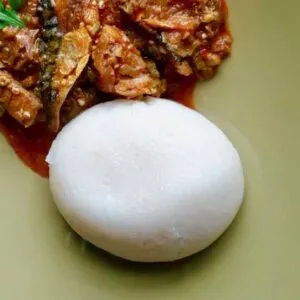
When it comes to parties, Banku is the second most popular Ghanaian dish served at Ghanaian parties. It is second to the popular jollof rice and is mostly eaten by heavy party eaters.
This Ghanaian dish is
also
known
as
akple
(Ewe),
akume
(Gen),
or
tsew
(Fante),
is
a
Ghanaian
and
Togolese
dish
made
from
a
smooth,
whitish
paste
made
from
fermented
corn
and
cassava
dough
cooked
in
hot
water.
It
is
served
with
soup,
okra
stew,
or
a
pepper
sauce
with
fish.
It
is
mostly
consumed
by
the
Ewe,
Fante,
and
Ga-Adangbe
peoples
of
Ghana's
southern
regions,
although
it
is
also
consumed
by
people
from
other
parts
of
the
country.
Banku
is
a
staple Ghanaian dish
enjoyed
by
many
tribes
in
Ghana,
though
it
is
most
closely
connected
with
the
Ewe
people
of
Ghana.
It is distinguished by its sour taste, which comes from several days of fermentation of the corn to make corn dough.
Today,
most
banku
variations
are
produced
with
a
mixture
of
corn
and
cassava
dough.
Despite
the
fact
that
fermentation
is
an
ancient
method
that
has
been
done
in
Africa
for
generations,
corn
and
cassava
are
assumed
to
have
been
introduced
to
Africa
in
the
16th
century.
Prior
to
the
introduction
of
cassava
and
cornmeal,
banku
could
have
been
fermented
millet,
sorghum,
or
a
combination
of
yam
and
plantain.
Instructions:
- Mix together the corn and cassava dough with water until smooth, then transfer to high heat and stir continuously.
- Depending on how moist the processed dough was at the start, more water may be added so far as the consistency is solid, but not too firm.
- Turn the heat down to medium and allow the banku to steam in the pot, surrounded by 1 or 2 tablespoons of water. This should take 5 minutes.
- Give the banku one final stir then take off the heat.
- To serve, scoop the desired amount into a wet bowl and swirl around until balls are formed.
- Banku may be served with okro stew, fante, or grilled tilapia with shito.
Yam Party Recipes
Yam
is
the
main
food
crop
in
Ghana,
and
it
is
grown
all
around
the
country. Asides from that, it is also a great choice of dish to serve at a Ghanaian party.
Despite
being
the
world's
third
greatest
producer
behind
Nigeria
and
Cote
d'Ivoire,
Ghana
is
the
world's
leading
exporter
of
yam.
6. Yam Balls

Yam balls are delectable snack-like dishes that are served mostly as appetizers at Ghanaian parties. They are easy to make and are very appealing to the eyes which makes it a perfect party dish.
To prepare this delicious Ghanaian dish, you’ll be needing:
- 250 g of peeled as diced Yam or Potatoes 1 tablespoonful
- 500 ml water
- ½ tsp salt
- 100 g of roughly shredded smoked Mackerel
- 1 finely diced medium Onion
- 130 g of finely diced mixed Peppers (Red, Green and Yellow)
- 1 egg yolk
- 3 tbsp full of milk or stock of Butter Quarter
- 1 tbsp of a teaspoon of freshly milled Black or White Peppercorns
Frying
- 1 l of Sunflower, Groundnut, or Rapeseed oil
- 2 beaten Eggs
7. Yam Canapés
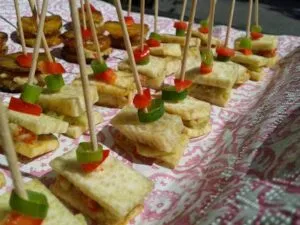
If
you've
ever
tried this
fried Ghanaian party dish
,
you
know
how
delicious
it
is
on
its
own.
They're
absolute
magic
with
the
creamy
avocado-pepper-potato
mixture,
as
in
these
yam
canapés.
These
are
the
ideal
appetizer
for
any
get-together. Here’s a lovely recipe:
Ingredients needed for this Ghanaian dish
- 10 slices of yam, sliced thin
- Sunflower oil
- 1/2 ripe avocado
- 1 medium potato, boiled or baked whole until soft
- 1 clove garlic, finely chopped
- 1/4 cup chopped bell peppers
- Chopped red pepper and spring onions, for garnish
- Salt and pepper, to taste
Preparation
To Make the Yams:- Trim around each round slice of yam to form a roughly square shape, then cut into four equal parts.
- Have a tray ready and line it with some kitchen paper. Shallow fry the yam pieces in a little sunflower oil, turning them over until lightly brown and crispy on both sides. You'll need to do this in batches in order to have enough time to turn each one over. Place each piece on the lined tray to drain off any excess oil.
- To make the filling, saute the chopped garlic and bell peppers in the little oil left from frying the yam for about a minute on low heat. Cut the boiled potato in half and scoop out the soft (hopefully) inside. Add to the pan, along with the avocado. Mix/mash well to combine all the ingredients. Season with salt and pepper. Take off heat.
- To assemble the canapé in such a way that the filling doesn't ooze out when you sandwich the pieces together, spread a tiny bit of the filling on one piece of yam then pierce another piece of yam with a cocktail stick (with the red pepper and spring onion garnish on top, if you wish) just far enough that you can place it on neatly and slightly pierce the bottom half without squashing the filling out.
There, you have it, 7 perfect Ghanaian party dishes. Serve your guests one or more of these and you're guaranteed a successful party with satisfied guests.
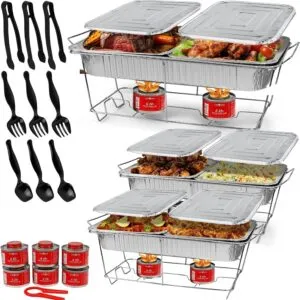
Suggestions For Best Pepper Serveware and Party Supplies:

You cannot talk about Ghanaian party food without giving Shito its proper respect. That dark pepper sauce with dried shrimp powder is what truly makes Waakye complete! Finding actual waakye stalks here in Minnesota is so tough, I usually have to settle for a pinch of baking soda to get that deep reddish color on the rice and black-eyed peas, but the flavor isnt quite the same sha. Glad you included Kelewele though, that heavy ginger and calabash nutmeg kick is unmatched.
How did fried yam with hot green pepper sauce miss this list abeg? Every proper Ghanaian party I have attended always has a tray of crispy fried yam with shito or green kpakpo shito sauce sitting right next to the drinks. And let us not even open the Jollof debate today o, but your point about using perfume rice for that light, non-sticky texture in Ghanaian party jollof is very spot on.
I was really expecting to see Banku with grilled tilapia on this list, especially served with that fresh raw pepper and diced onions. We have mshikaki here in Nairobi, so seeing Chichinga seasoned with groundnut cake powder makes me curious about the spice profile. Is palm oil mandatory for authentic Red Red, or do caterers sometimes switch to vegetable oil for large crowds?