Henakisoa sy Ravitoto (Malagasy Pork with Cassava Leaves)
Abuja, Nigeria · View all recipes
Overview
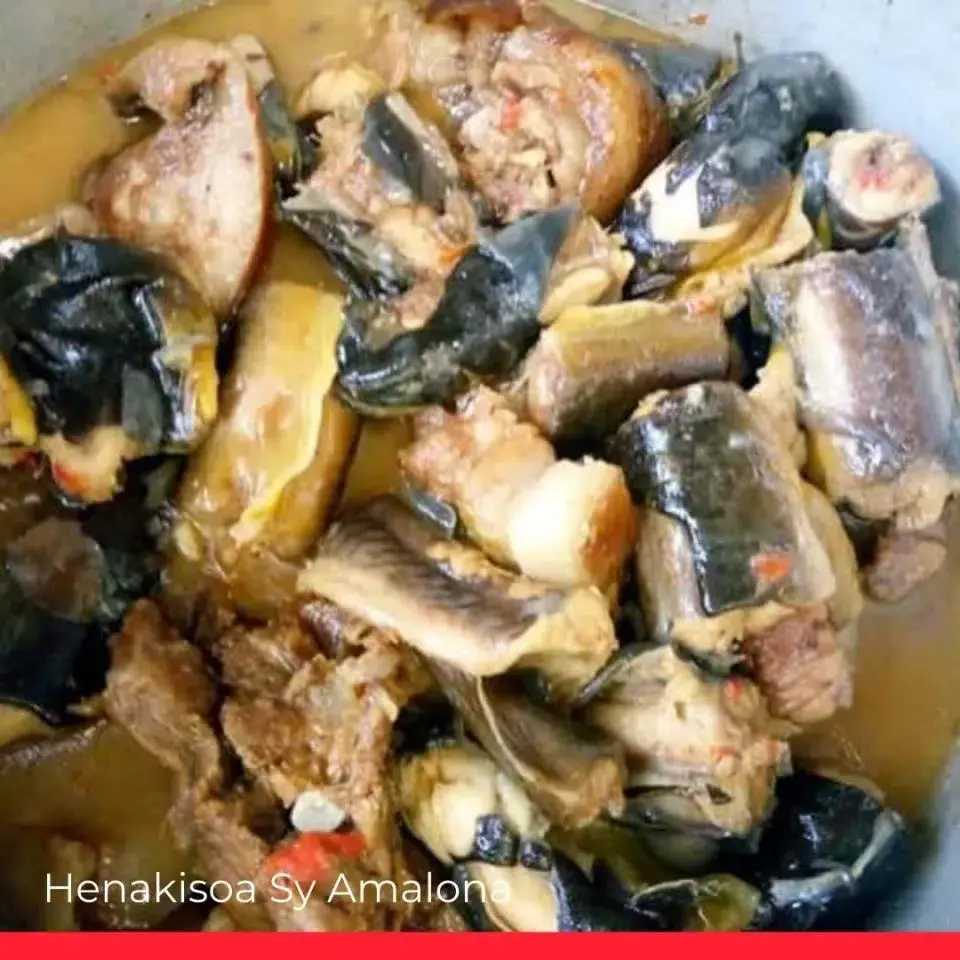
Pork browned and cooked slowly with ravitoto, pounded cassava leaves, until the meat is tender and the greens have collapsed into a dense, dark mass. It is Malagasy, and it is close to a national dish. The page needs an immediate correction. Its title, henakisoa sy amalona, means pork with eel, and that dish is real: one of the seven royal dishes of the Merina highlands, and genuinely divisive in Madagascar, since some communities do not eat pork and the pairing of pork with fish is unusual. **But the recipe attached to this page contains no eel.** It is pork with ravitoto, which is a different and far more common dish, and the source's own prose drifts into describing that one instead. The recipe here follows the ingredients, and the title has been changed to name what is actually made. The URL is unchanged. Ravitoto is worth knowing about. Cassava leaves are pounded, traditionally in a wooden mortar, and the pounding is the defining step, giving the name, then cooked long and slow. Cassava leaves must be thoroughly cooked, as the raw leaf is toxic. Tinned or frozen ravitoto sold at African grocers has already been processed. Ravitoto sy henakisoa is commonly described as Madagascar's national dish, though the Merina royal tradition holds otherwise.
AFN Heritage Note
Ravitoto sy henakisoa is a Malagasy dish of pork cooked with pounded cassava leaves, widely described as a national dish of Madagascar. Henakisoa sy amalona, pork with eel, is a separate dish counted among the seven royal dishes of the Merina highlands.
Ingredients
Dietary tags are provided by contributors as a guide, not verified by AFN, and they depend on the products you buy. If you have a serious allergy, check every ingredient yourself. Cooking, allergies and your own judgement
Directions
- 1
Cut the meat into large pieces of about 4 cm.
- 2
Peel the garlic cloves and mash them to a purée.
- 3
Warm the oil in a casserole dish.
- 4
Brown the meat on all sides.
- 5
Pour in a little water and the garlic purée, and season.
- 6
After 30 to 40 minutes, when the pork is tender, work in the ravitoto and cook gently for another 10 minutes.
- 7
Taste, adjust the seasoning and serve with rice.
Africook’s Notes
- Brown the pork properly before any liquid goes in. It is where the depth of the dish comes from.
- Pork belly alongside the loin is worth including. The fat renders into the cassava leaves and is much of what makes the dish rich.
- Use tinned or frozen ravitoto from an African grocer. Preparing cassava leaves from raw is a long process and they must be cooked thoroughly, since the raw leaf is toxic.
- Do not add much water. Ravitoto should be dense rather than soupy.
- It is served with rice, which in Madagascar is eaten at nearly every meal.
- Black pork from Gascony is what the source recommends for a more refined result, though any good pork works.
Questions cooks ask
Why doesn't this recipe contain eel?
Because the source's recipe does not, despite its title. Henakisoa sy amalona means pork with eel and is a real Malagasy dish, one of the seven royal dishes of the Merina highlands. The recipe attached to this page is pork with ravitoto, pounded cassava leaves, which is a different and far more common dish, and the source's own prose drifts into describing that one. The title here names what is actually made; the URL is unchanged.
What is ravitoto?
Pounded cassava leaves, the name comes from the pounding, which is traditionally done in a wooden mortar and is what distinguishes ravitoto from simply chopped leaves. The leaves are cooked long and slowly until they collapse into a dense, dark green mass. Cassava leaves are toxic raw and must be cooked thoroughly. Tinned and frozen ravitoto sold at African grocers has already been processed and is safe to use directly.
Is this Madagascar's national dish?
Ravitoto sy henakisoa is very commonly described as one, and the source says as much. The complication is that the Merina royal tradition of the highlands names seven royal dishes, of which henakisoa sy amalona, pork with eel, is one, and ravitoto is not among them. Both claims circulate. What is not in dispute is that ravitoto sy henakisoa is eaten very widely across the island.
Why is pork with eel divisive?
Two reasons the source gives, and both are real. Some Malagasy communities do not eat pork, for religious or customary reasons. And the combination of pork with fish is unusual in Malagasy cooking generally, so the pairing strikes many people as odd regardless. Despite that, it remains a prestige dish served to honour distinguished guests at traditional celebrations in the highlands.
Reviews
Be the first to rate this recipe
Cooked it? Your rating helps the next person decide whether to try it.
No reviews on this one yet. If you have cooked it, yours would be the first.
You Might Also Like
Browse all Malagasy recipes →
Romazava
Tsaramaso Malagasy (White Bean and Tomato Stew)