

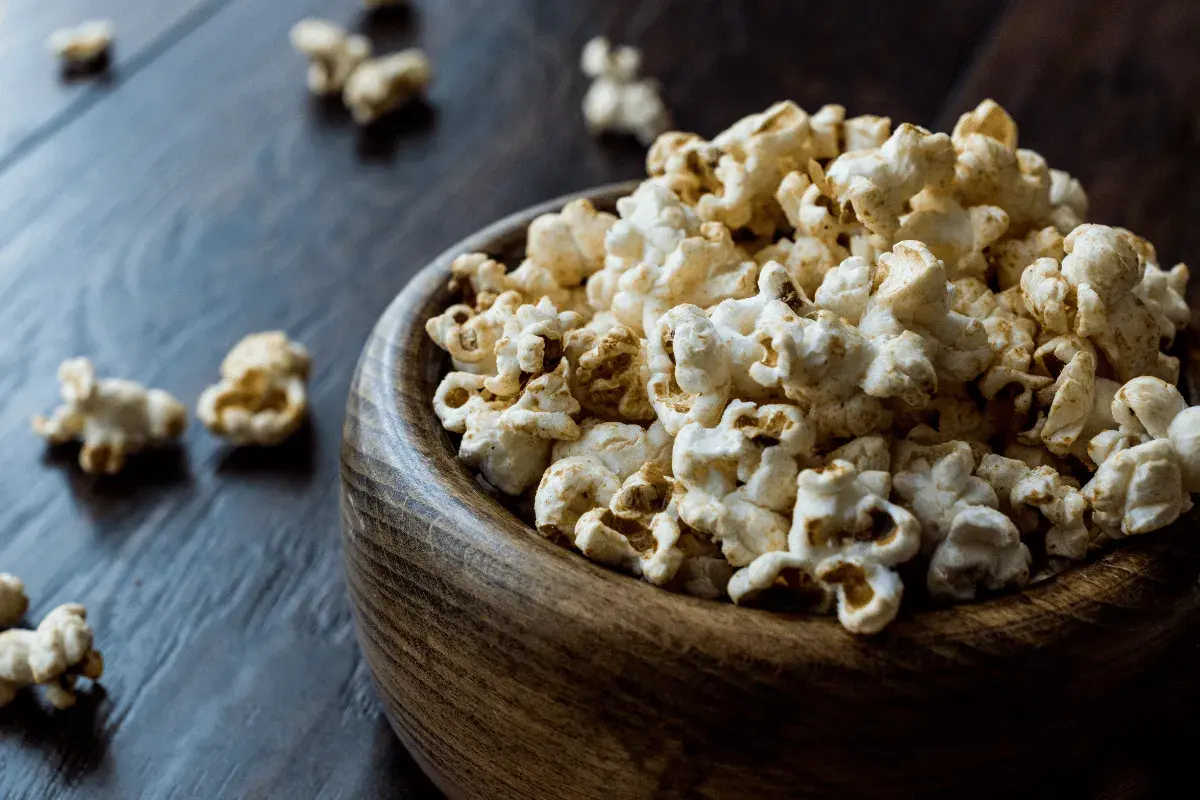
Honey Popcorn
Abuja, Nigeria · View all recipes
Overview
Popcorn popped on the hob, coated in a honey and butter mixture and baked briefly so the coating sets crisp rather than staying sticky. No country is claimed. **This page had no recipe card in the source**, only an article about why honey popcorn is good. The ingredients and method below have been reconstructed from what that article describes, and that is flagged rather than hidden. The technique the article gets right is the baking step, and it is the difference between honey popcorn and sticky popcorn. Honey poured over popcorn stays tacky, because honey is around eighteen per cent water. Spreading the coated popcorn on a tray and baking it at a low temperature drives that water off, and the sugars set into a thin brittle shell. Ten to fifteen minutes at a low heat, turned once or twice, is enough. Its other observation is also true: honey helps salt adhere to the popcorn, which distributes the seasoning far more evenly than salt sprinkled onto dry kernels, most of which falls to the bottom of the bowl. Popcorn itself is indigenous to the Americas, maize was domesticated in Mexico and popping varieties are ancient there. Maize is now grown and eaten across Africa, but popcorn as a snack came the other way.
Ingredients
Dietary tags are provided by contributors as a guide, not verified by AFN, and they depend on the products you buy. If you have a serious allergy, check every ingredient yourself. Cooking, allergies and your own judgement
Directions
- 1
Warm the oil in a large heavy pot over medium heat with three kernels in it, lid on. When those three pop, the oil is at temperature.
- 2
Tip in the rest of the kernels, cover, and shake the pot occasionally until the popping slows to a few seconds between pops. Take it off the heat immediately.
- 3
Set the oven to 250°F / 120°C and line a large baking tray with parchment.
- 4
Warm the honey, butter and salt together in a small pan until the butter has melted and the mixture is smooth and pourable.
- 5
Pour the honey mixture over the popcorn in a large bowl and turn it through thoroughly, so every piece is lightly coated rather than a few being drenched.
- 6
Spread the coated popcorn in a single layer on the tray.
- 7
Bake for 10 to 15 minutes, turning it once or twice. This drives off the water in the honey so the coating sets crisp instead of staying tacky.
- 8
Cool completely on the tray before serving, it crisps further as it cools.
Africook’s Notes
 Personal notes from Deborah Olayiwola
- Bake it after coating. This is the whole difference between crisp honey popcorn and a sticky mess.
- Keep the oven low. Honey burns readily and a hot oven scorches it before the water has evaporated.
- Test the oil with three kernels before committing the rest. It stops you burning a whole batch.
- Take the pot off the heat while a few kernels are still popping. Waiting for the last one burns the rest.
- Coat lightly and evenly. Drenched popcorn will not crisp however long it bakes.
- Cool it completely on the tray. It is still slightly soft when it comes out of the oven and hardens as it cools.
Questions cooks ask
Why bake the popcorn after coating it?
Because honey is around eighteen per cent water, and popcorn coated in honey and left alone stays tacky and soft. Baking at a low temperature drives that water off, and the remaining sugars set into a thin brittle shell around each piece. Ten to fifteen minutes at a low heat, turned once or twice, is enough, and it should be cooled completely on the tray afterwards, since it crisps further as it cools.
Why doesn't salt stick to plain popcorn?
Because there is nothing for it to stick to. Salt sprinkled over dry popcorn mostly falls straight through to the bottom of the bowl, which is why the last handful is always over-salted and the first is bland. Coating the popcorn in something, honey, butter, oil, gives the salt a surface to adhere to, and distributes it far more evenly. This is the most useful observation in the original article.
Why doesn't this page have a proper recipe?
Because the original page did not have one, it was an article about why honey popcorn is good, with no ingredient list and no method attached. The recipe here has been reconstructed from what that article describes, and the reconstruction is flagged rather than presented as if it came from the source. The quantities are working proportions.
Is popcorn African?
No. Maize was domesticated in Mexico, and popping varieties are ancient in the Americas, archaeological evidence for popped corn goes back thousands of years there. Maize is now grown and eaten enormously widely across Africa, in forms from ugali to kenkey to pap, but it arrived after the Columbian exchange and popcorn as a snack came from the Americas rather than the other way round.
Reviews
Be the first to rate this recipe
Cooked it? Your rating helps the next person decide whether to try it.
No reviews on this one yet. If you have cooked it, yours would be the first.
You Might Also Like
Papaya Smoothie for Weight Loss
Mozambique Matapa Recipe
Garden Egg Stew (Earthenware Bowl Method)