

Hausa Masa
Overview
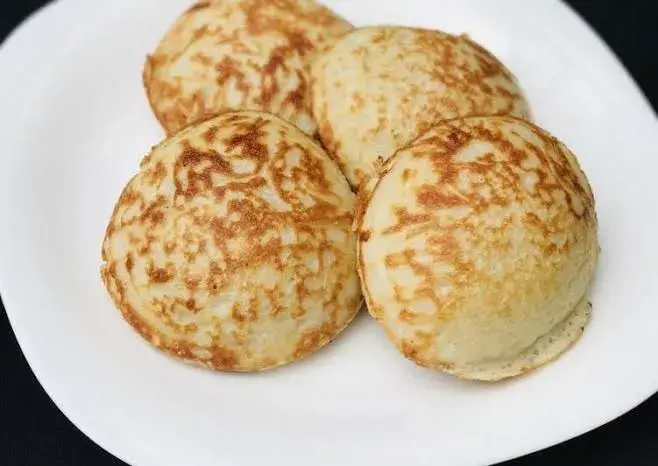
Masa, also called waina, is a fermented rice cake from the Hausa of Northern Nigeria: small, round, spongy underneath and browned on the surface, cooked in a dedicated pan with shallow round wells. It belongs to the Hausa, one of the largest ethnic groups in Africa, and it is among the dishes most closely identified with them. The fermentation is what makes it. Rice is soaked, ground with cooked rice, and left to rise overnight, and the mild sourness that develops is what separates masa from any other rice pancake. The holes that open across the surface as it cooks are the visible evidence of that ferment, and a masa without them has not been left long enough. It is breakfast food and snack food, sold from street stands and in markets across the north, and it appears at celebrations and family gatherings. What goes with it varies by household and by time of day: honey, groundnut oil, a peppery stew, or yaji, the same spice blend used on suya. Masa is a dish that has held its association with one people while spreading well beyond them, which is a fair description of how Hausa food generally has travelled through Nigeria.
AFN Heritage Note
Masa, also called waina, is documented as an established preparation among the Hausa of Northern Nigeria, where fermented grain cakes are cooked in a dedicated wells pan known as a tanderu or masa pan. Its earliest documented date is uncertain.
Ingredients
Dietary tags are provided by contributors as a guide, not verified by AFN, and they depend on the products you buy. If you have a serious allergy, check every ingredient yourself. Cooking, allergies and your own judgement
Directions
- 1
Rinse the rice thoroughly and soak it in water for 4 to 6 hours or overnight.
- 2
Drain the soaked rice and transfer it to a blender. Add the cooked rice and blend to a smooth batter, adding a little water to reach the right consistency.
- 3
Transfer the batter to a bowl, cover with a clean cloth, and leave to ferment for at least 8 to 10 hours or overnight. Fermentation time varies with temperature.
- 4
After fermentation the batter will have risen and will smell slightly sour.
- 5
Dissolve the yeast and sugar in a little water in a small bowl and leave for about 5 minutes until frothy.
- 6
Add the yeast mixture, salt and a little water to the fermented rice batter and stir well.
- 7
Heat a non stick frying pan or a masa pan over medium heat and grease it with a little vegetable oil.
- 8
Pour a ladleful of batter into the pan, spreading it in a circular motion into a thin round.
- 9
Cook until the underside is golden brown. Small holes will form across the surface.
- 10
Flip and cook the other side for a further minute until golden brown.
- 11
Repeat with the remaining batter, adding oil as needed.
- 12
Serve warm with honey, groundnut oil, stew or yaji.
Africook’s Notes
 Personal notes from Laila Yetunde
- The overnight ferment is not optional and it is not the same as the yeast. The yeast gives lift; the ferment gives the sour note that makes it masa rather than a rice pancake.
- Watch for the holes. When small holes open across the surface the underside is ready and it is time to turn. Turning before they appear gives a dense, gummy cake.
- A masa pan with round wells gives the proper shape and thickness. A poffertjes or aebleskiver pan is the closest widely available equivalent, and a non stick frying pan works for a flatter version.
- Keep the heat at medium. Too hot and the outside browns before the inside sets; too low and the cake dries out before it colours.
- Best eaten fresh and warm. Masa firms up considerably as it cools and does not reheat well.
Questions cooks ask
What is the difference between masa and waina?
They are the same dish under two names, both used among the Hausa. Masa is the more widely used term outside Northern Nigeria, and waina is common within it. Some households use waina specifically for the version made with rice and masa more broadly, but the usage is not consistent and neither is wrong.
Why is my masa not spongy?
Under fermentation, almost always. The batter needs eight to ten hours, and longer in a cold kitchen, and it should visibly rise and smell sour before you cook it. The second common cause is turning the cakes too early, before the holes have opened across the surface, which collapses the structure.
What is masa eaten with?
Honey and groundnut oil are the most common sweet treatments. On the savoury side it is eaten with a peppery stew, with miyan taushe, and with yaji, the groundnut and spice blend used on suya. It is eaten at breakfast, as a snack, and at gatherings, and the accompaniment shifts with the occasion.
Can I make masa without a special pan?
Yes. A non stick frying pan gives a flatter, wider masa that tastes the same but does not have the characteristic round domed shape. A poffertjes or aebleskiver pan reproduces the wells almost exactly and is the best substitute if you make masa often. Masa pans are sold at Nigerian grocers and online.
Reviews
5 reviews
You Might Also Like
Browse all Nigerian recipes →
Edo Black Soup
Nigerian Fisherman Soup
Igbo Yam Porridge
my first attempt was a mess because my kitchen was too cold here in Toronto and the batter refused to rise even after 10 hours, no sour smell at all just flat batter. Second try I put the bowl next to the heater and the yeast finally activated, fried up golden on the outside! abeg warn people about room temperature in winter.
Toronto cold will really test you o! That masa batter needs warmth to get the proper sour taste, if not e go just sit there flat. Glad the heater saved the second batch sha. People in cold places usually put the bowl inside an unheated oven with just the light turned on, it works well too.
Finally found a proper pan on Rye Lane last week so I could make this. In London weather, leaving the batter overnight on the counter wasnt enough to get that sour smell, I had to put the bowl inside the oven with just the light on to ferment properly. Once that worked, the inside was so fluffy sha.
herh in Tamale we buy masa every morning for breakfast oo. I tried making it at home with this yeast method because usually my mother only uses overnight sour batter without bakers yeast. fermented for 8 hours and the sour smell was just right, went so well with warm koko after fajr.
massa is very big in Northern Ghana too, not just Nigeria. the secret really is adding that cooked rice to the batter before blending or else the inside wont get soft and spongy paa. tried it yesterday with groundnut soup and it was perfect oo.