Umqombothi
Lagos, Nigeria · View all recipes
Overview
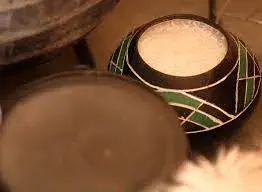
Umqombothi is Xhosa beer, brewed from maize meal, maize malt and sorghum malt. It is thick, cloudy, sour smelling and low in alcohol, usually under three per cent, and it is not made to be compared with lager. It is a different category of drink with a different purpose. Its purpose is ceremonial before it is social. In Xhosa practice umqombothi is brewed for the return of the abakwetha, the young men coming back from ulwaluko, the initiation and circumcision rite. It is central when families communicate with the amadlozi, the ancestors, and it appears at traditional weddings, funerals and imbizo, the community meetings where matters are decided. A gathering of consequence has umqombothi at it, and its absence would be noticed as a statement. The drink is not confined to South Africa. Sorghum beer is brewed across the continent under many names: dolo in Burkina Faso, pito in Nigeria, ingwebu among the Ndebele of Zimbabwe, which is their word for froth. Brewing is done outdoors over an open fire, cooled at ambient temperature, and the recipes are held within families and passed down rather than written.
AFN Heritage Note
Umqombothi is documented in Xhosa practice as the beer brewed for the return of the abakwetha following ulwaluko, and as the drink through which families address the amadlozi. Sorghum beer of the same family is brewed across Africa under names including dolo in Burkina Faso, pito in Nigeria and ingwebu in Zimbabwe.
Ingredients
Dietary tags are provided by contributors as a guide, not verified by AFN, and they depend on the products you buy. If you have a serious allergy, check every ingredient yourself. Cooking, allergies and your own judgement
Directions
- 1
Make a paste with the maize meal, 1 kg of the sorghum and six litres of boiling water in a large bucket.
- 2
Cover tightly and leave to ferment for two to three days in a dark, warm place.
- 3
Bubbles should appear on the surface, showing that fermentation has begun.
- 4
Take out 2 cups of the mixture and set aside.
- 5
Put 2 litres of water in a pot, bring to the boil and stir in the remaining paste.
- 6
Turn the heat down and simmer for an hour.
- 7
Turn off the heat, allow to cool, then transfer back to the bucket along with the 2 cups set aside earlier.
- 8
Stir well with a ladle. Pour in the remaining dry sorghum, add 3 litres of cold water and stir well.
- 9
Seal, cover with a blanket or thick cloth to insulate, and leave to ferment for 24 hours.
- 10
Strain and serve.
Africook’s Notes
 Personal notes from Jennifer Ezeokoli
- Every vessel and utensil must be scrupulously clean. A contaminated ferment does not produce a slightly worse umqombothi; it produces something undrinkable.
- The malt ratio decides the character. More maize malt gives a lighter colour and a mellower drink; more sorghum gives a darker, stronger tasting one. This is the main lever a brewer has.
- Five days is the practical maximum. Longer fermentation raises the alcohol slightly but rarely above five per cent, and past that point the brew spoils rather than strengthens.
- A cup of sugar in the final mixture boosts fermentation if the brew is sluggish.
- It is made and drunk fresh. Umqombothi is not a keeping drink, and it is brewed for a specific occasion rather than stocked.
Questions cooks ask
How strong is umqombothi?
Low, usually under three per cent alcohol by volume and rarely above five even with a long ferment. It is closer in strength to a weak beer than to anything distilled, and its thickness and sourness matter more to how it is experienced than its alcohol does. It is drunk in quantity from a shared vessel.
What is the difference between maize malt and sorghum malt in umqombothi?
They control colour and flavour in opposite directions. Maize malt, sold in South Africa as umthombo, gives a lighter coloured beer with a mellower taste. Sorghum malt gives a darker colour and a stronger, sharper flavour. Most recipes use both, and the ratio between them is where a brewer's preference shows.
How long does umqombothi take to make?
Three to four days in total: two to three days for the first ferment, an hour of cooking, then a further 24 hours for the second ferment. It cannot be accelerated, and the drink is brewed for a specific occasion rather than kept, because it does not hold once it is ready.
When is umqombothi traditionally served?
At occasions of significance in Xhosa practice: the return of the abakwetha after ulwaluko, communication with the ancestors, traditional weddings, funerals and imbizo. It is also drunk socially, but its ceremonial role is what gives it standing, and a significant gathering without it would be noticed.
Reviews
Be the first to rate this recipe
Cooked it? Your rating helps the next person decide whether to try it.
No reviews on this one yet. If you have cooked it, yours would be the first.
You Might Also Like
Browse all South African recipes →
Dombolo (Dumplings or Steamed Bread)

Boeber (Cape Malay Sweet Milk Drink)