

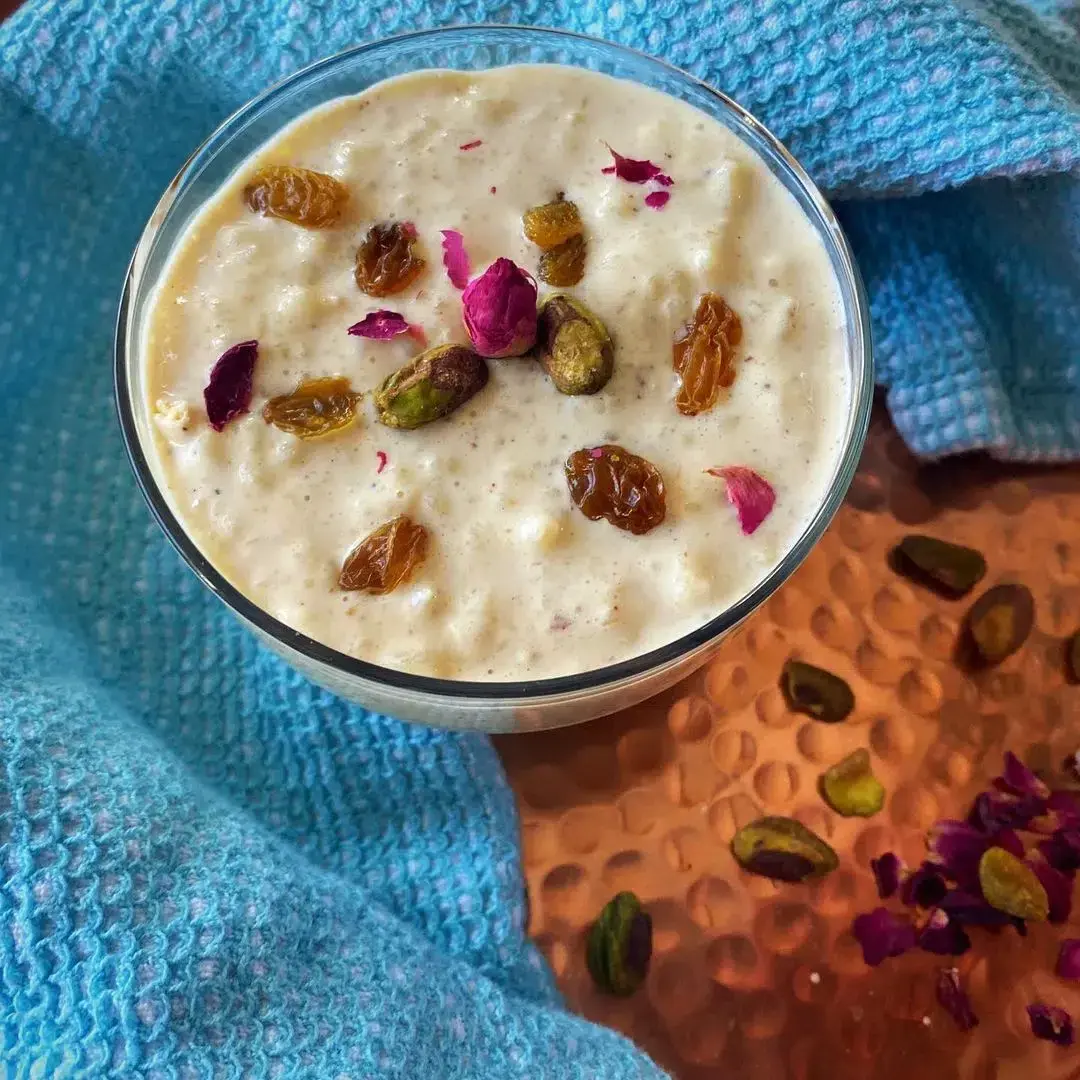
Roz bi Laban (Rice Pudding)
Overview
Roz bi laban is rice with milk, which is exactly what the Arabic says, and it is among the most commonly eaten desserts in Egypt. It is sold from dessert shops and traditional restaurants in small individual bowls, set rather than loose, and served cold more often than warm. Its ubiquity comes from its simplicity. Rice, milk, sugar and a thickener are ingredients every household has, and the whole thing can be made in under half an hour if the rice is cooked separately rather than simmered in the milk from the start. That shortcut is common in Egyptian home kitchens and makes the dish close to foolproof, where the traditional method of cooking the rice slowly in milk demands constant stirring in the manner of a risotto. Rice pudding exists across most of the world and the Egyptian version is placed by its details. Cornstarch is used alongside the rice to give a firmer set than European rice puddings have, coconut flakes and raisins go on top, and cinnamon and chopped almonds are the other standard finishes. It sits in the same category as mahalabia and umm ali on the Egyptian dessert table, and is considered relatively light against those.
AFN Heritage Note
Roz bi laban, meaning rice with milk, is documented as an Egyptian dessert sold in dessert shops and traditional restaurants, and belongs to the wider family of Middle Eastern milk puddings alongside mahalabia. Rice reached Egypt through cultivation in the Nile Delta established under Arab rule.
Ingredients
Dietary tags are provided by contributors as a guide, not verified by AFN, and they depend on the products you buy. If you have a serious allergy, check every ingredient yourself. Cooking, allergies and your own judgement
Directions
- 1
Bring the milk just to the boil in a heavy based saucepan over medium heat.
- 2
Add the rice and reduce the heat so it cooks uncovered at a simmer for 30 to 35 minutes, until the rice is tender.
- 3
Stir occasionally, since the rice and milk can catch. Stirring also stops a skin forming on the surface.
- 4
Add the sugar and stir well. Add extra milk or water if all the liquid is absorbed before the rice is cooked.
- 5
Once cooked and creamy, take it off the heat and stir in the butter and vanilla.
- 6
Transfer to serving bowls and sprinkle with cinnamon and extra sugar, or top with sultanas and chopped almonds.
Africook’s Notes
- Use a heavy based pan and keep the heat low. Milk and sugar catch on a thin pan and a scorched pudding cannot be rescued.
- Portion it into individual bowls straight off the heat, before it thickens. It sets considerably as it cools and will not pour neatly once it has.
- Short grain rice is what gives the creaminess. Long grain stays separate and produces a thinner pudding.
- For a firmer set closer to what Egyptian dessert shops sell, whisk a tablespoon of cornstarch into a little cold milk and stir it in during the last few minutes.
- It keeps four days in a sealed container and is eaten cold or warm. Loosen with a splash of milk when reheating.
Reviews
2 reviews
You Might Also Like
Browse all Egyptian recipes →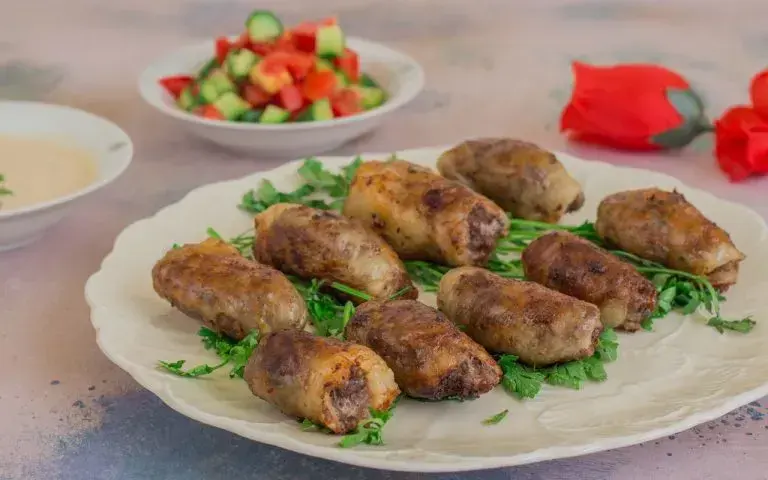
Tarb (Grilled Kofta Wrapped in Lamb Fat)
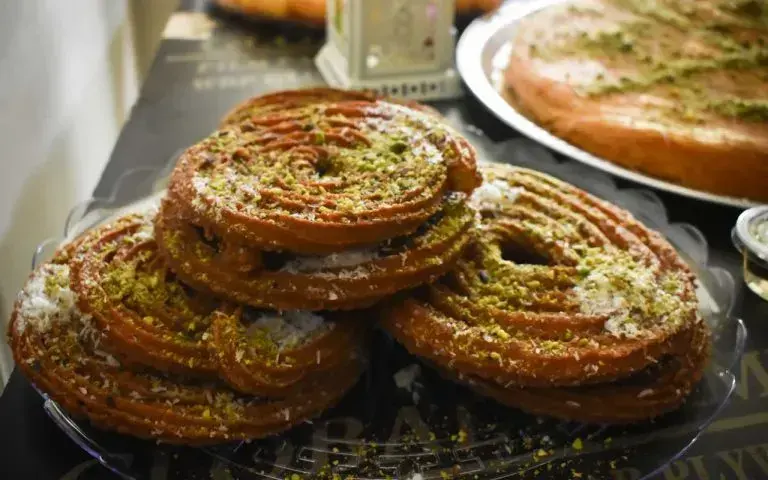
Egyptian Meshabek

My Egyptian neighbor in Seattle used to share this with us during Ramadan. I had to substitute Egyptian short grain rice with short-grain sushi rice from Uajimaya down in Chinatown, which worked well. Mine started catching at the bottom around 25 minutes so I had to add that extra 100ml of milk early and lower the heat. Very comforting warm with the vanilla and butter.
cooked this tonight for the kids when it was freezing outside. took closer to 40 minutes on my stove for the short grain rice to go soft, but stirring it constantly stopped that skin forming on top. stirring in the butter right at the end gave it the most incredible creamy texture. topped mine with cinnamon and sultanas. grand altogether.